Radio Play 1: Introduction — Meet Captain John Peck and the Journey Ahead
Meet Captain John Peck — a former Merchant Navy captain, senior Freemason, Rosicrucian, and practising Spiritualist — as he opens a twenty-part journey through his book, The Royal Arch Chapter: The Hidden Ritual. This first episode introduces the man behind the work and what led him, in his eighties, to put a lifetime of study into writing: a working Masonic ritual re-read as a map of the soul’s own journey, written for seasoned Companions and curious newcomers alike. Consider this an invitation into the series ahead — the specifics come later.
Radio Play 2: Setting the Scene — Inside the Royal Arch Chapter Room
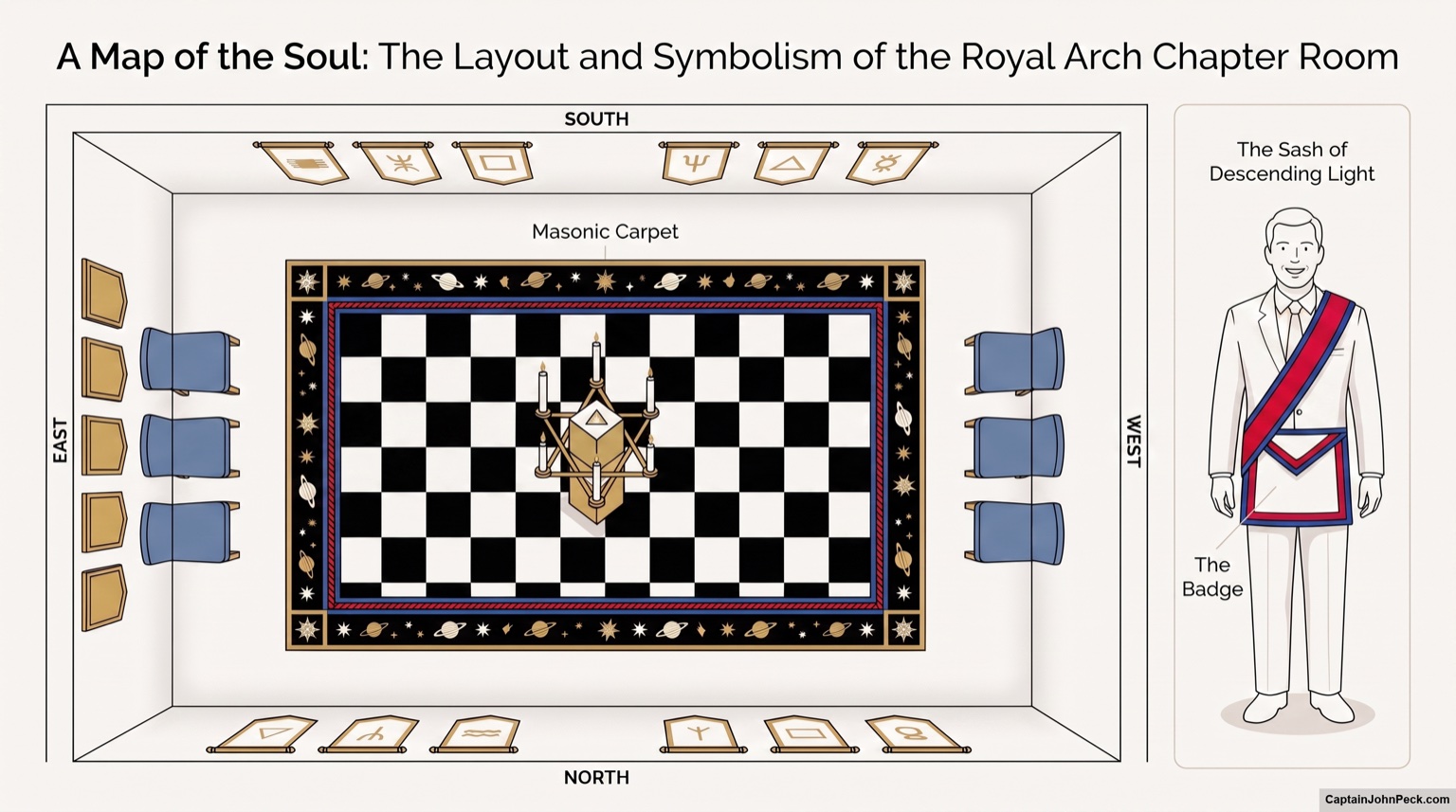
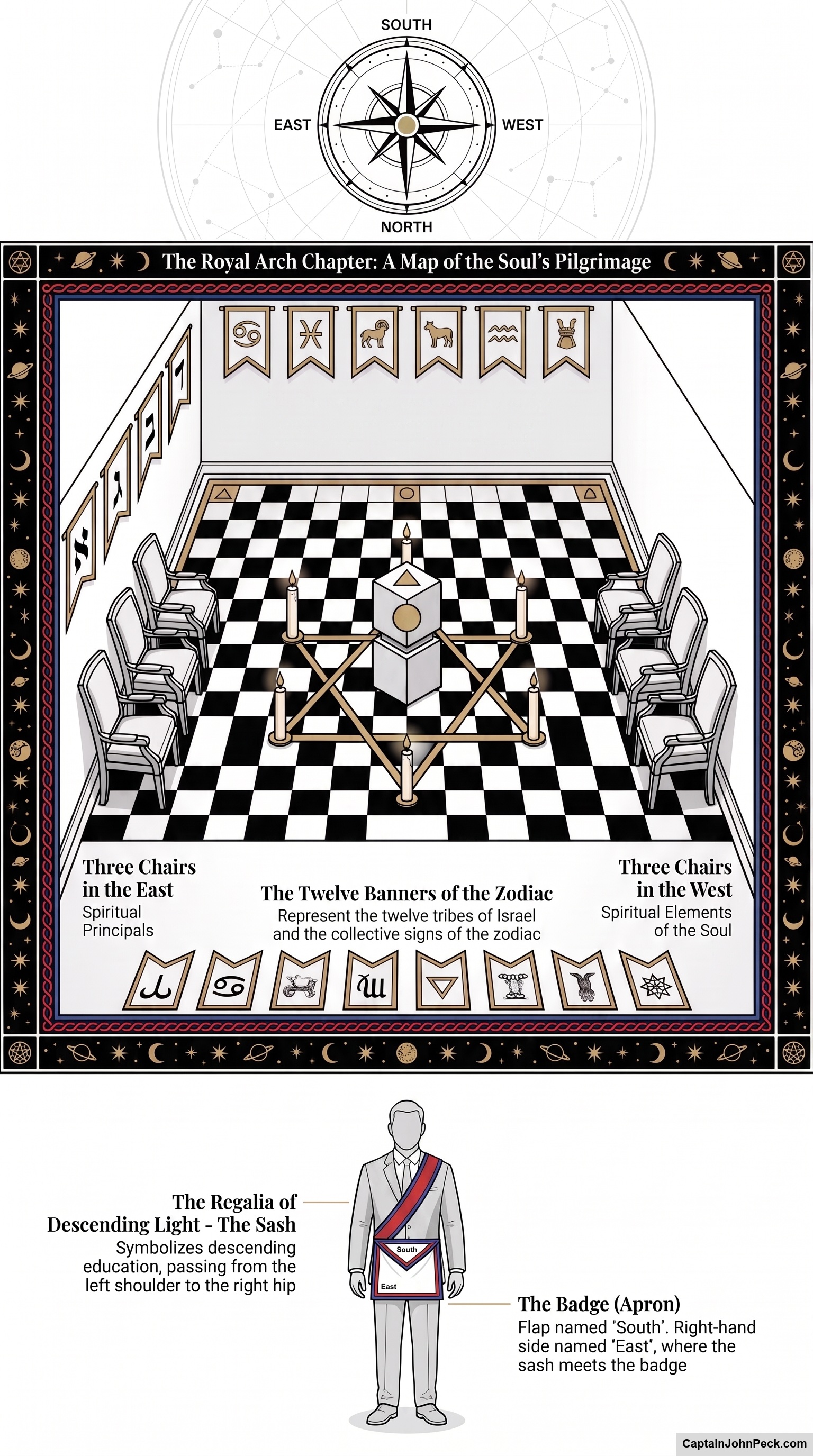
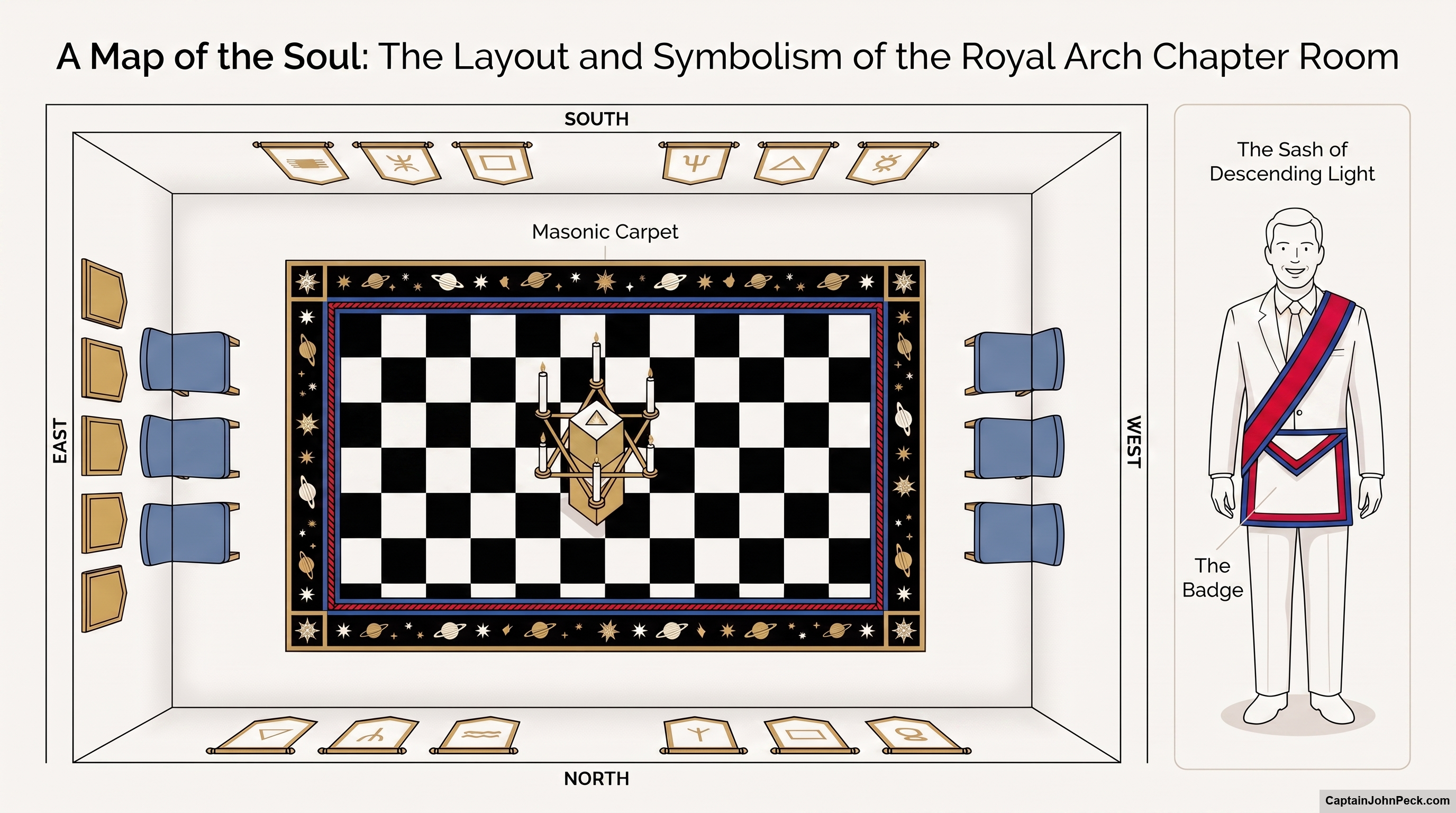
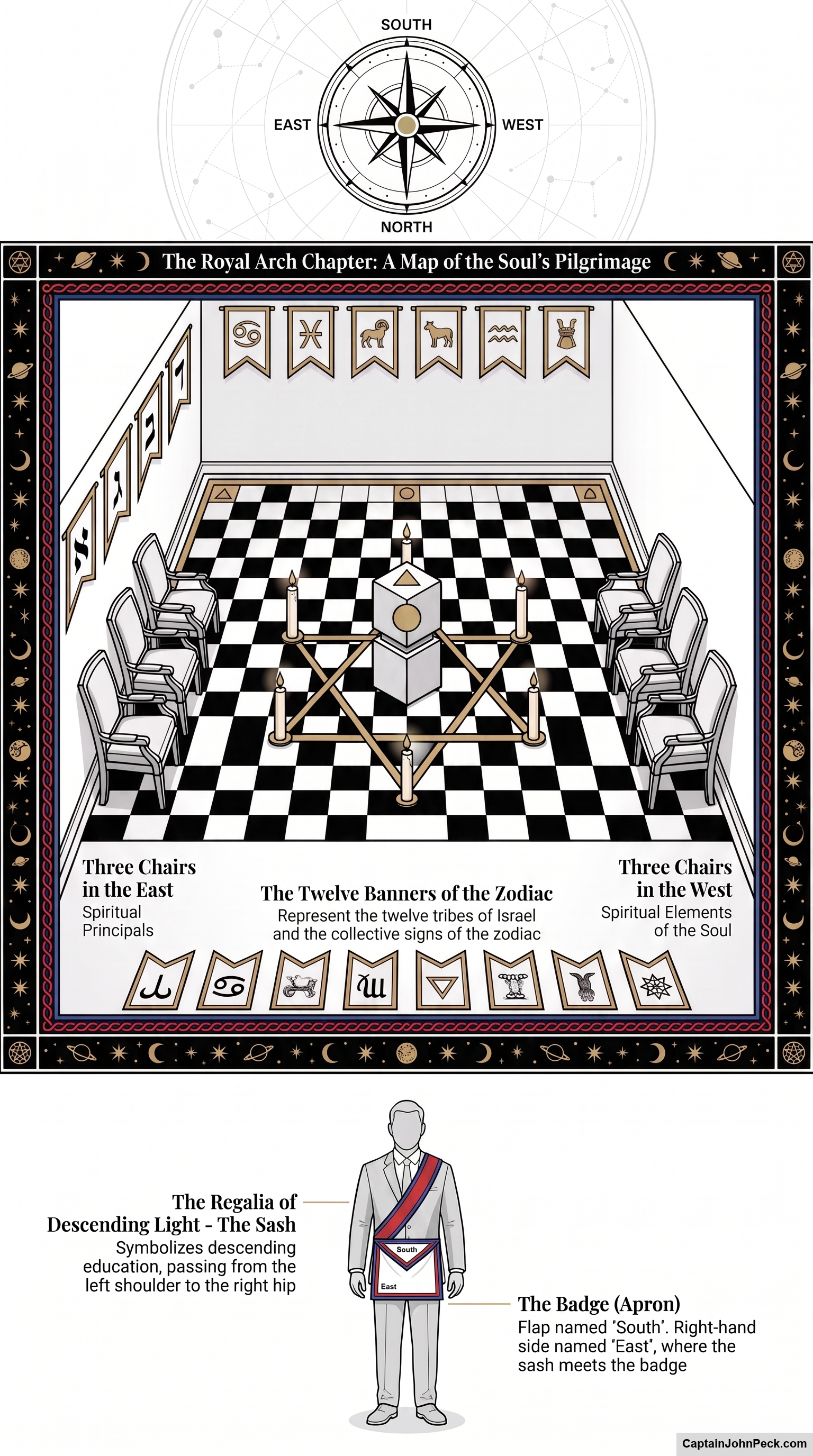
Step inside a Royal Arch Chapter room for the first time. This episode paints the physical space at the heart of Captain John Peck’s The Royal Arch Chapter: The Hidden Ritual — the sojourners’ chairs, the double cube and its candles, the banners lining the walls, and the sash worn by every Companion — and hints at the deeper symbolism Captain Peck sees running through it all. No prior knowledge of Freemasonry needed.
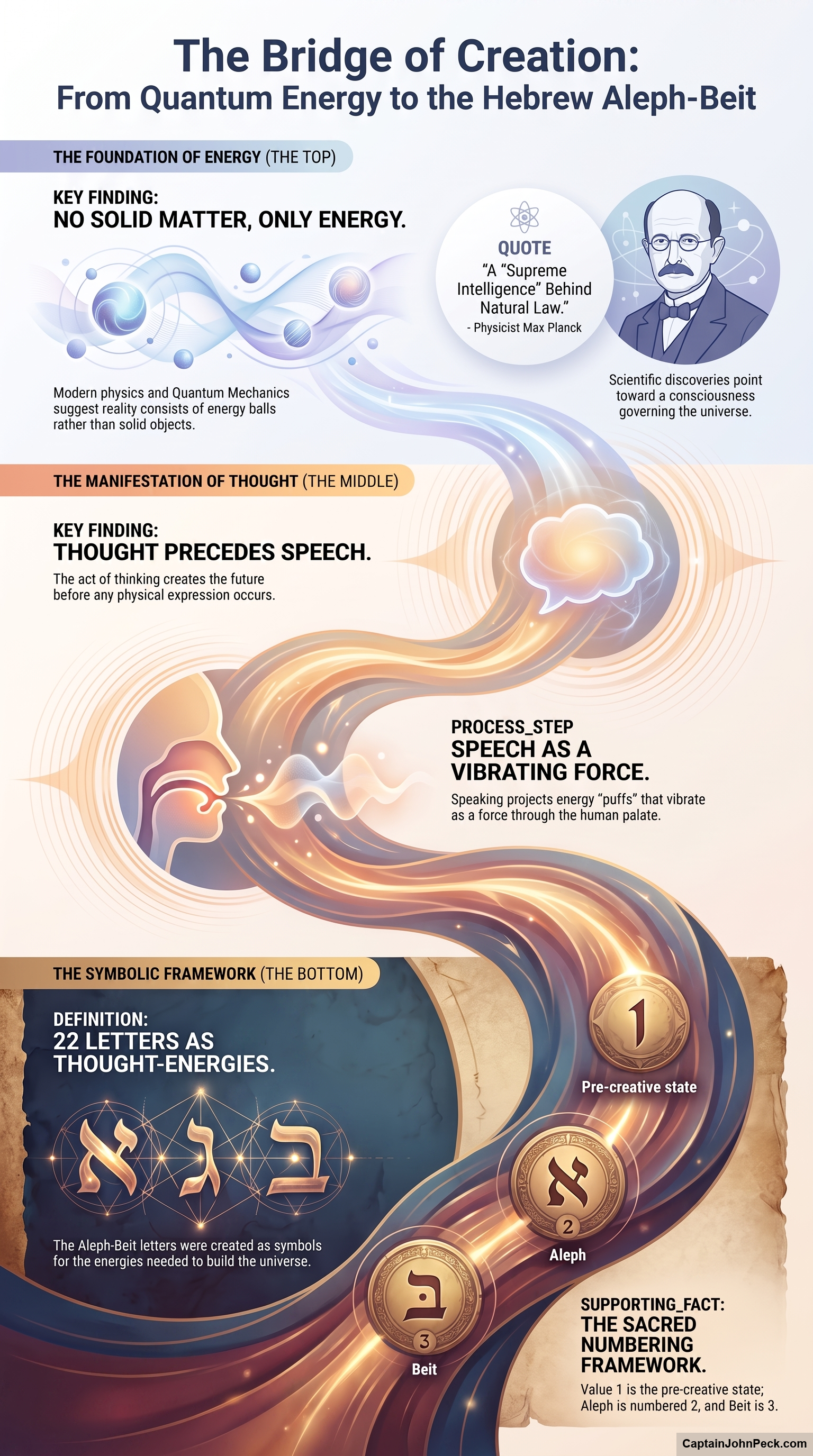
Radio Play 3: Energy, Thought, and the Hebrew Aleph-Beit

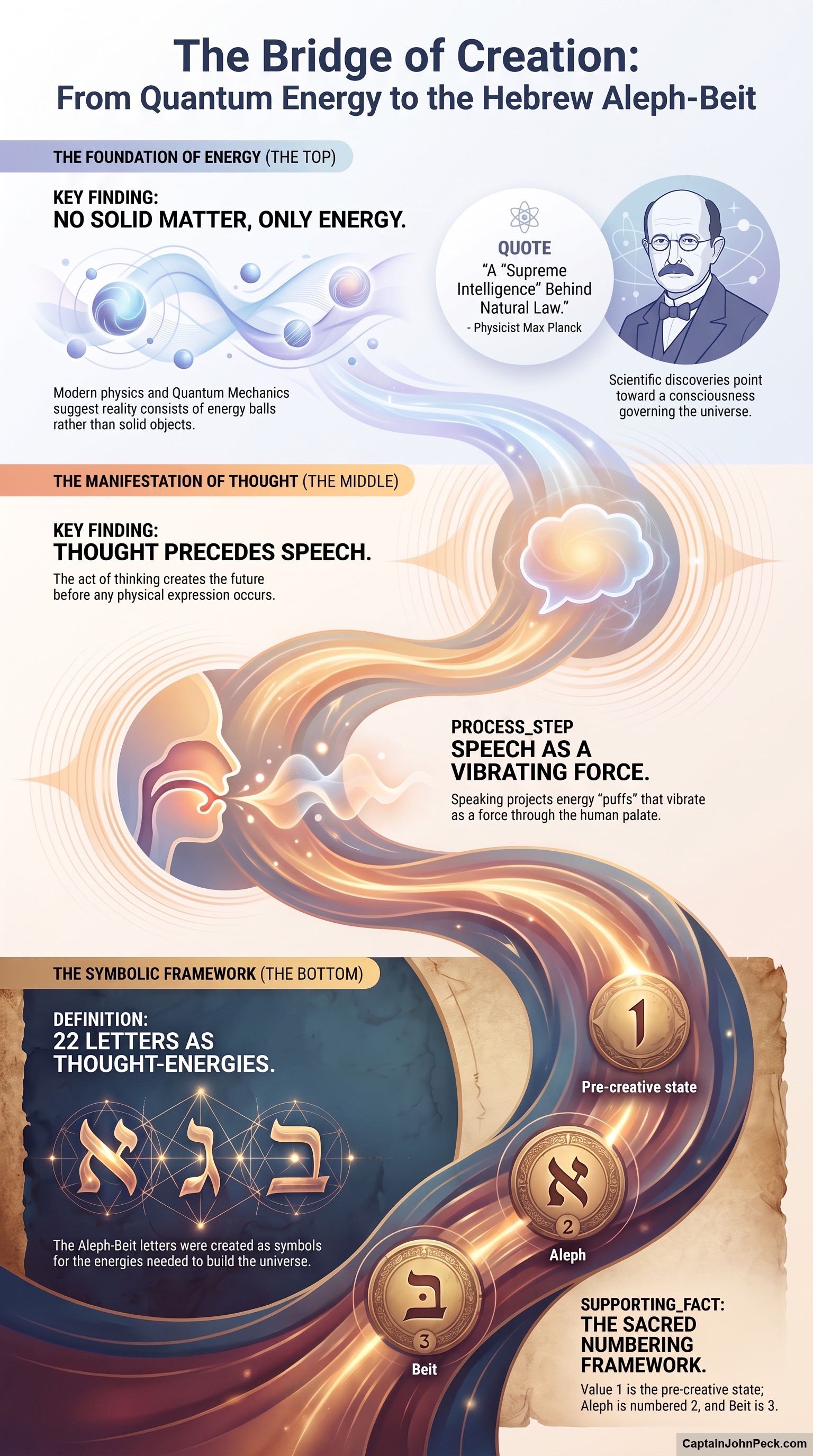
What if there’s no such thing as solid matter — only energy? This episode follows Captain John Peck’s own bridge between modern physics and ancient tradition in The Royal Arch Chapter: The Hidden Ritual, tracing his reasoning from quantum mechanics to a striking claim: that the twenty-two letters of the Hebrew Aleph-Beit were themselves created as symbols for the energies of thought behind creation. It’s the foundation the rest of the series’ letter-by-letter journey builds on.
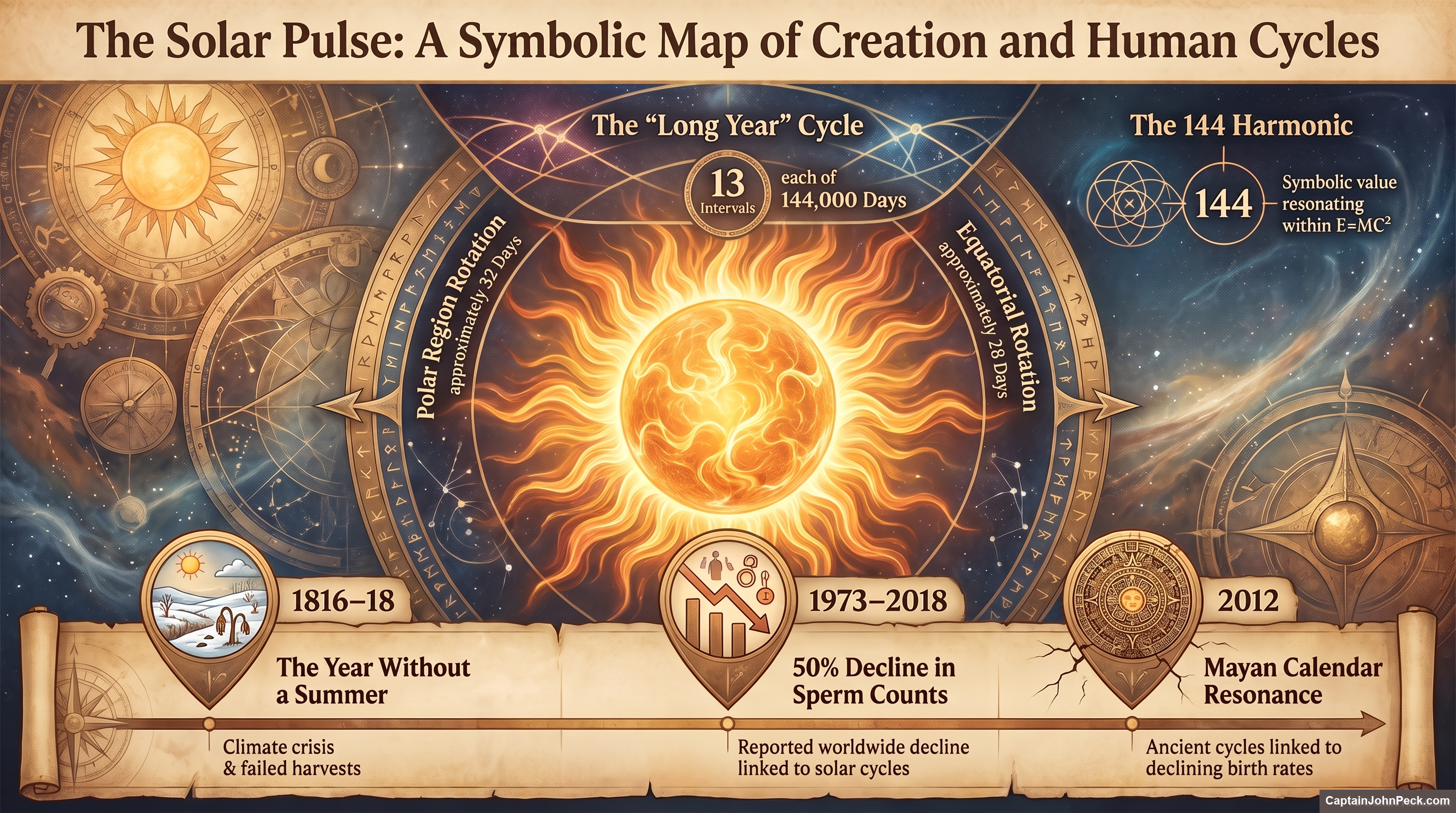
Radio Play 4: The Sun, the 144 Harmonic, and the Rhythms of Creation
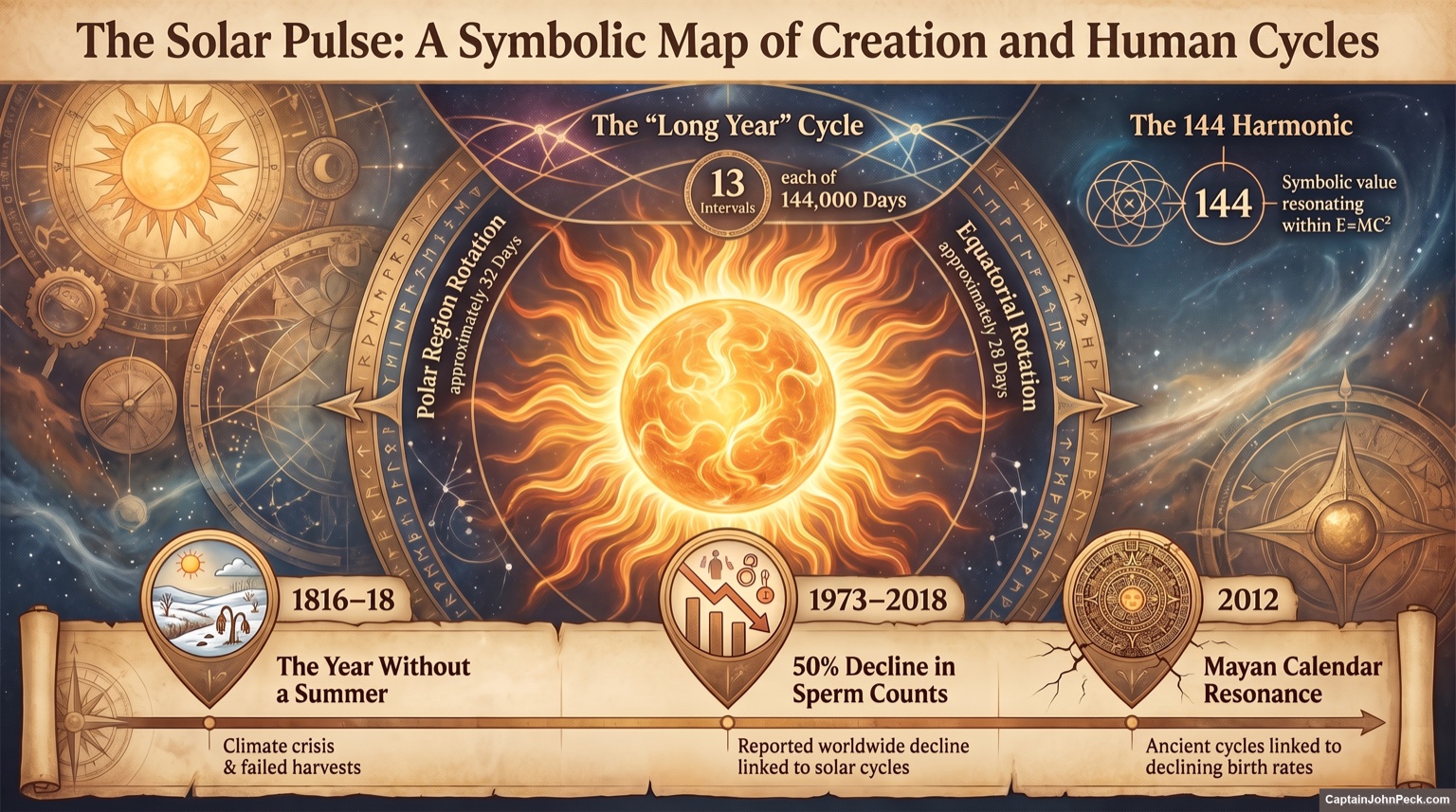

The sun doesn’t rotate evenly — and Captain John Peck thinks that matters. This episode follows his exploration, in The Royal Arch Chapter: The Hidden Ritual, of the sun’s differential rotation, a recurring “144” harmonic he traces from ancient tradition through to E=MC², and the historical and modern echoes he connects it to. A curious detour from hard science into symbolic pattern-seeking.
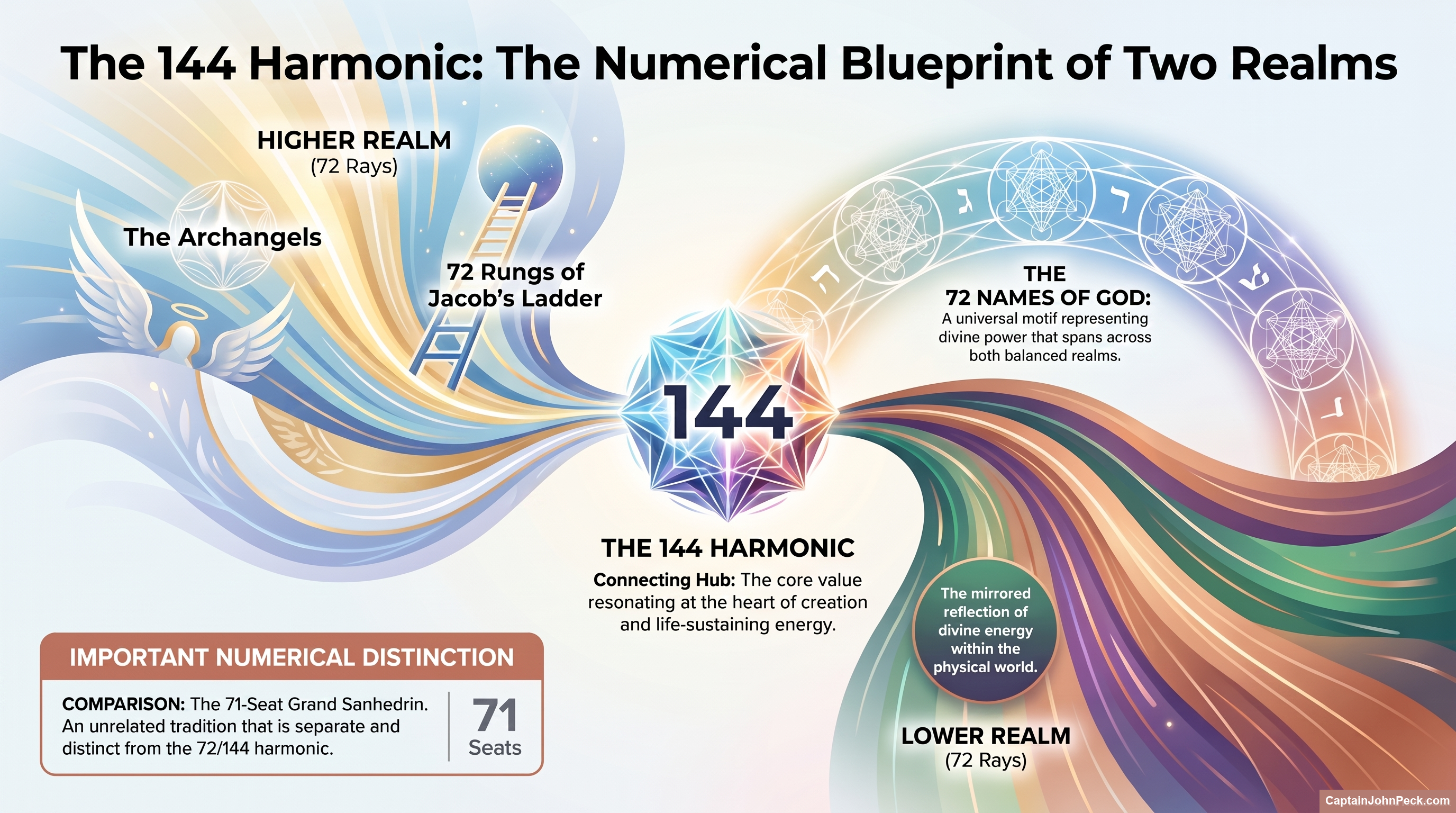
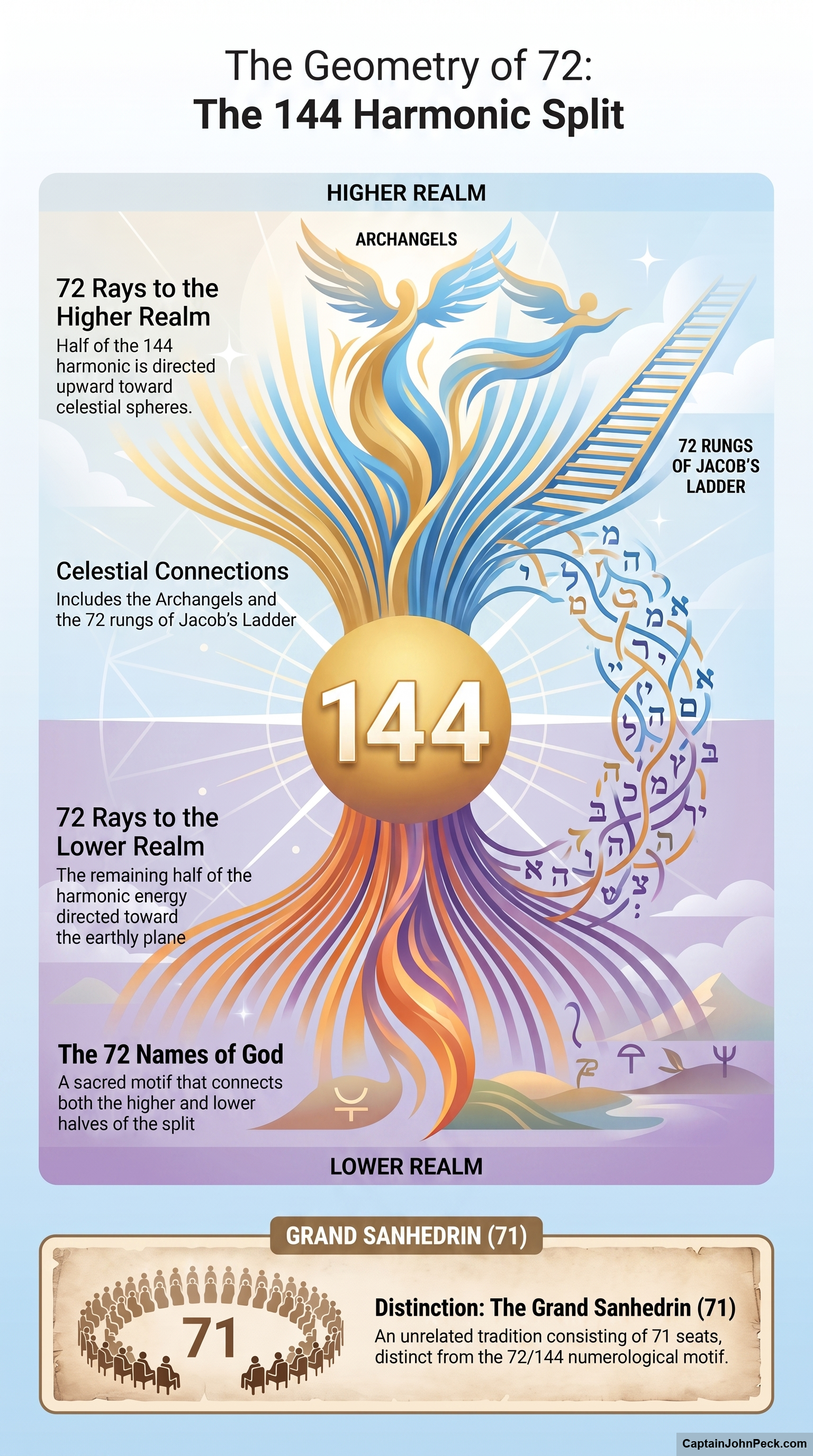
Radio Play 5: Archangels, the 72 Names of God, and Sacred Numbers
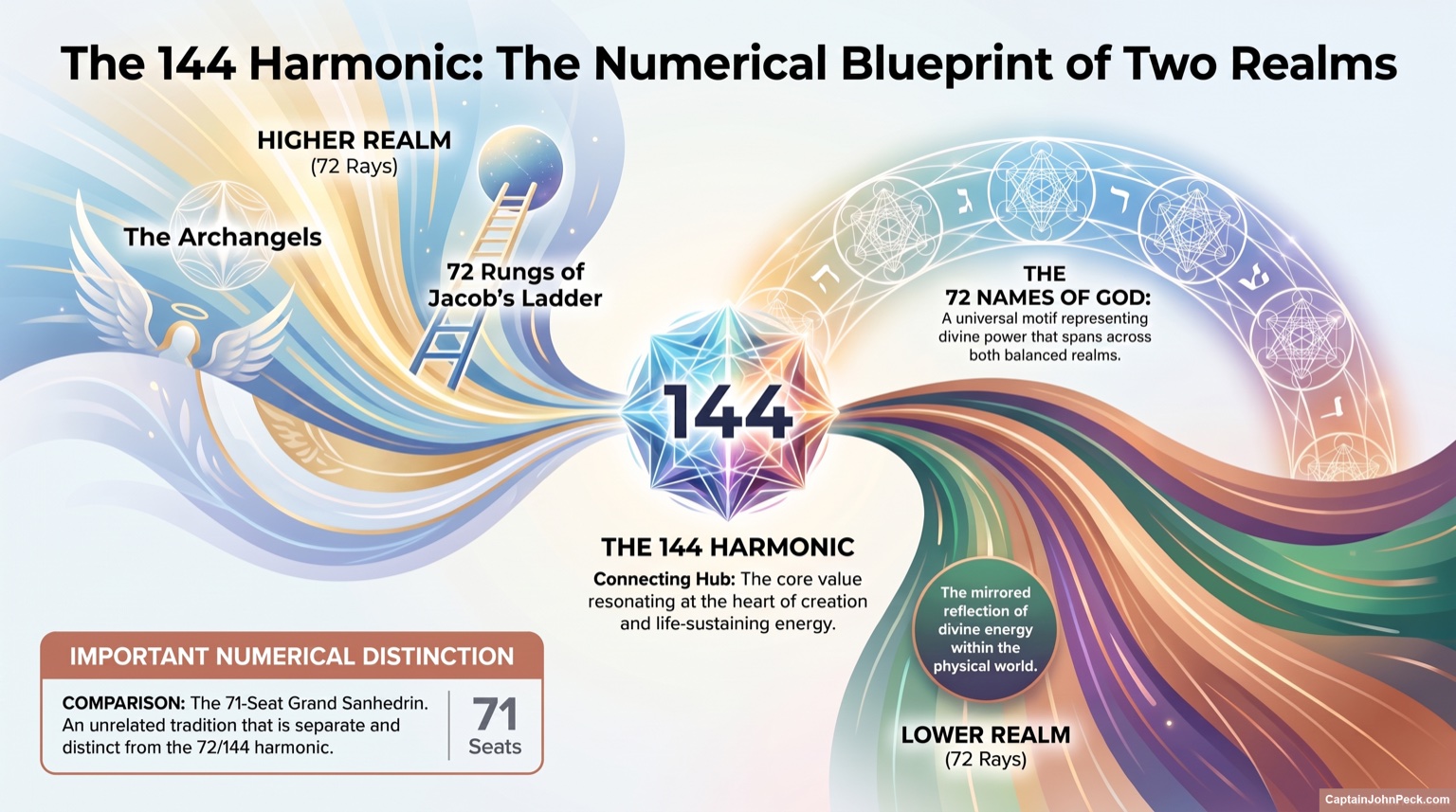
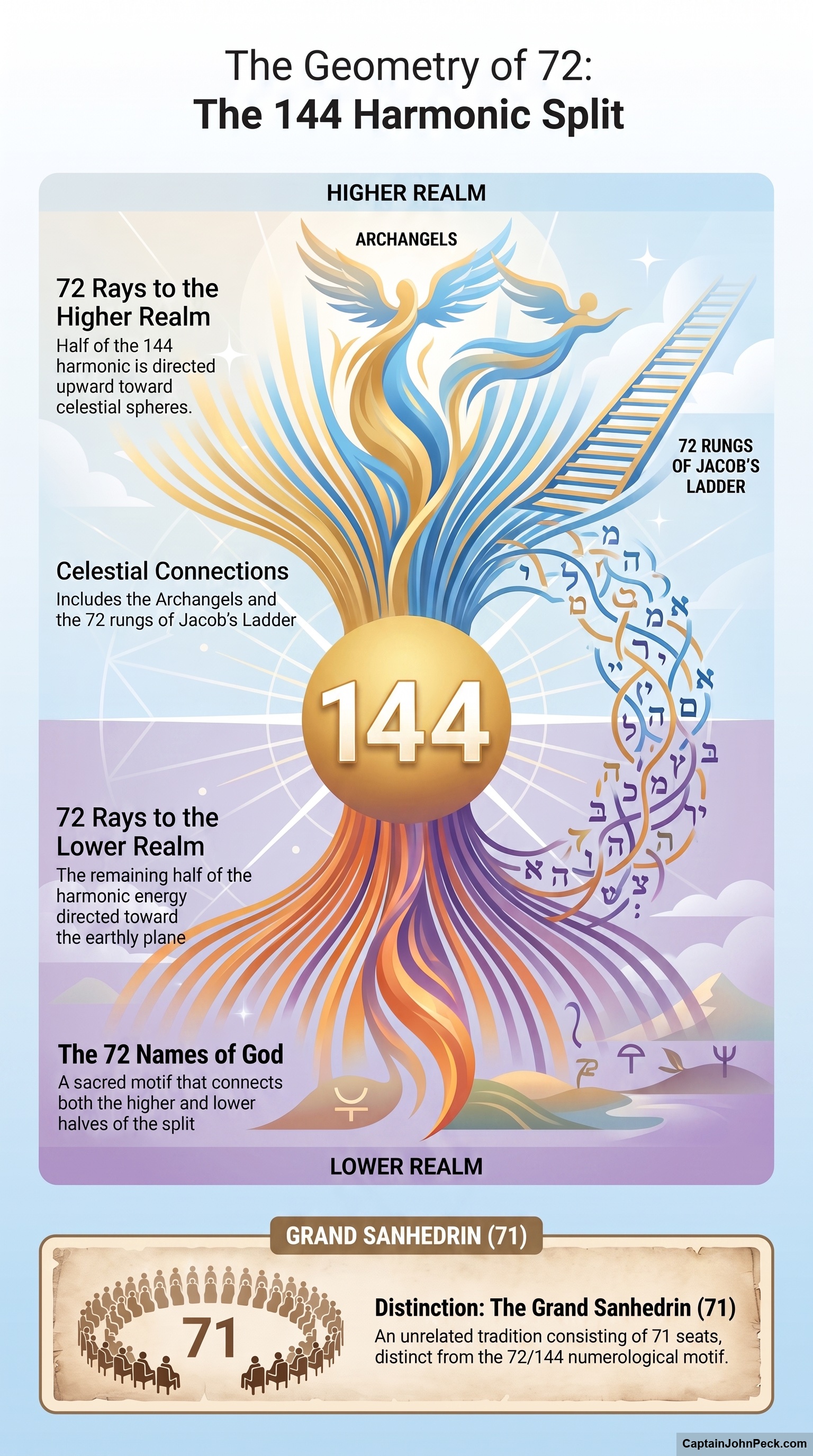
Building on the last episode’s 144 harmonic, this instalment of The Royal Arch Chapter: The Hidden Ritual follows Captain John Peck’s exploration of the number 72 — from the Archangels and the rungs of Jacob’s ladder to the 72 names of God — planting a numerical thread that recurs throughout the rest of the series.
Radio Play 6: Zerubbabel and the West — the First Obligation
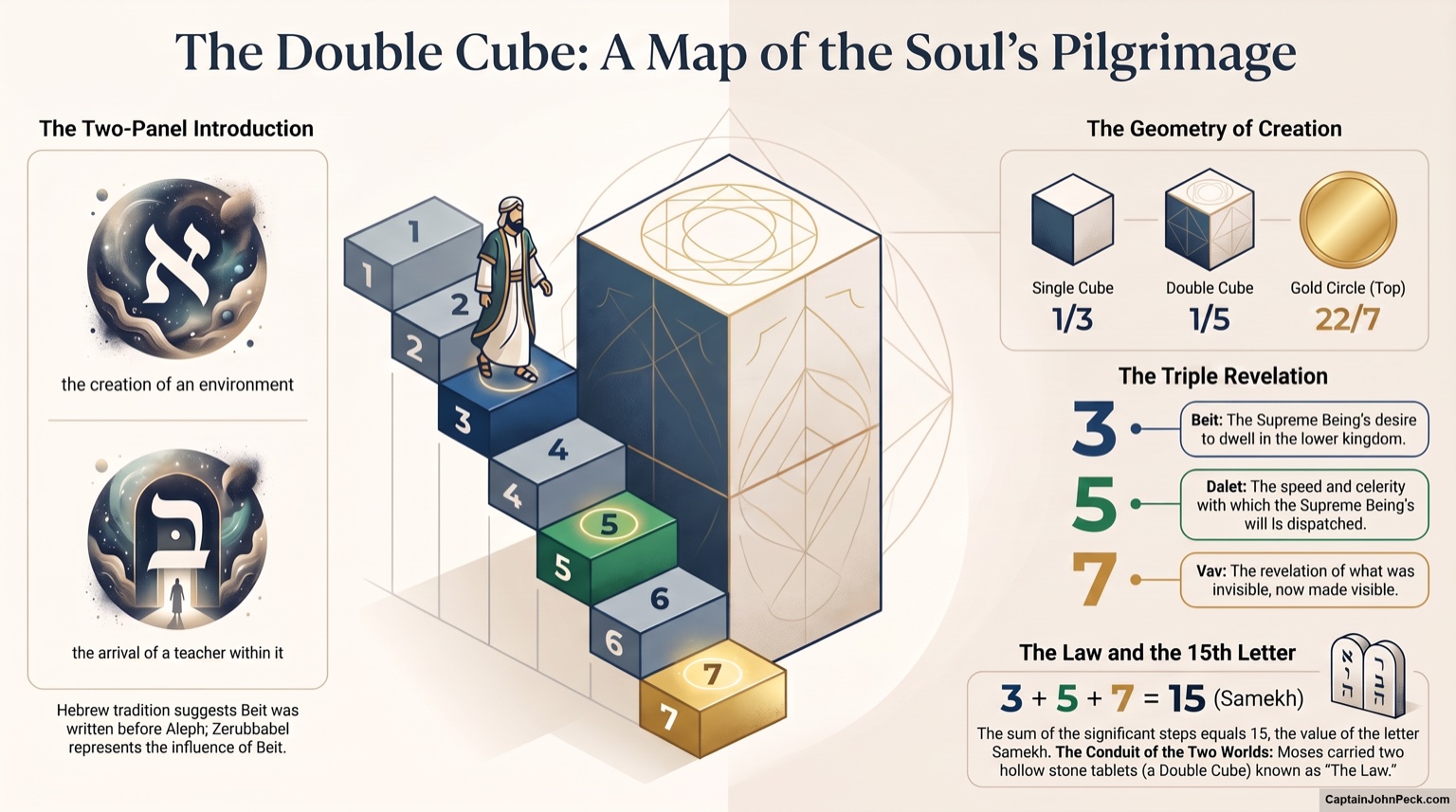
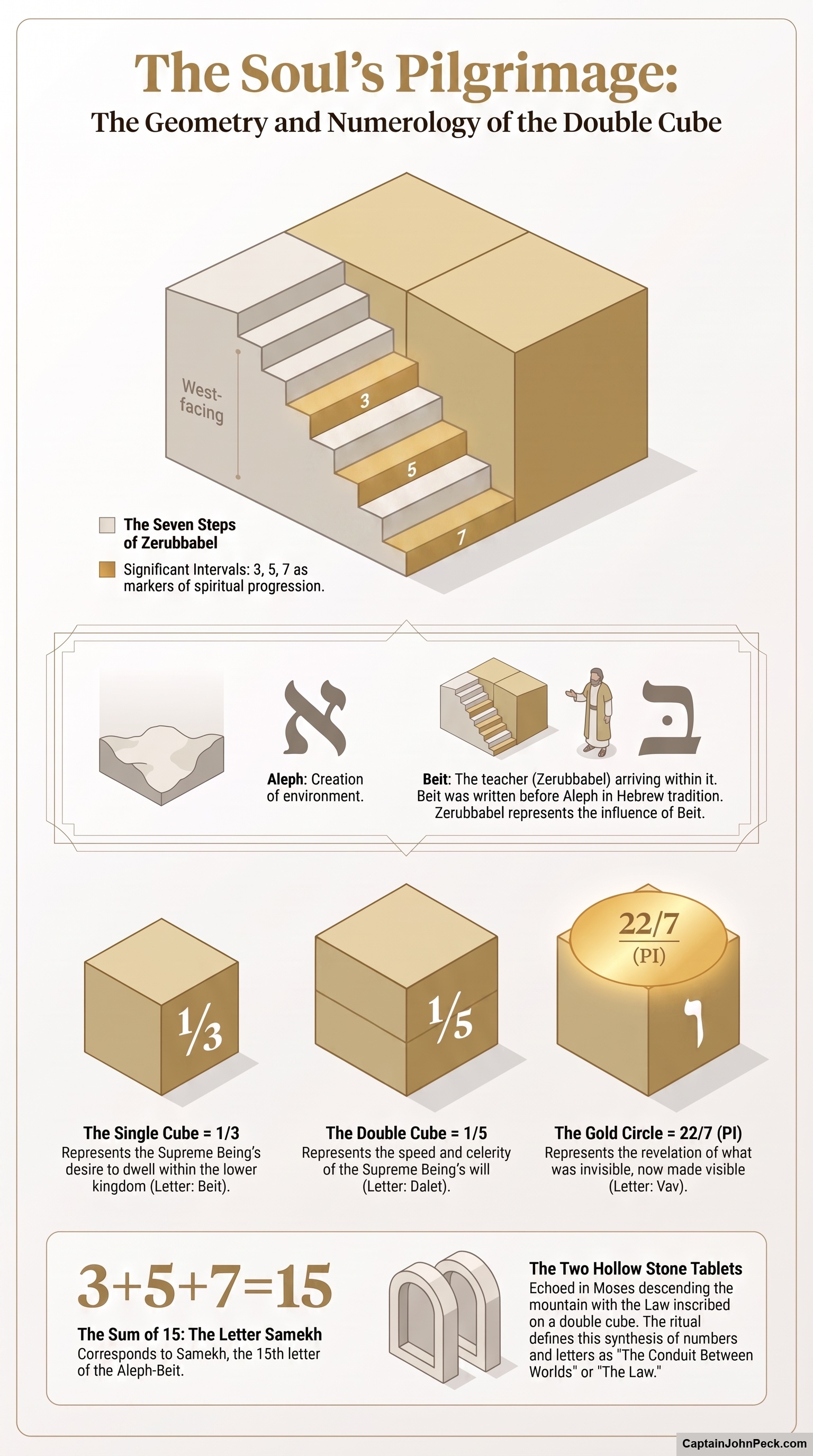
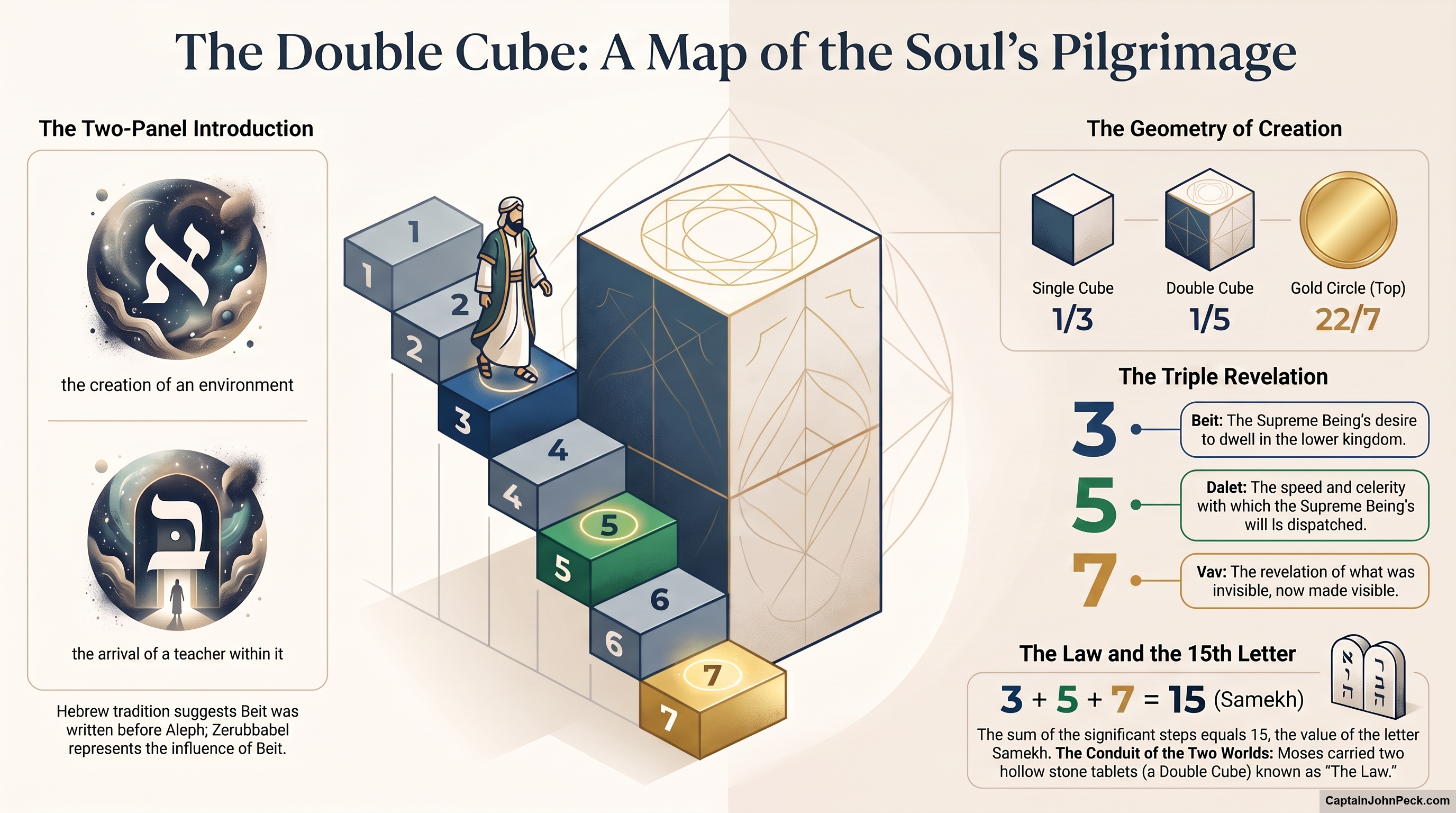
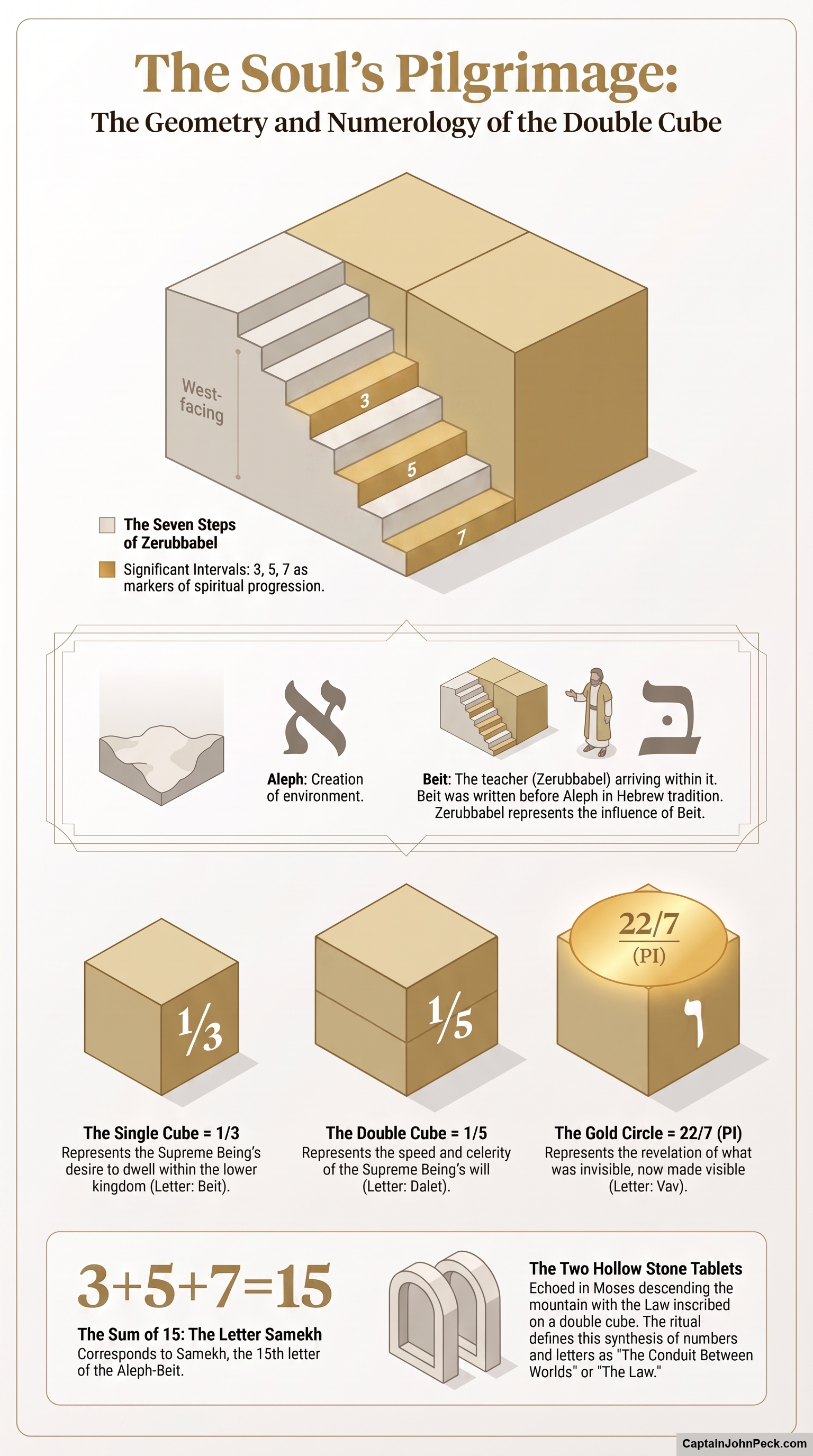
This episode follows the installation of the First Principal, Zerubbabel, in the West of the Chapter room, and Captain John Peck’s reading of the first two Hebrew letters — Aleph and Beit — as the creation of an environment and the arrival of a teacher within it. Drawn from The Royal Arch Chapter: The Hidden Ritual, it also looks at his own explanation for a curious piece of Hebrew tradition: why Beit was written before Aleph.
Radio Play 7: A Modern Parable — The School in Berkshire
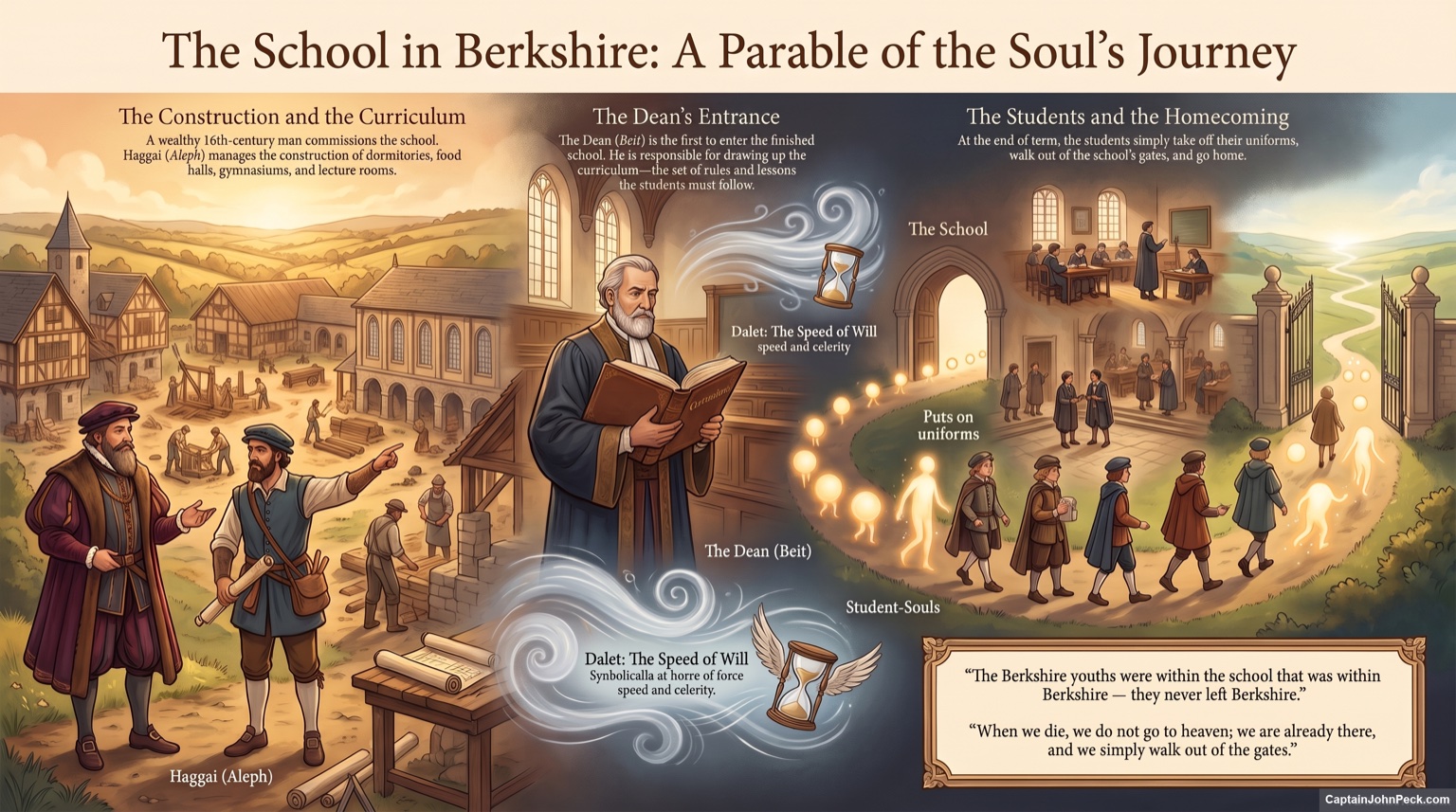
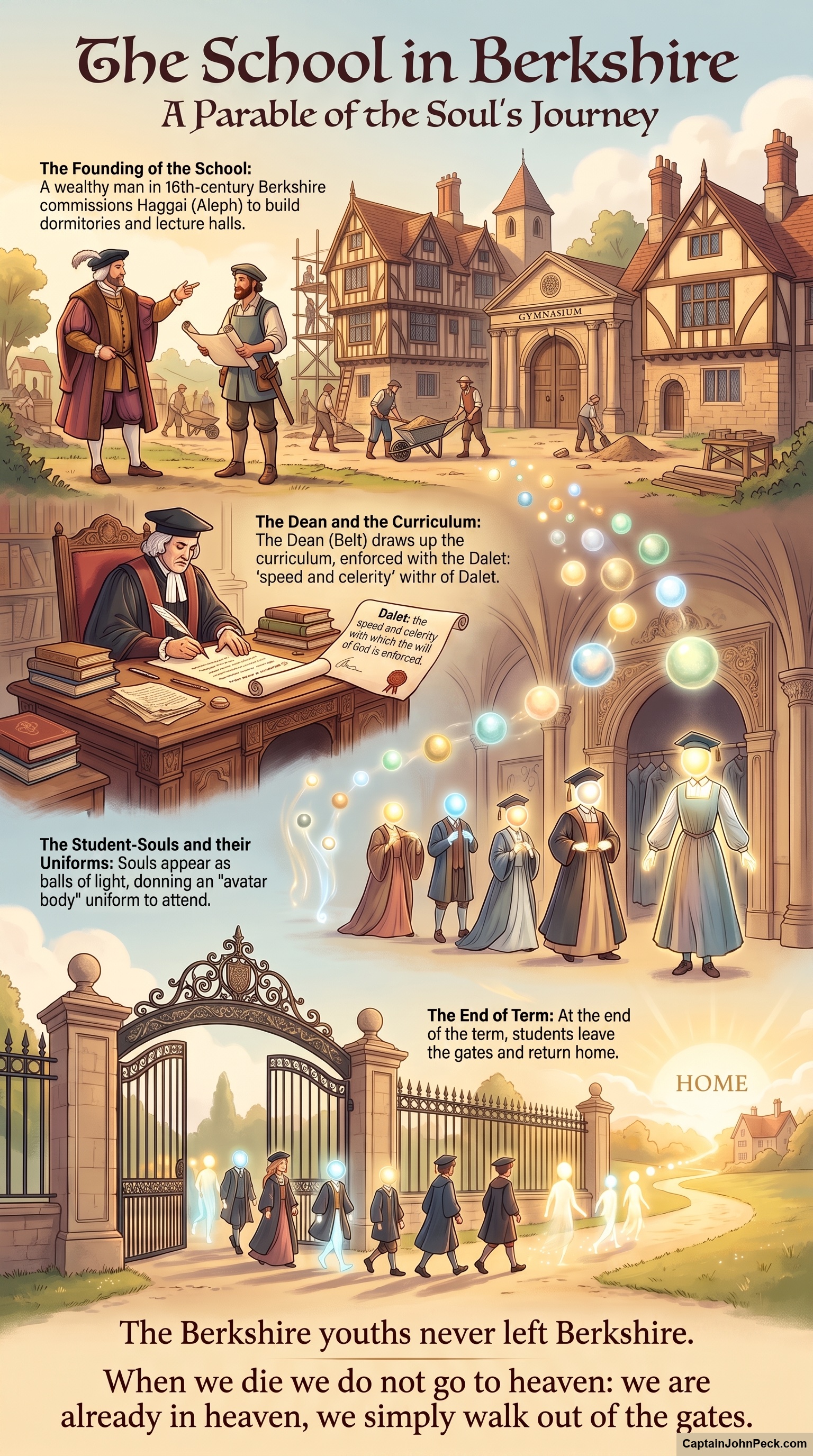
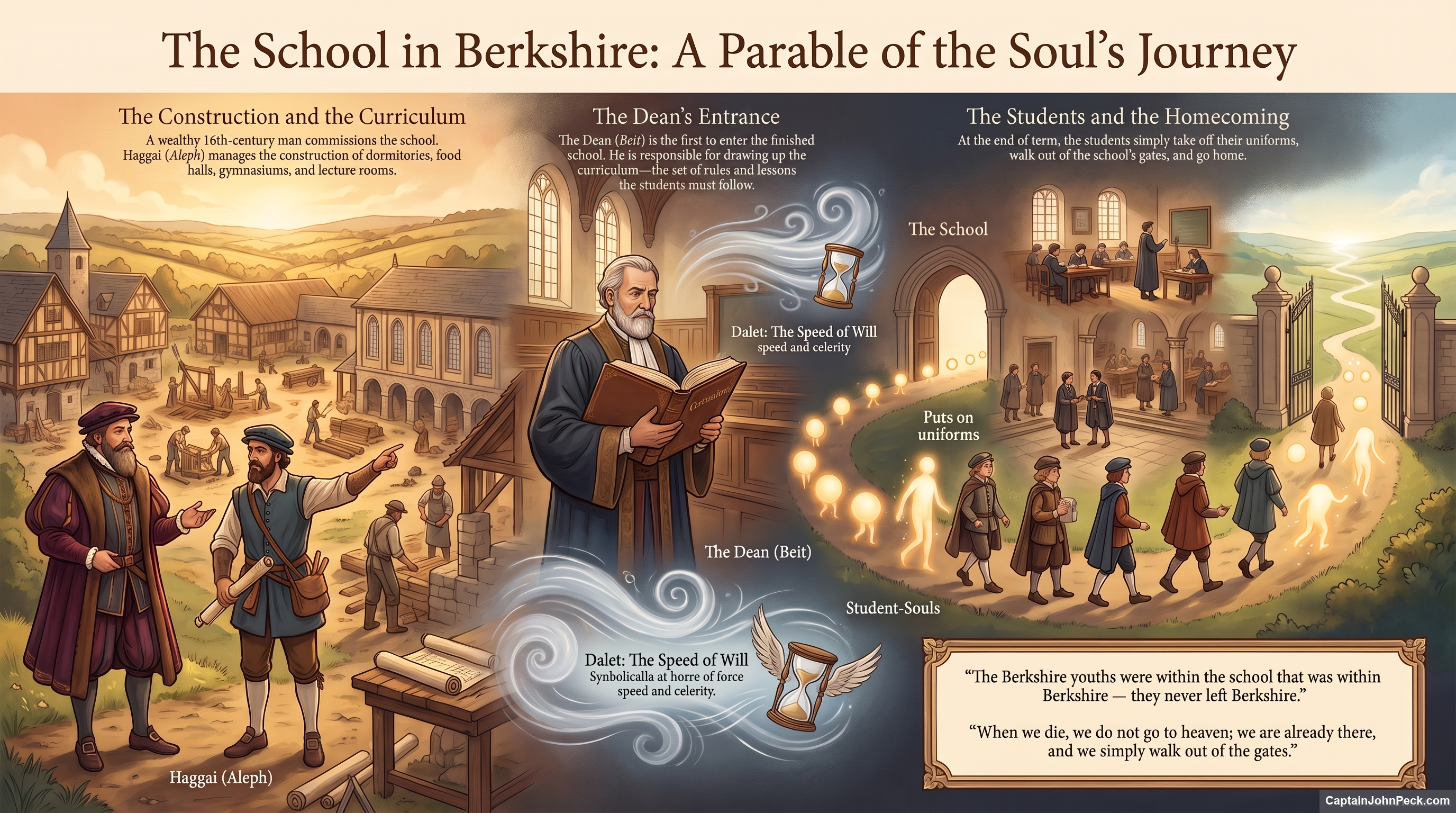
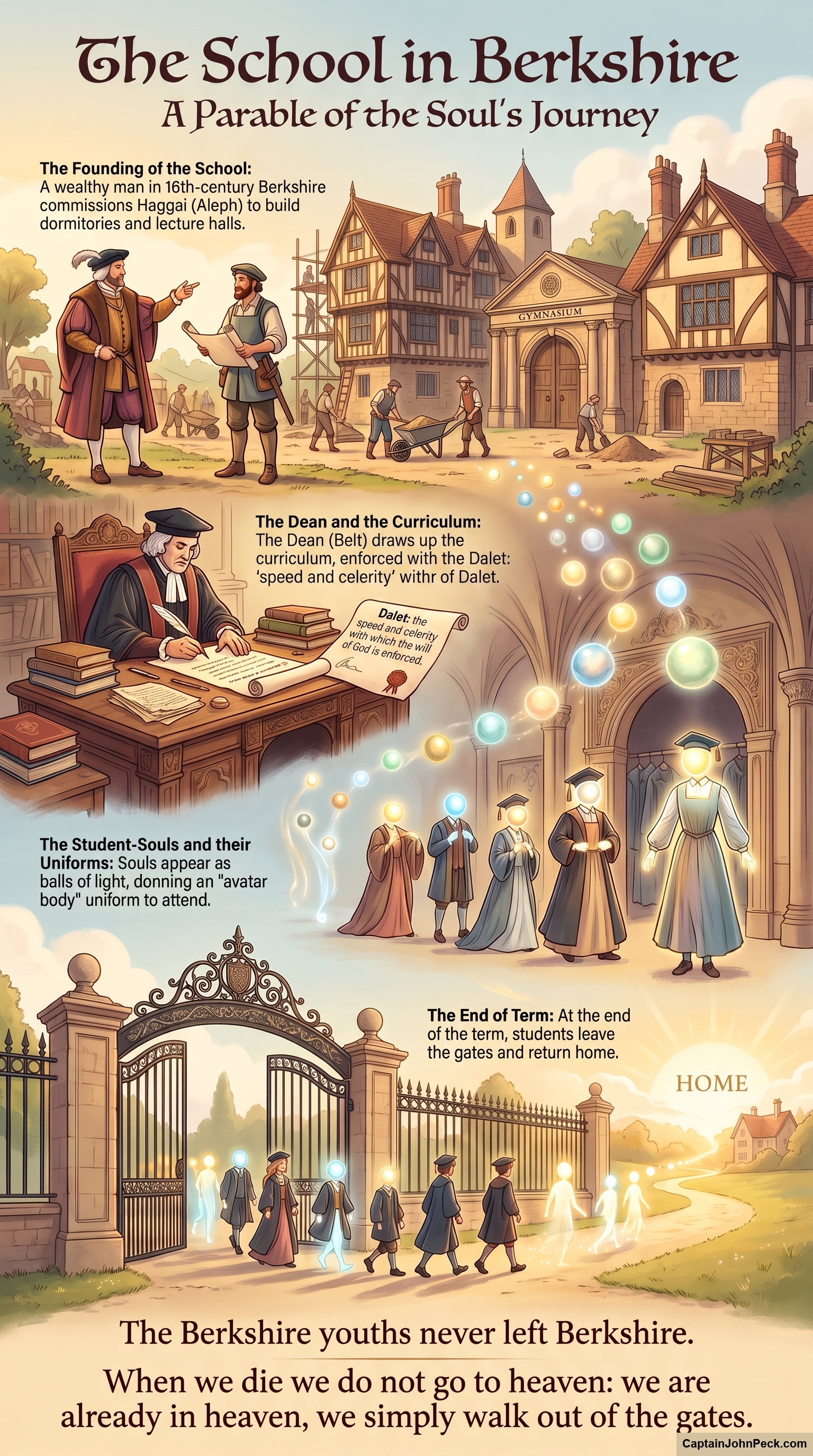
One of the most personal passages in The Royal Arch Chapter: The Hidden Ritual takes centre stage here: Captain John Peck’s own parable of a school built in sixteenth-century Berkshire, and what its students’ comings and goings can suggest about a soul’s time in a human life. A self-contained, accessible episode built around a single vivid story.
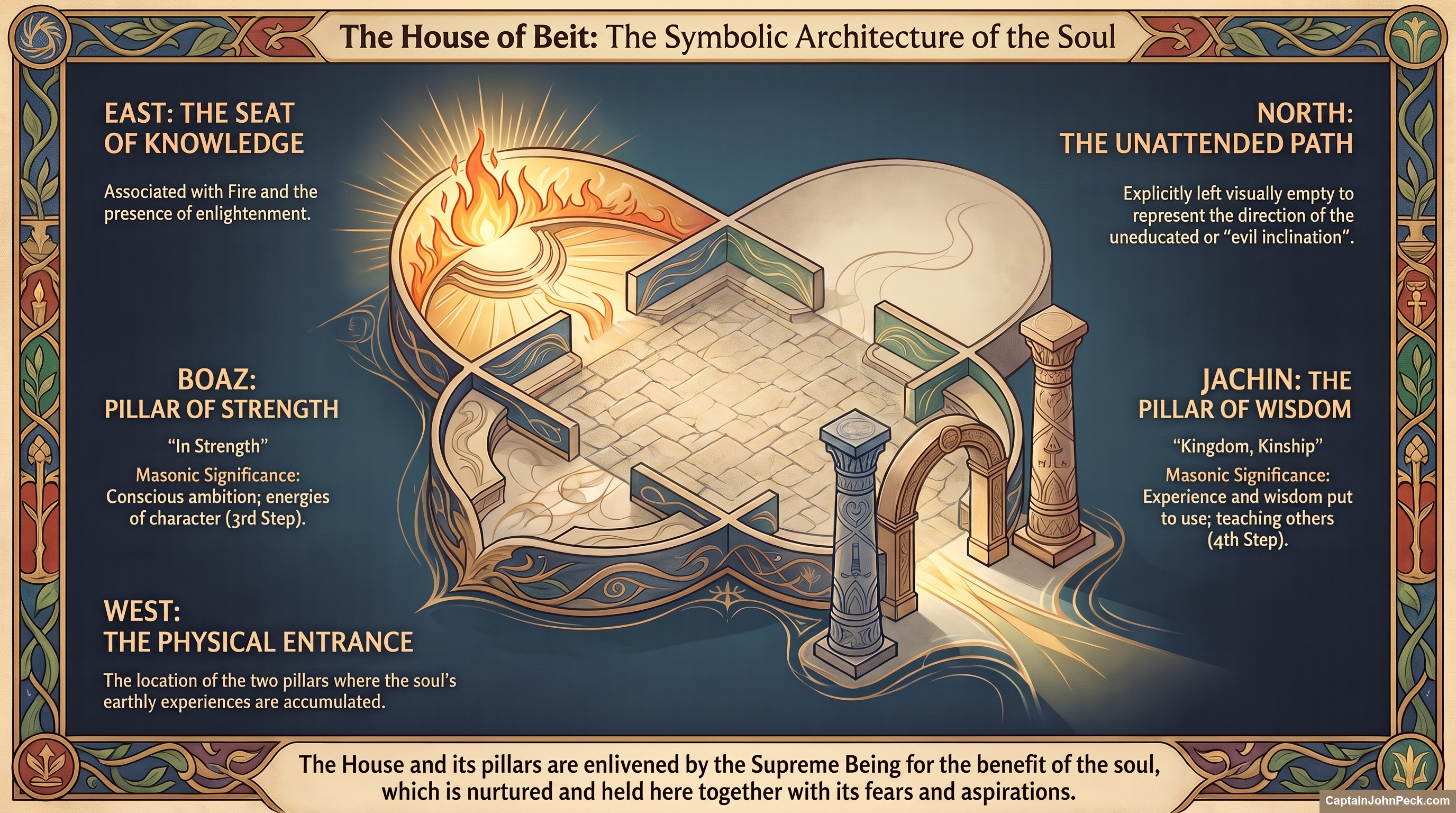
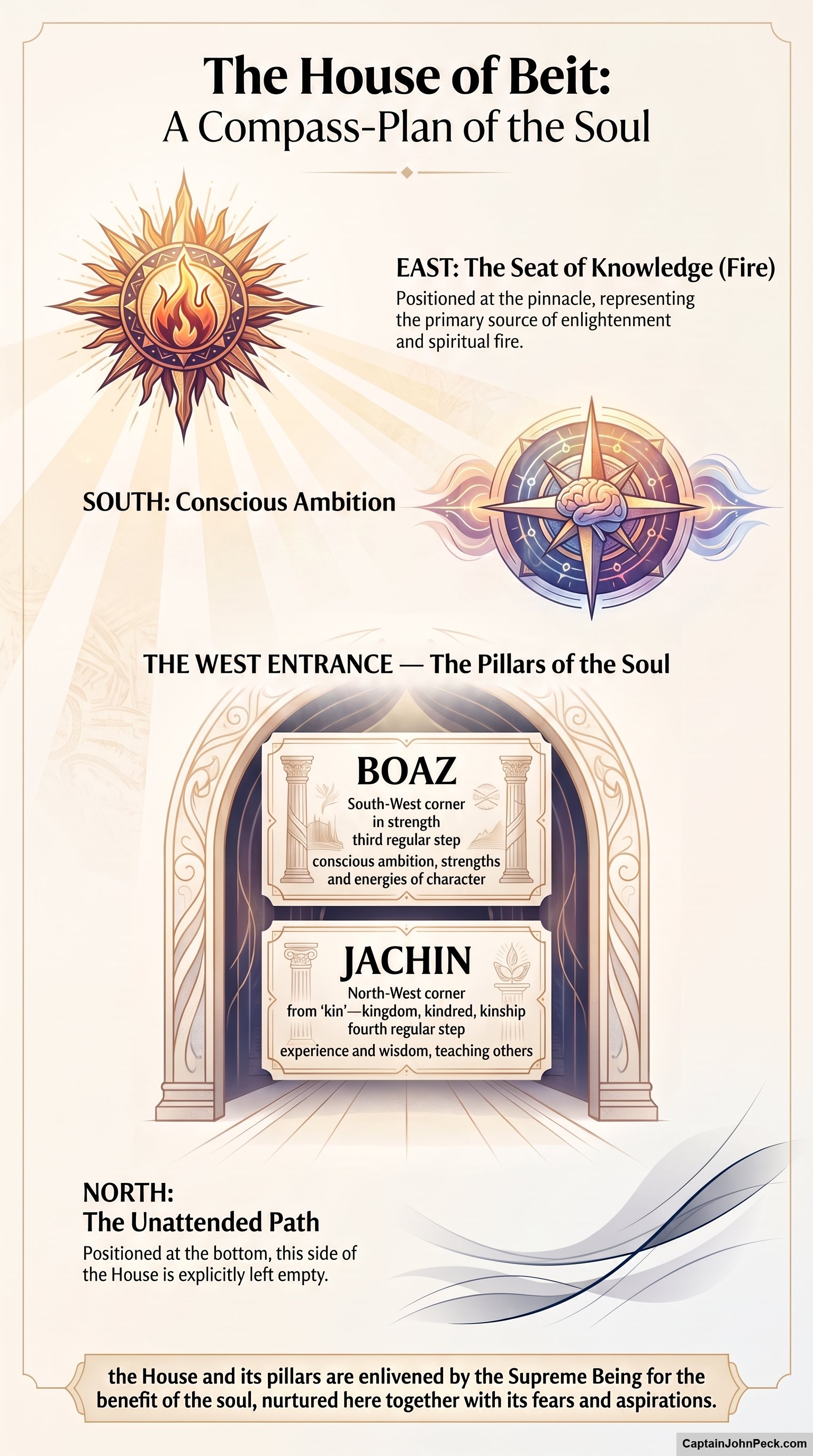
Radio Play 8: The Letter Beit — Fire, the House, and the Pillars Boaz and Jachin
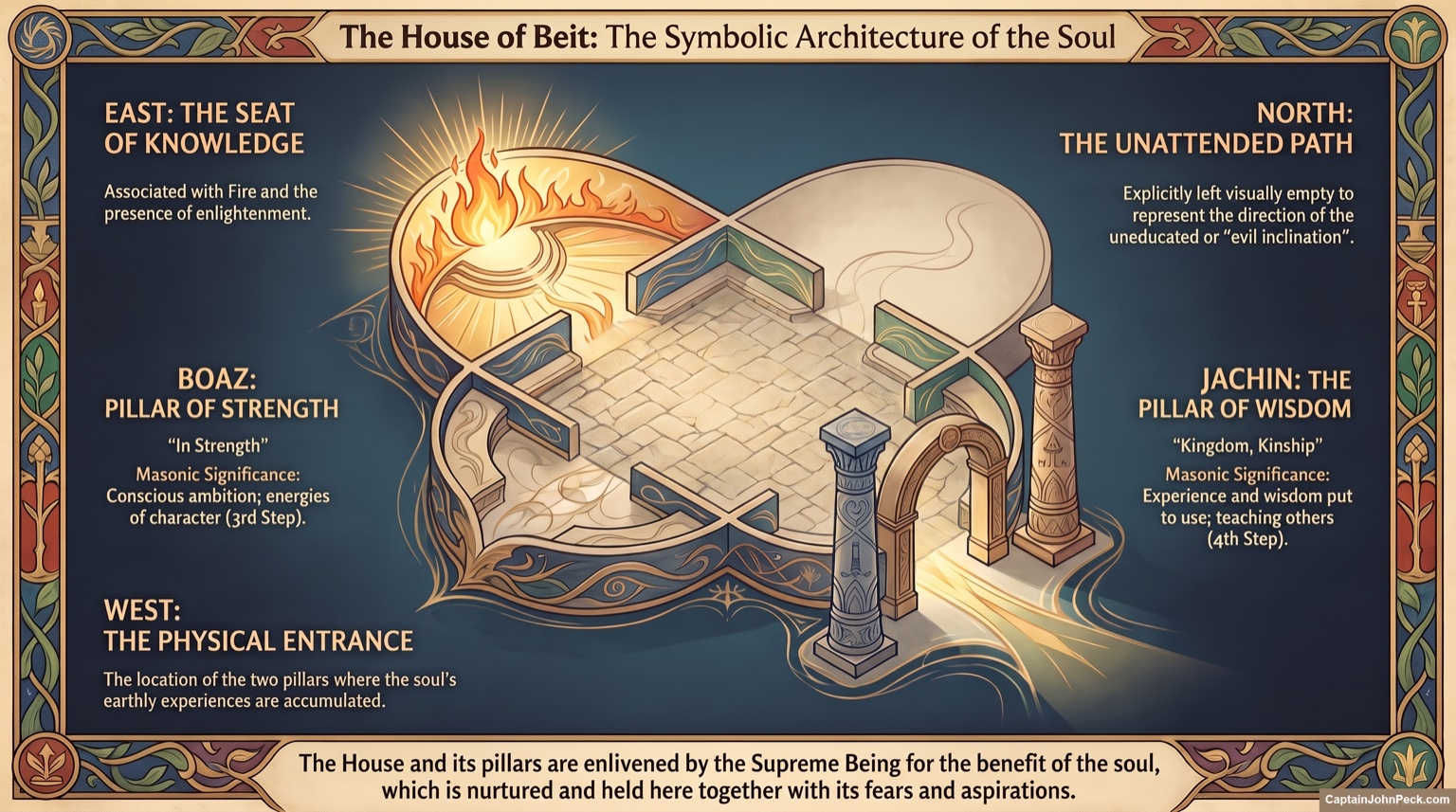
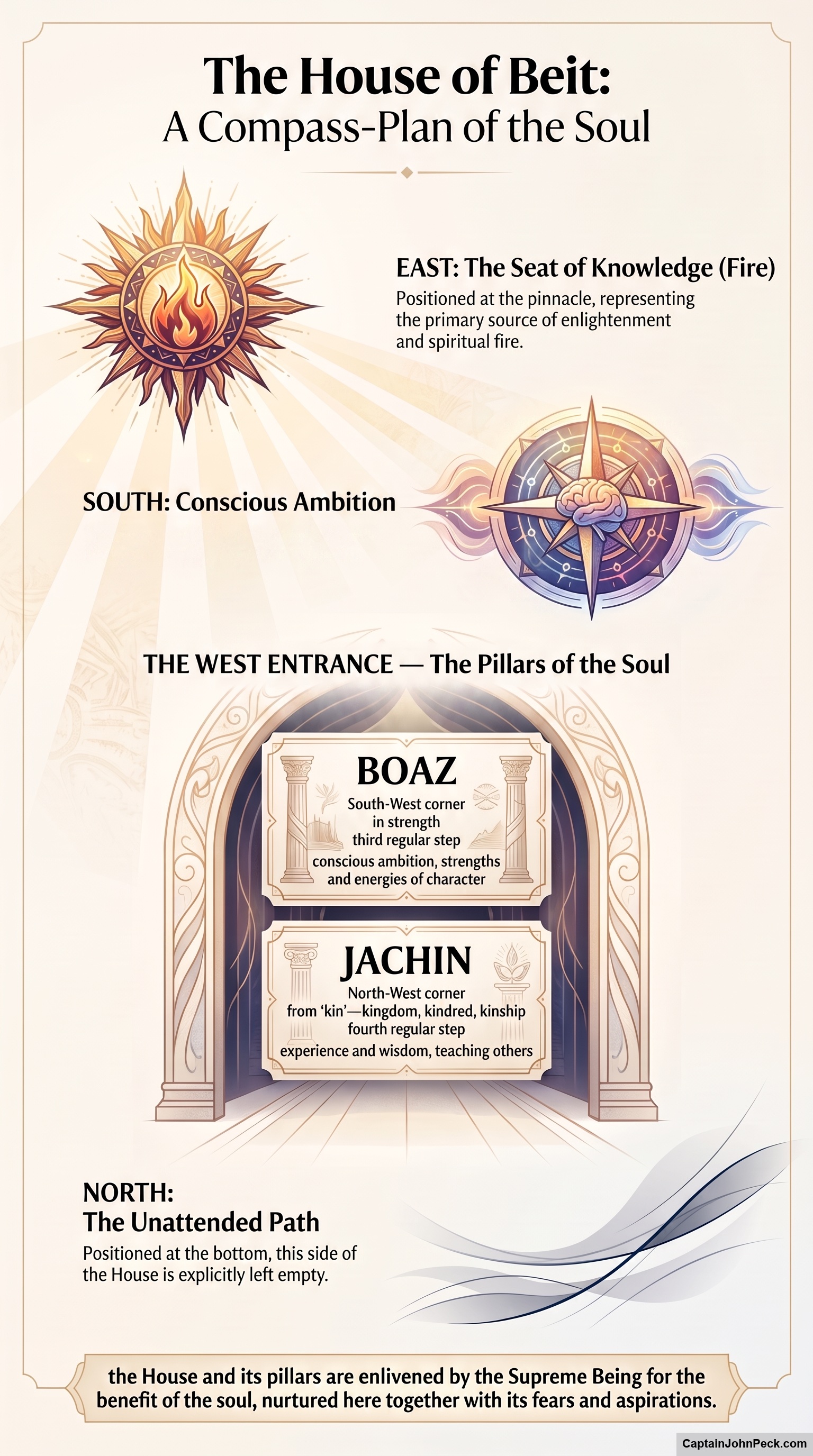
Focused on the Letter Beit as a house open only to the north, this episode explores Captain John Peck’s reading of the two pillars at the Chapter room’s western entrance — Boaz and Jachin — including an etymological detour into the word “Jachin” itself, drawn from The Royal Arch Chapter: The Hidden Ritual.
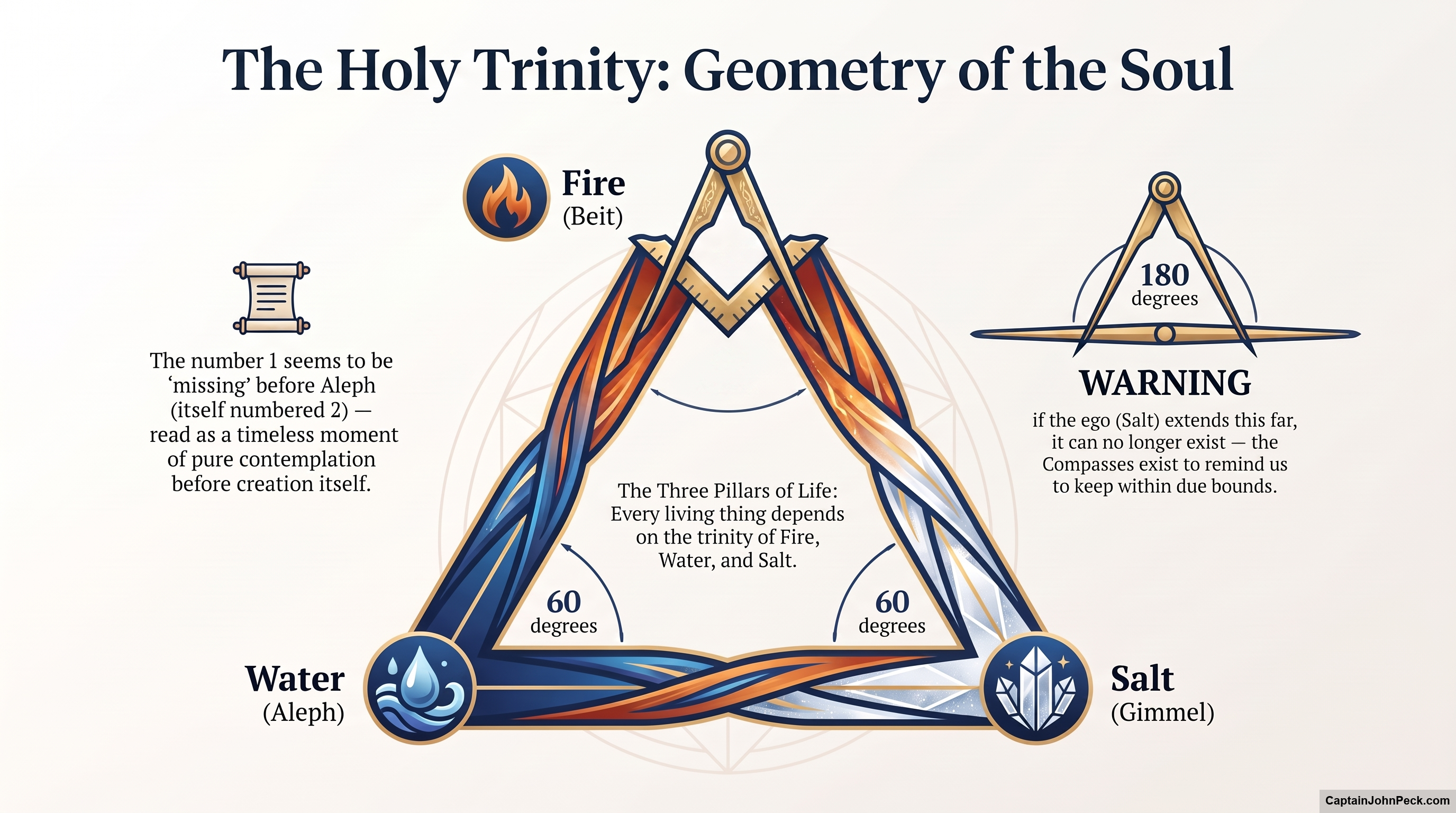
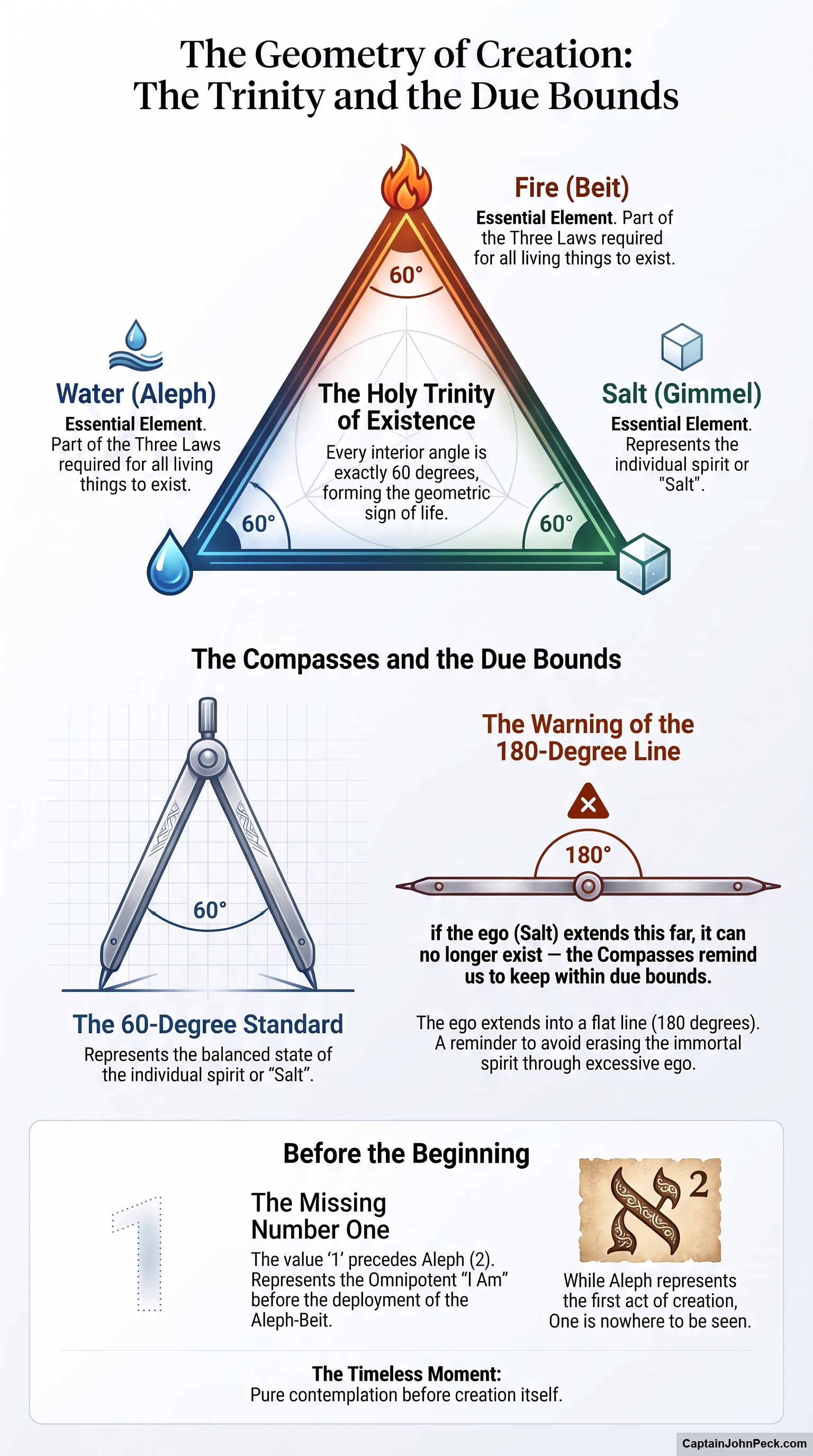
Radio Play 9: The Holy Trinity, Sacred Geometry, and the Compasses
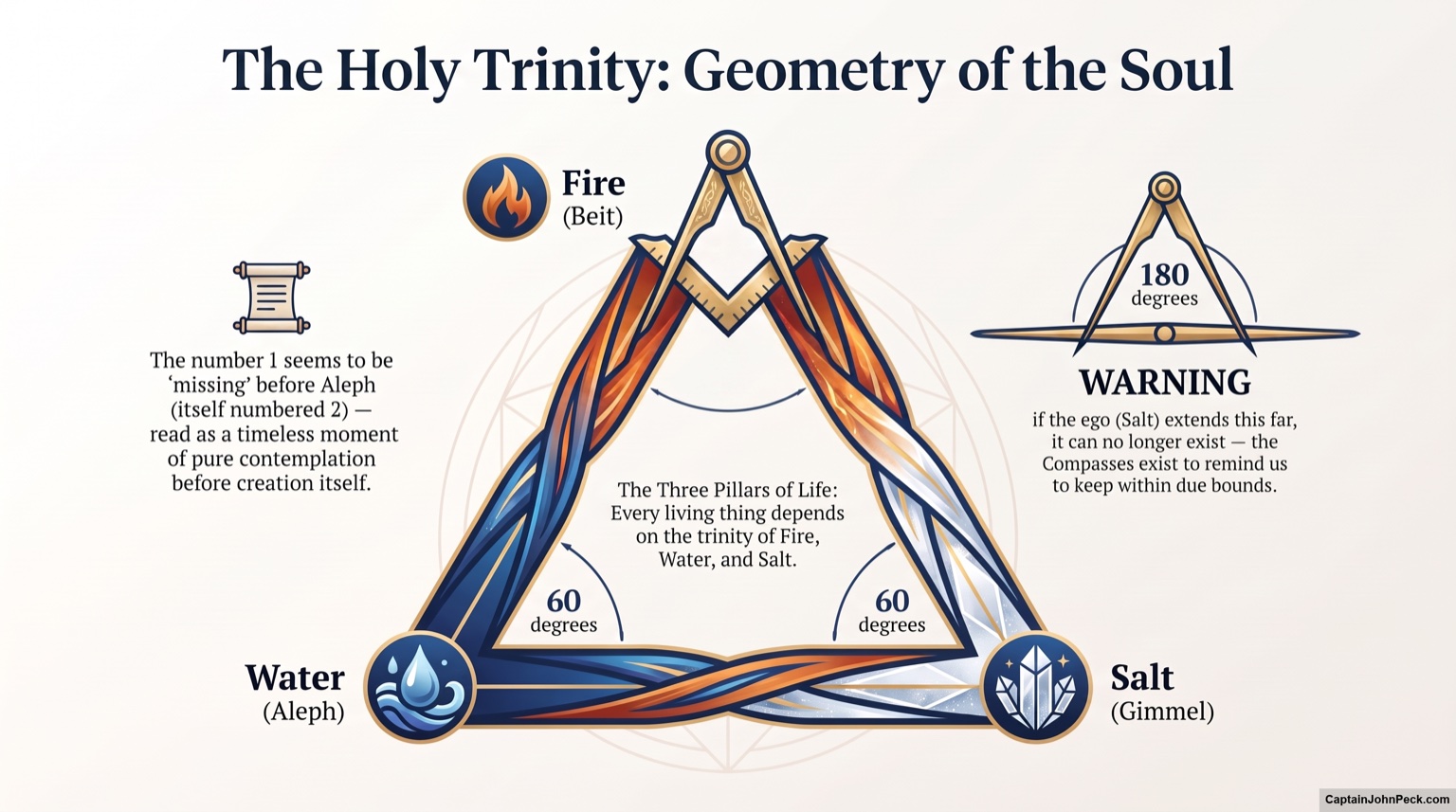
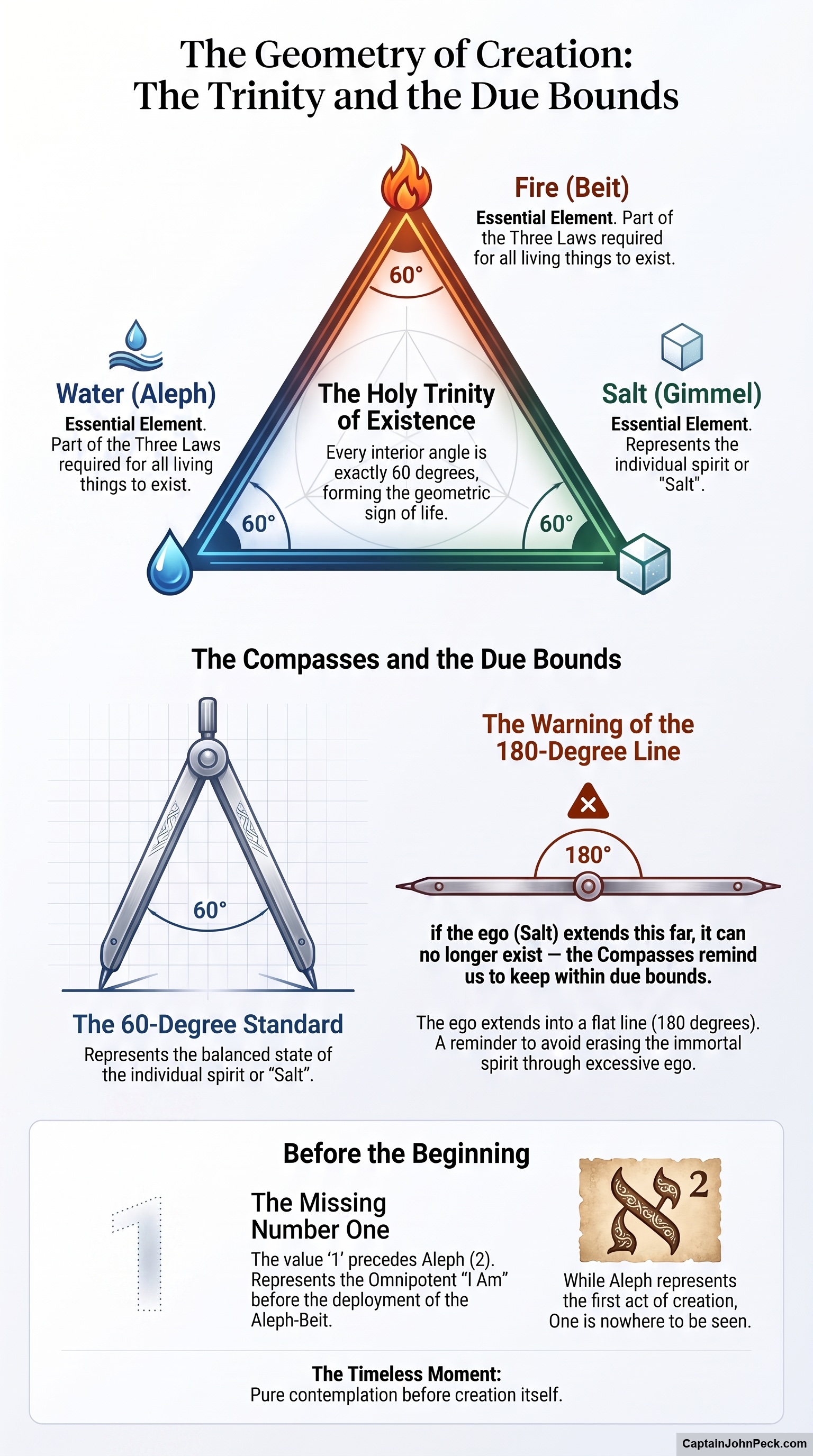
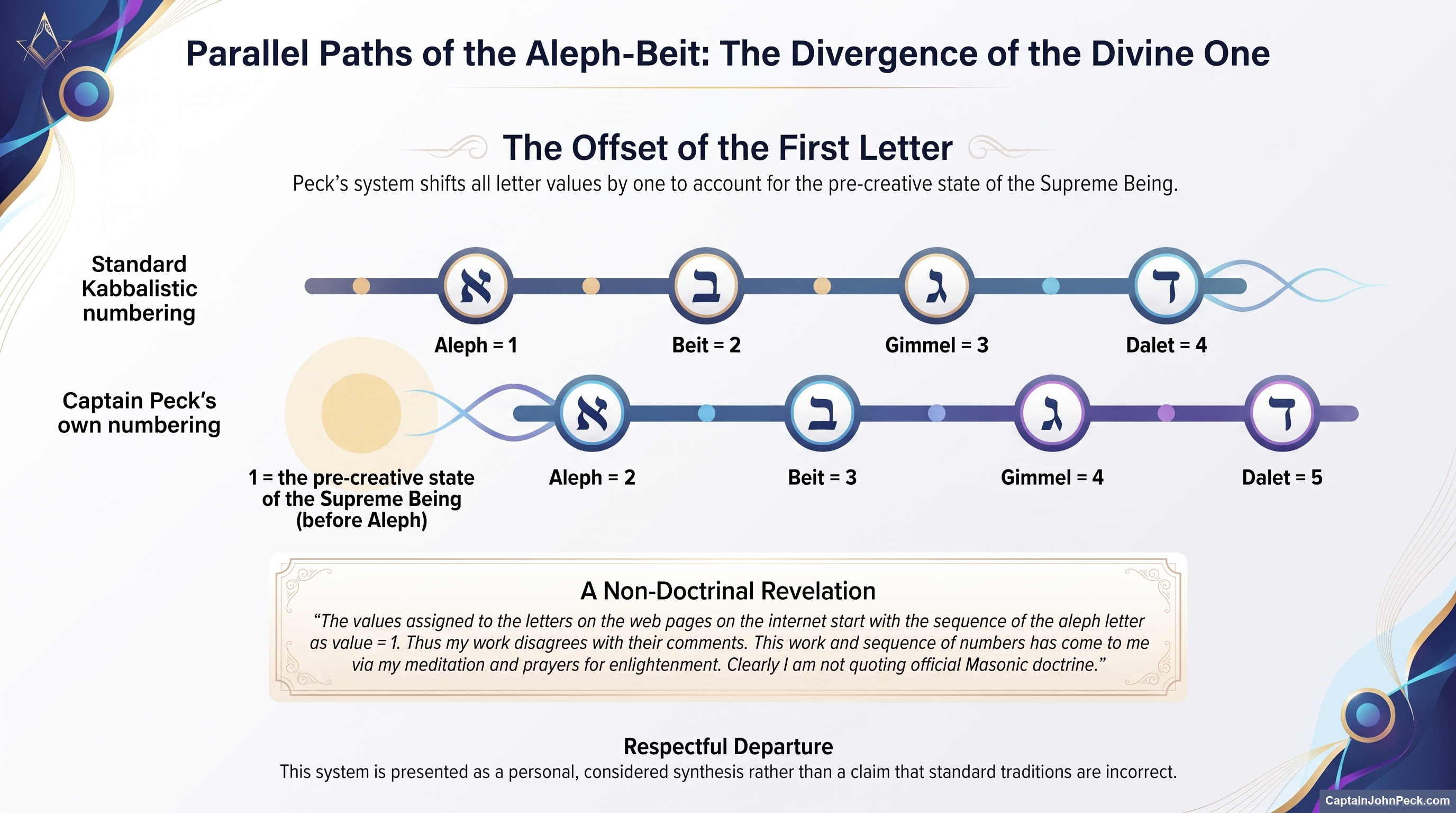
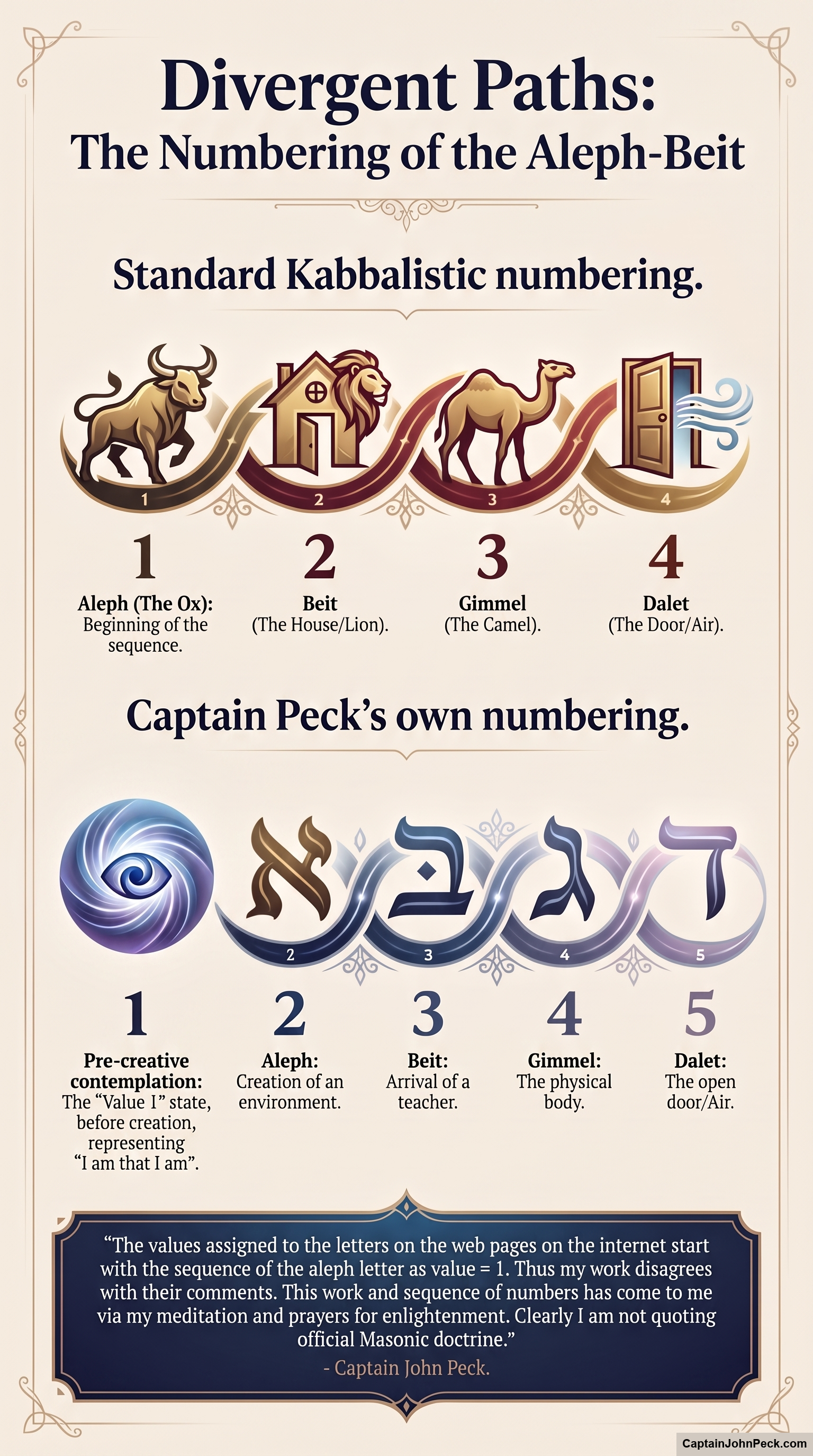
Fire, Water, and Salt — three elements Captain John Peck presents as a working Trinity in The Royal Arch Chapter: The Hidden Ritual. This episode follows the geometry he draws from them, his reading of the Compasses as a warning against unchecked ego, and a small numerological puzzle: why the number one seems to go missing before Aleph.
Radio Play 10: Haggai, Elshaddai, and the Destroyer of Suns
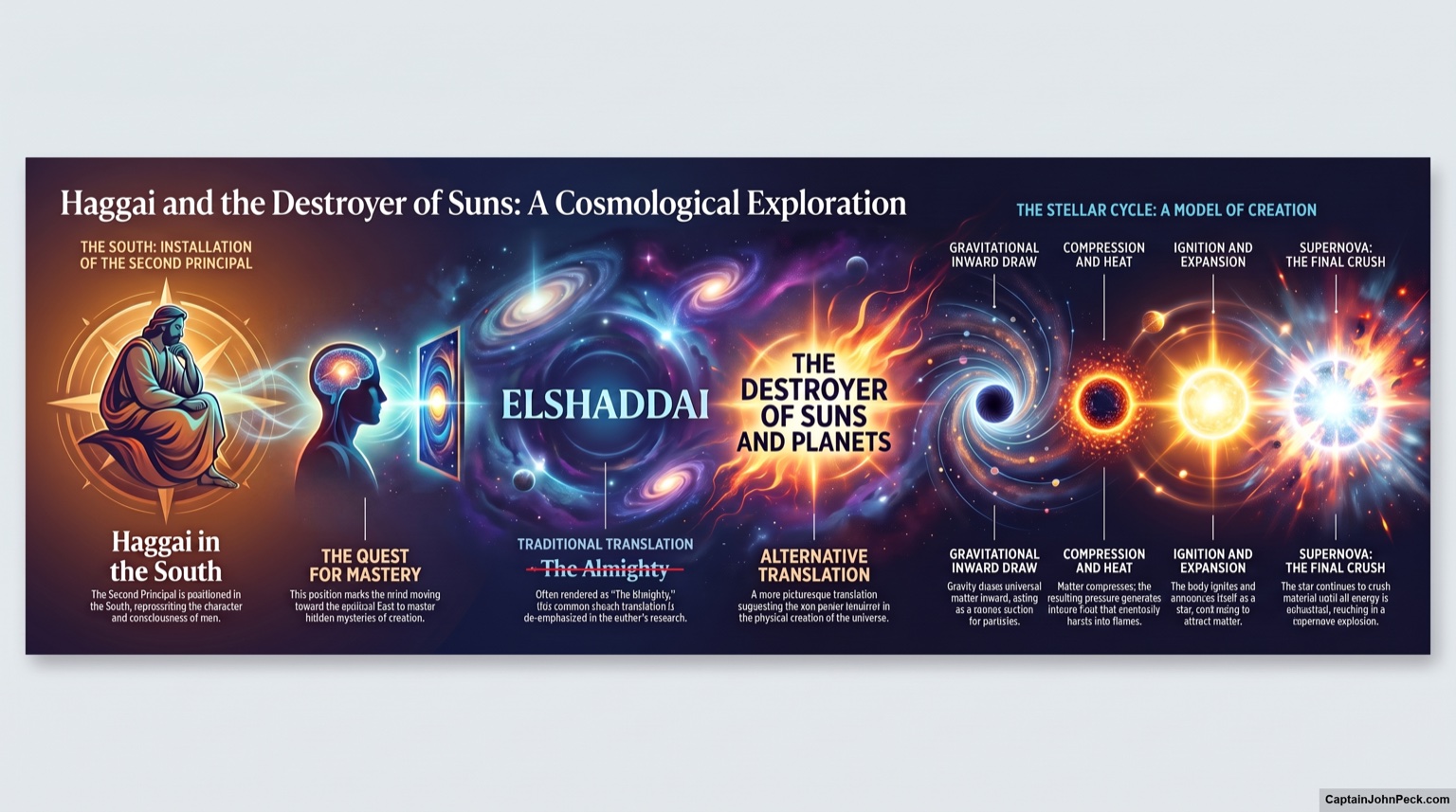
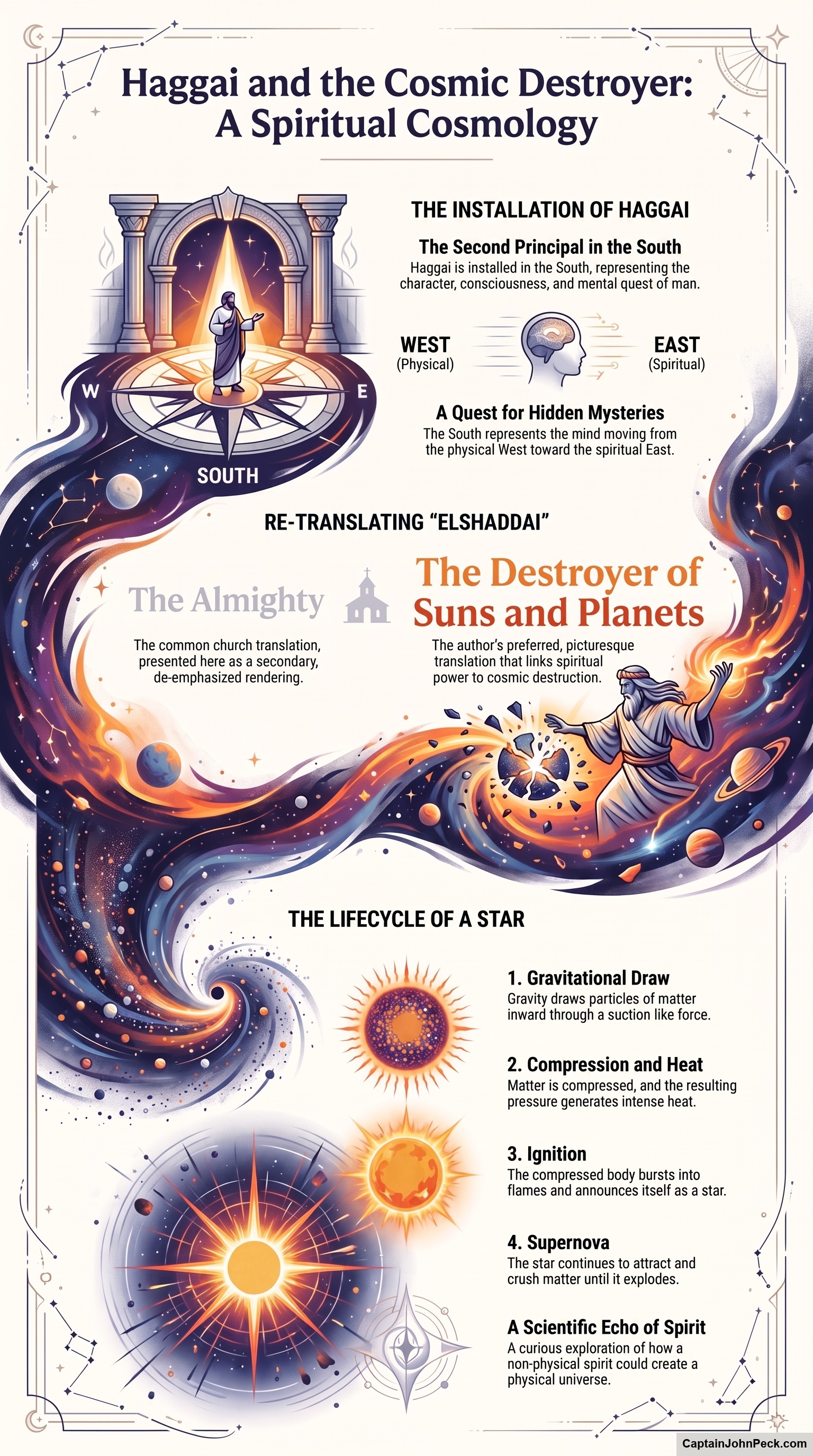
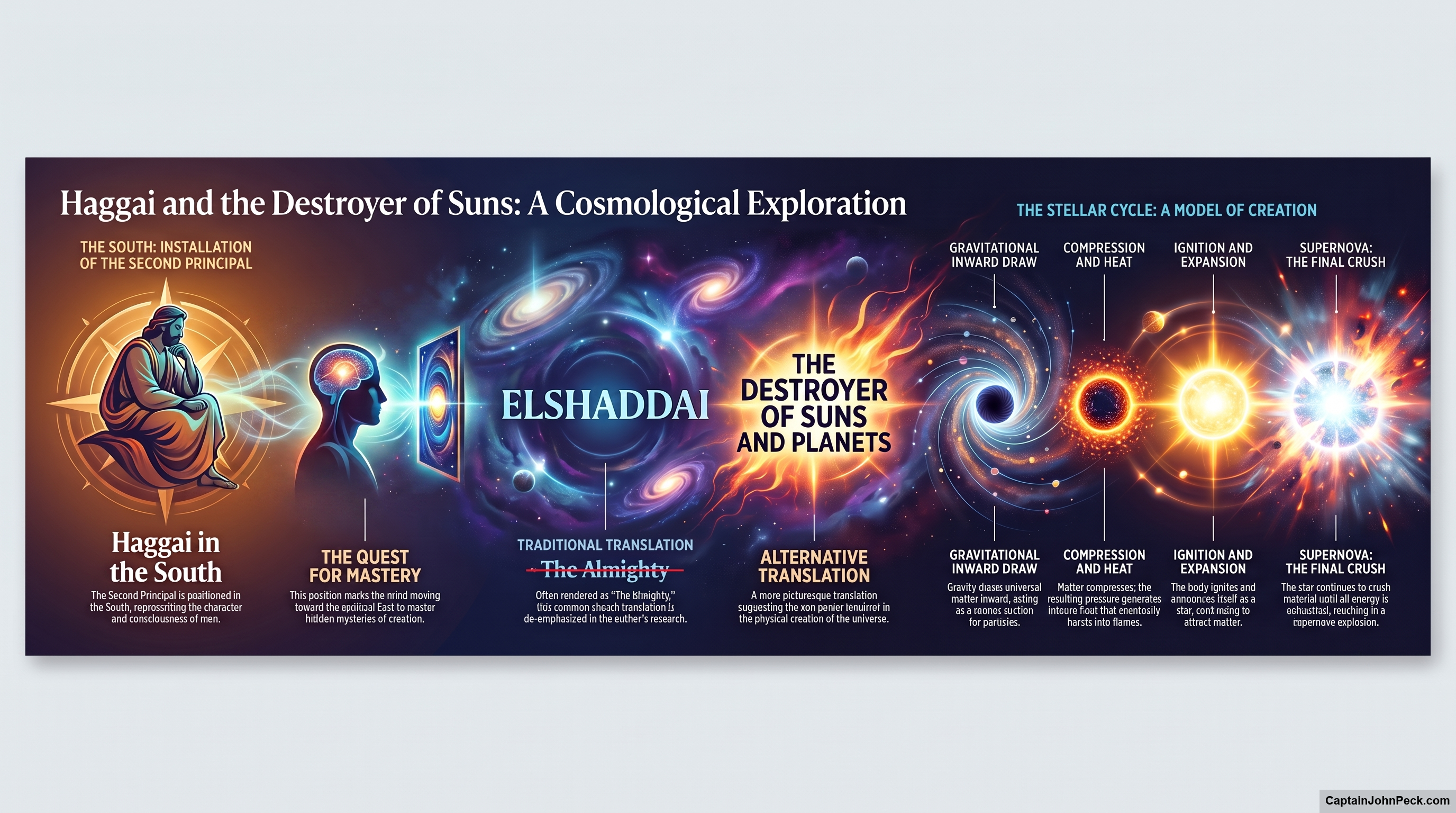
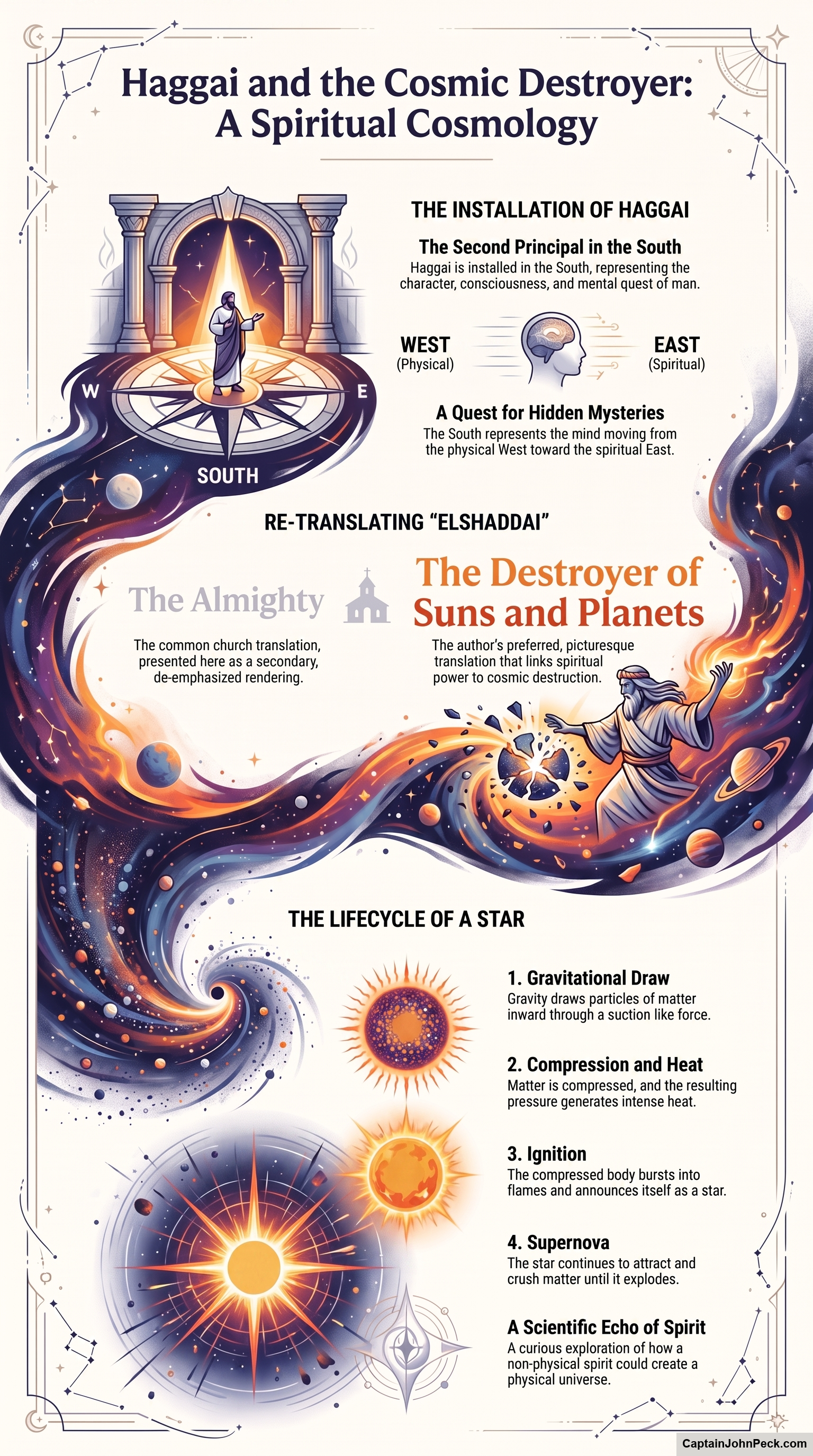
The installation of the Second Principal, Haggai, is the starting point for one of the more striking claims in The Royal Arch Chapter: The Hidden Ritual — an alternative reading of the word Elshaddai as “the destroyer of suns and planets.” This episode follows Captain John Peck’s own attempt to root that image in the physics of how stars are born.
Radio Play 11: Gold, Supernovae, and the Immortal Soul
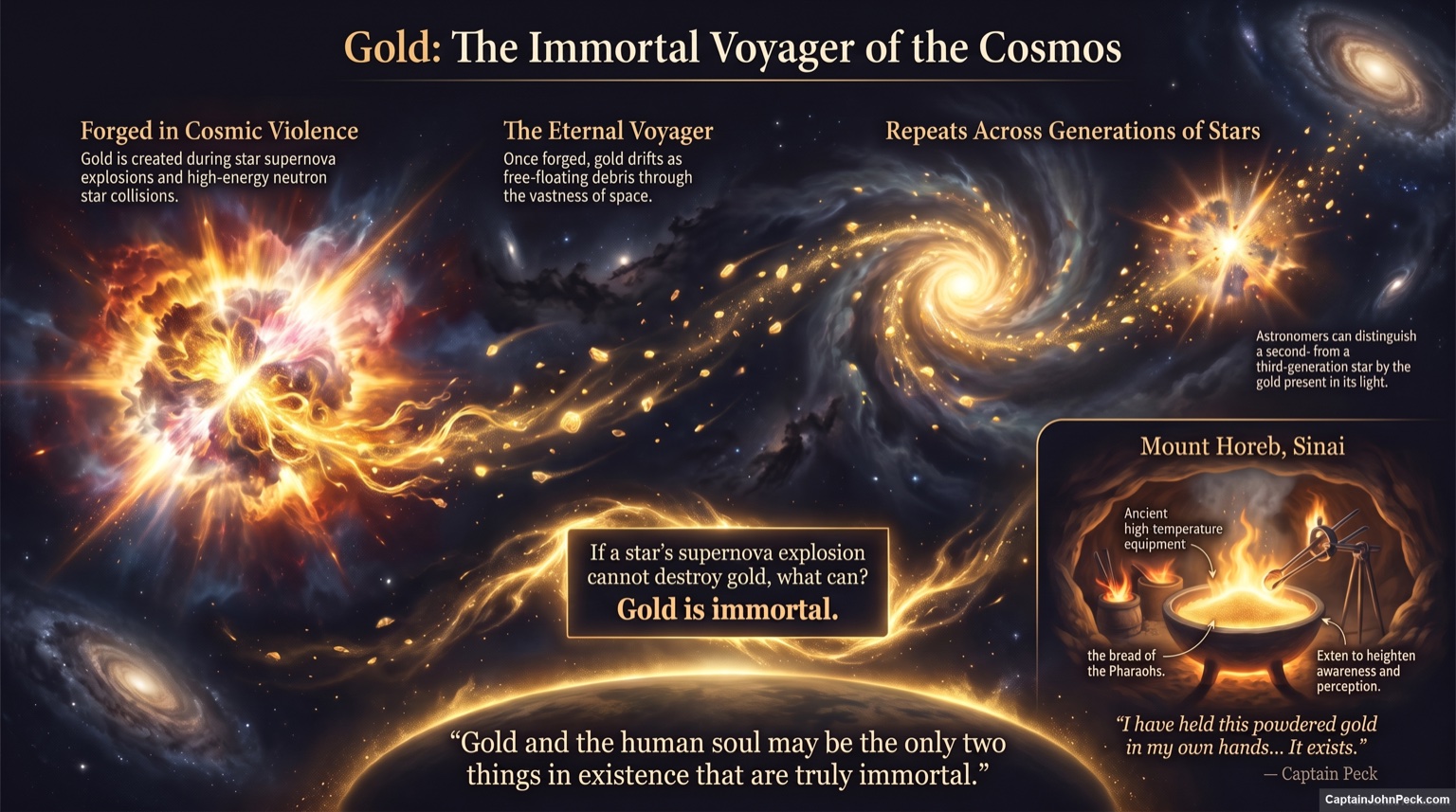
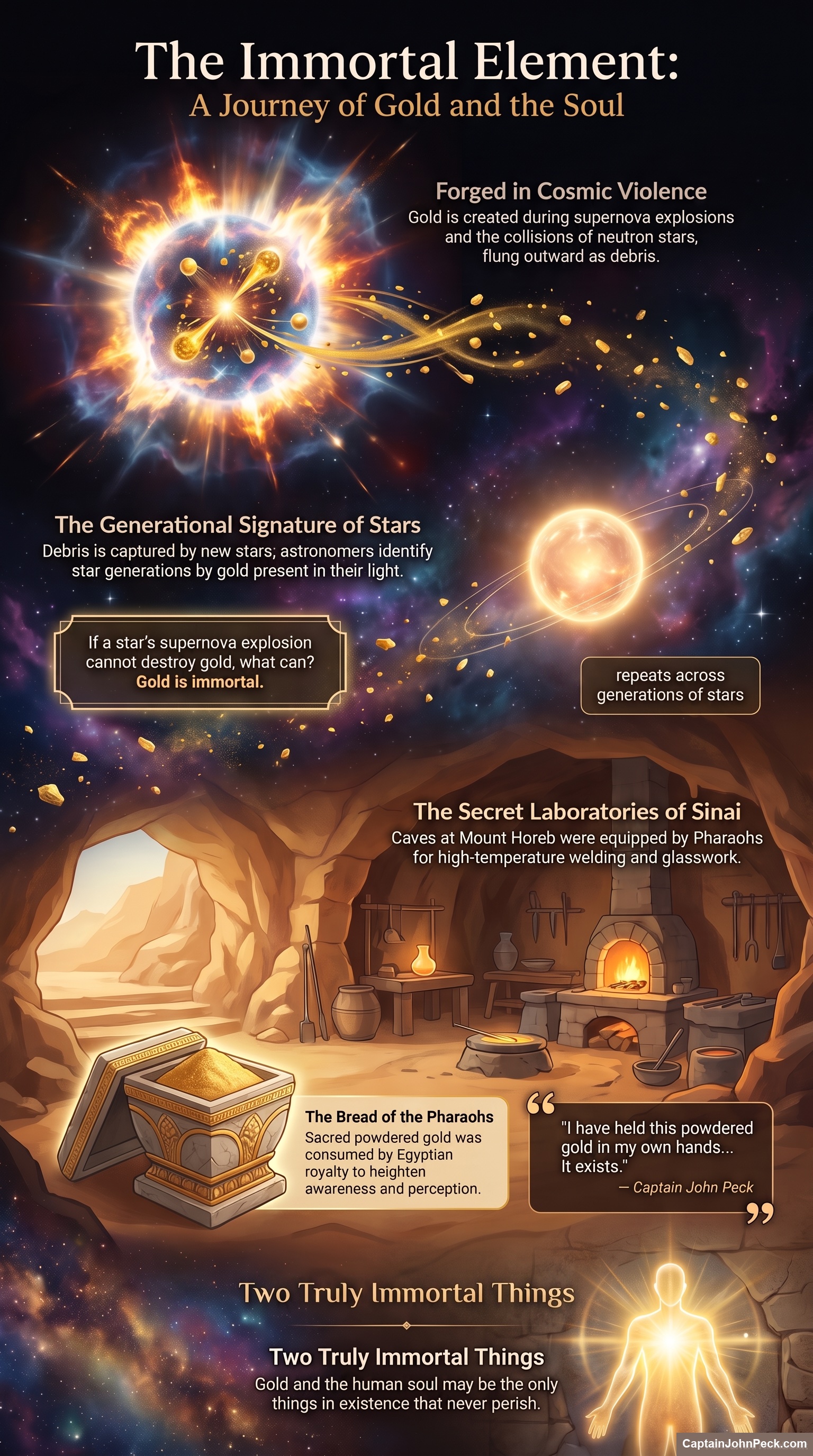
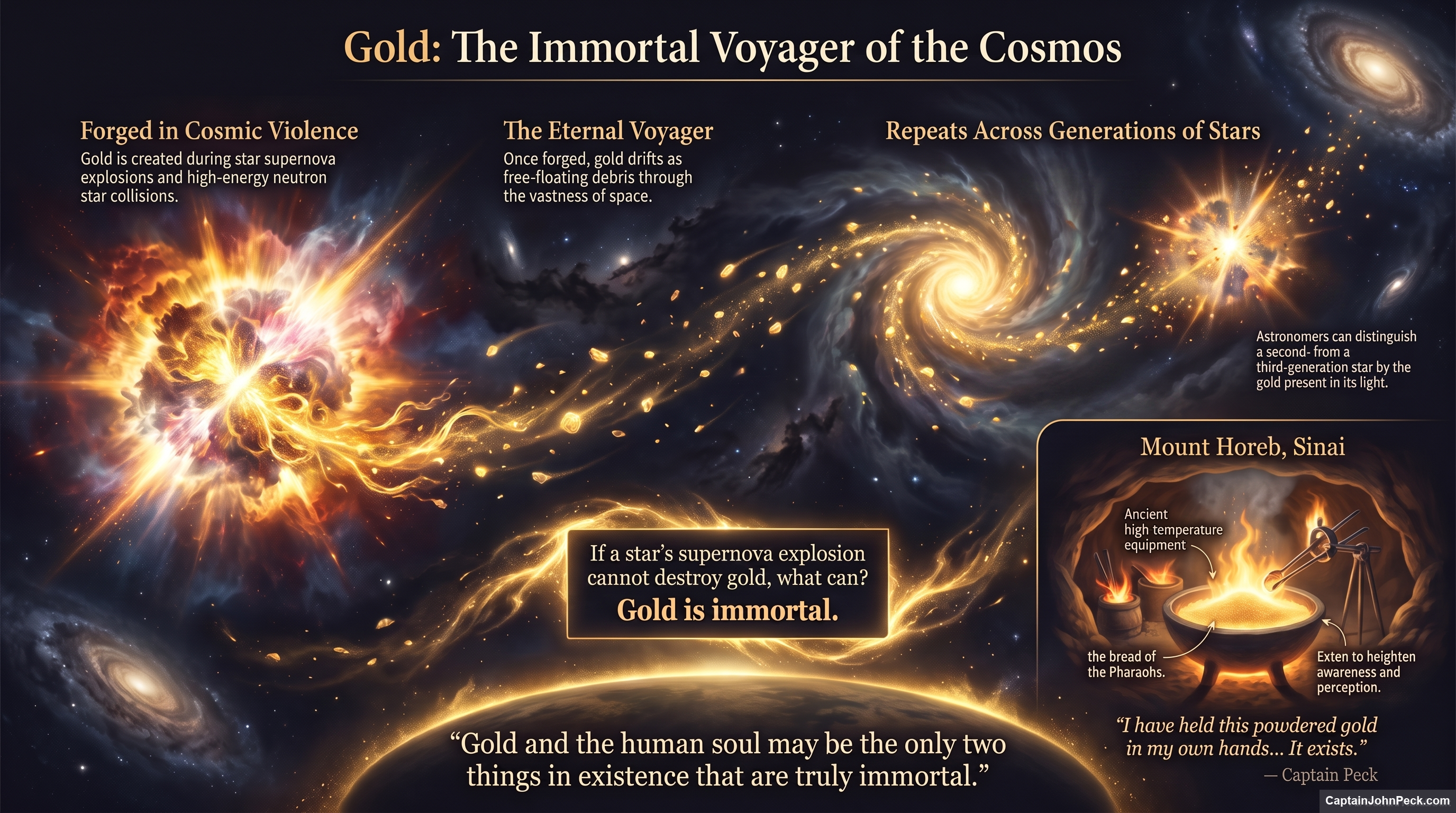
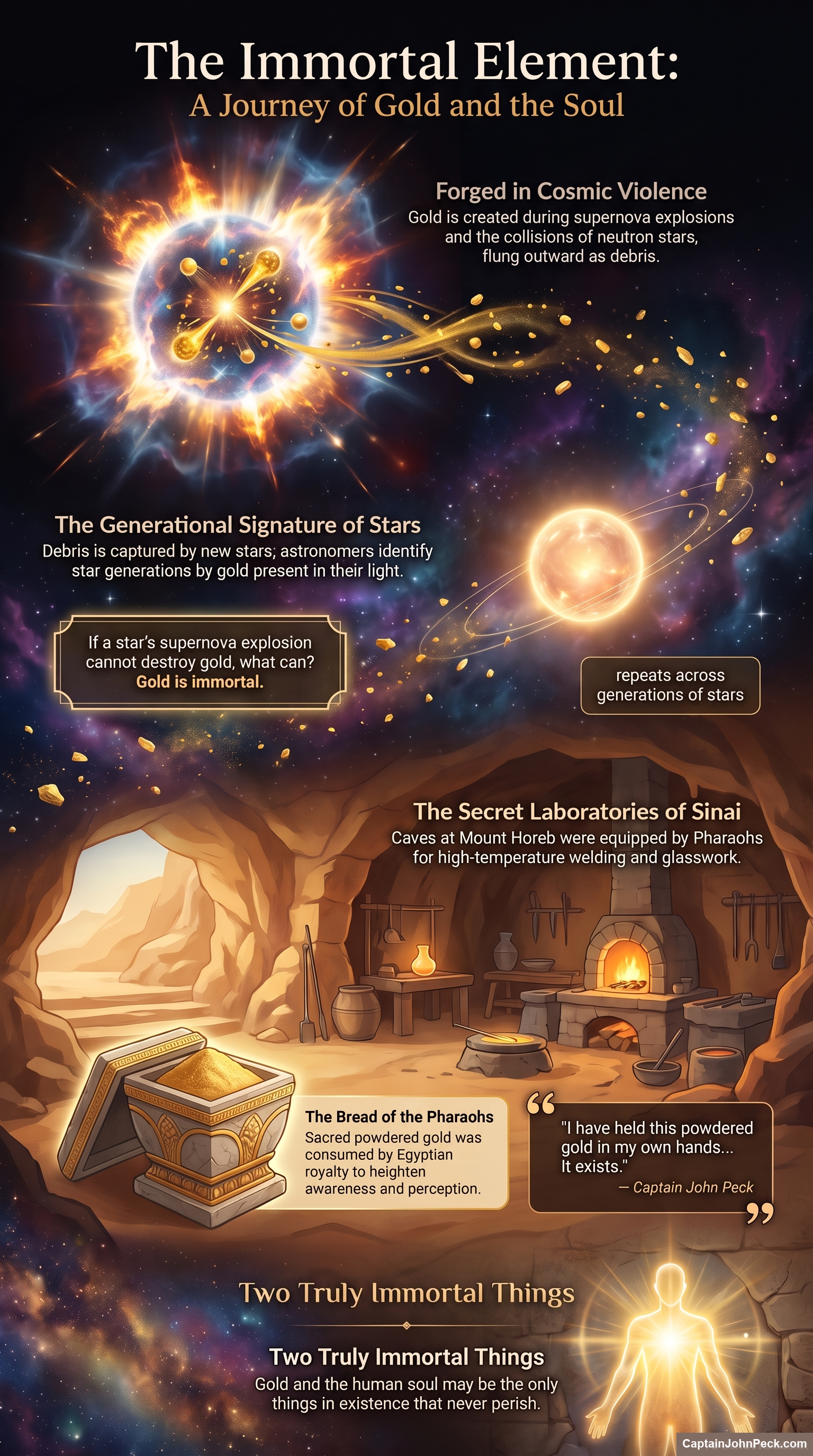
A deeply personal episode: Captain John Peck’s own account of holding sacred powdered gold once associated with the Pharaohs, set alongside the science of how gold is forged in supernovae. From The Royal Arch Chapter: The Hidden Ritual, this episode traces his conclusion that gold and the human soul may be the only two things in existence that are truly immortal.
Radio Play 12: Joshua, Gimmel, and the Gift of a Physical Body
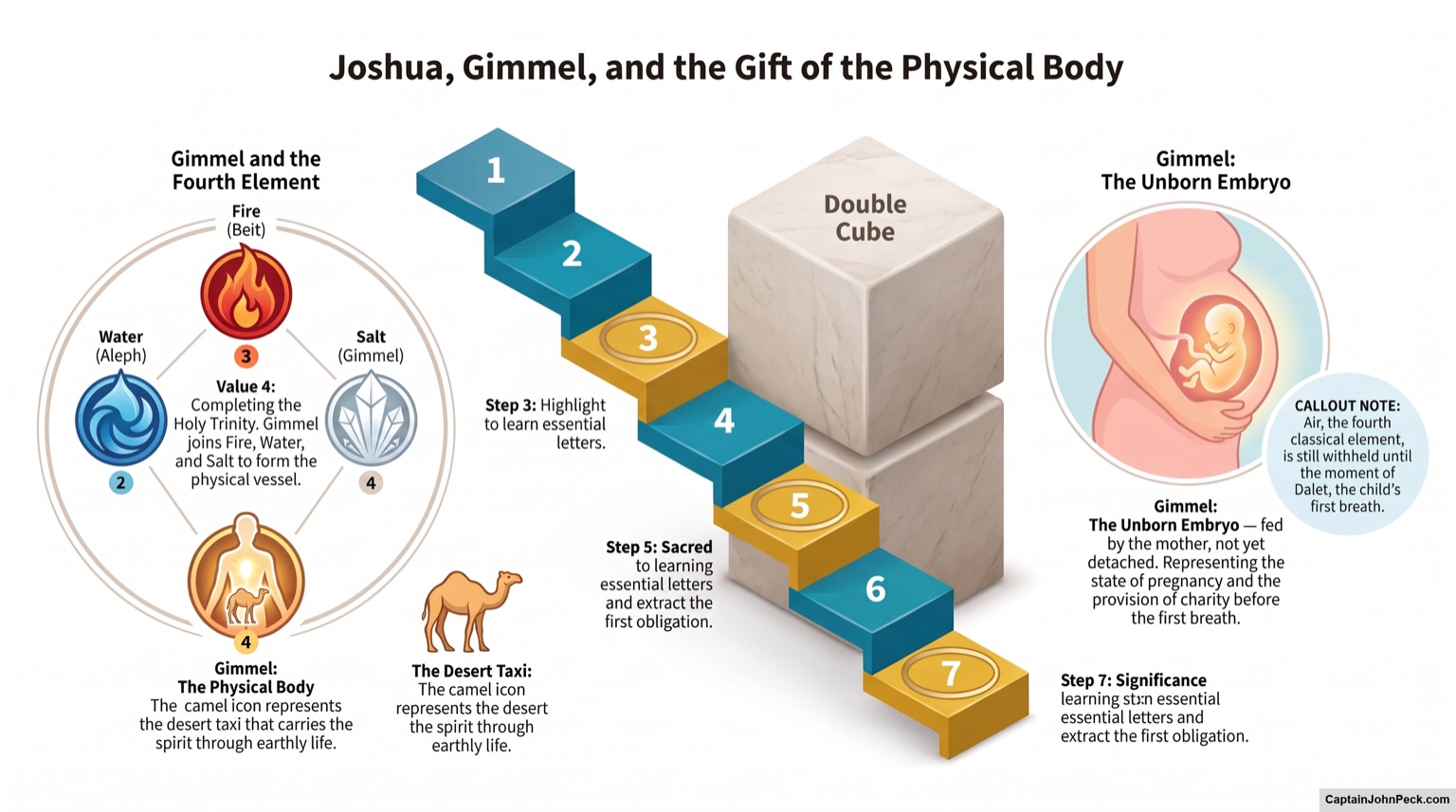
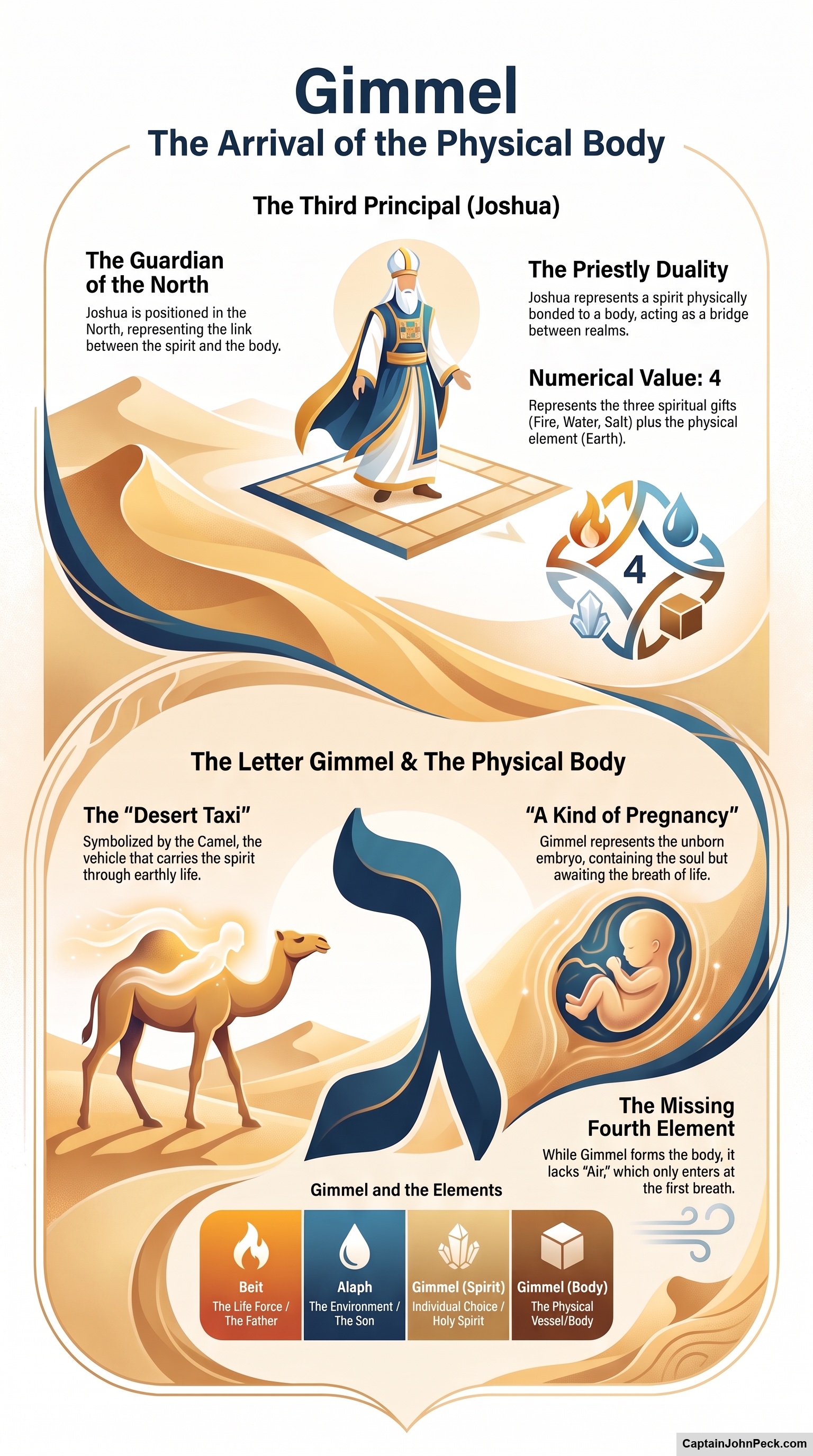
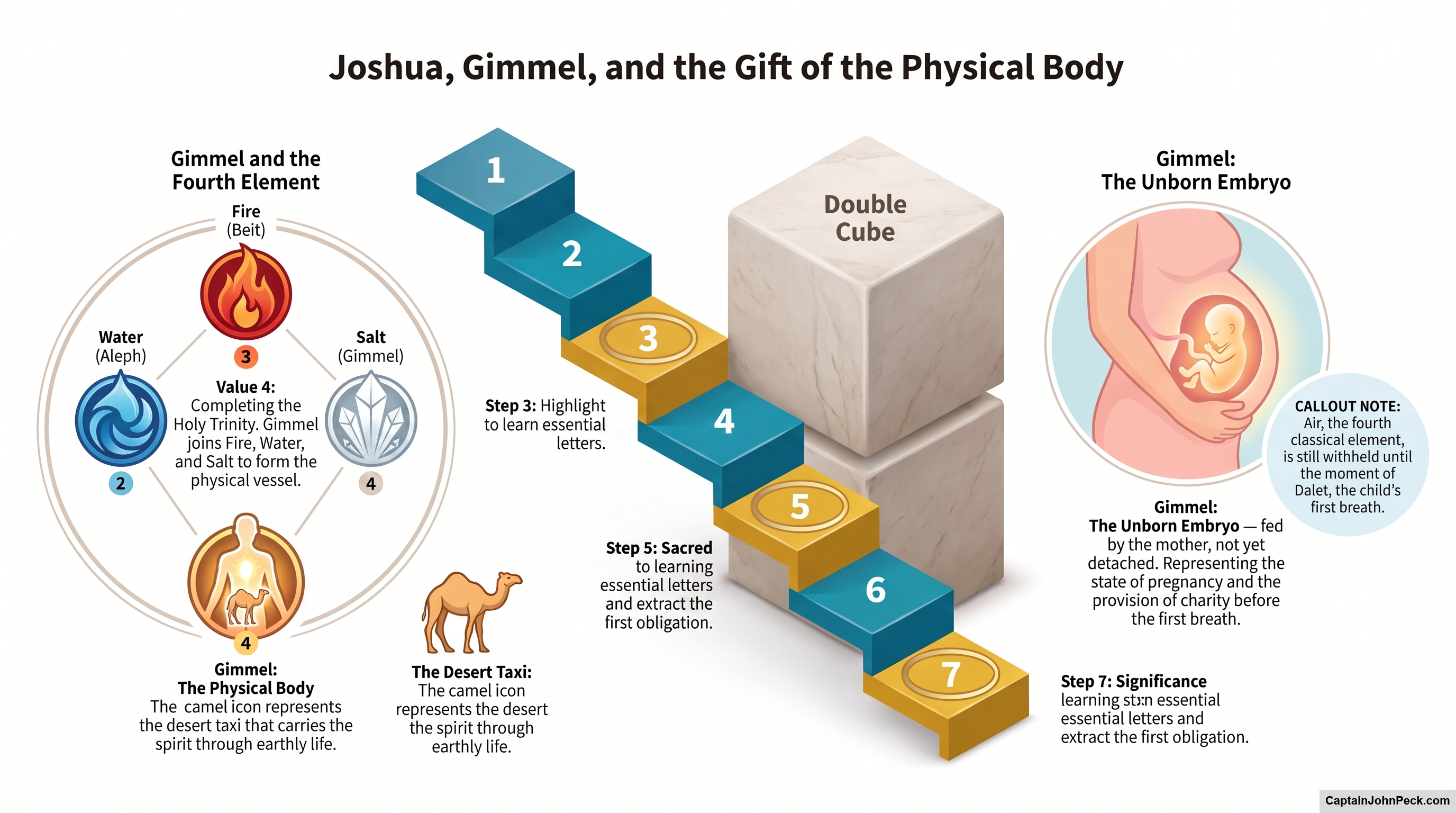
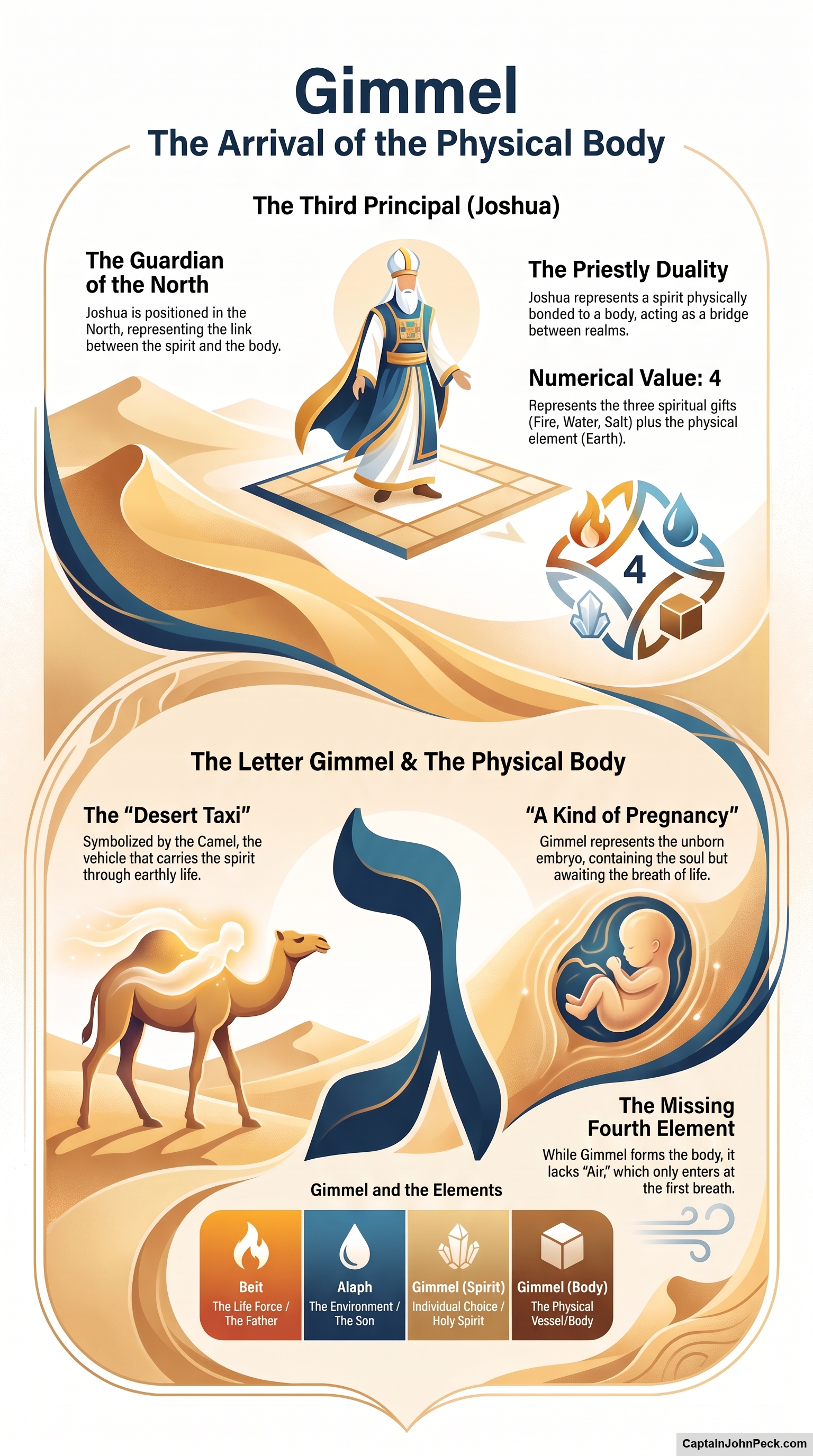
Following the installation of the Third Principal, Joshua, this episode turns to Captain John Peck’s reading of the letter Gimmel — the arrival of the physical body itself — in The Royal Arch Chapter: The Hidden Ritual, including his description of Gimmel as a kind of pregnancy, still waiting on the breath of life to come.
Radio Play 13: Dalet — Charity, the Open Door, and the Name Israel
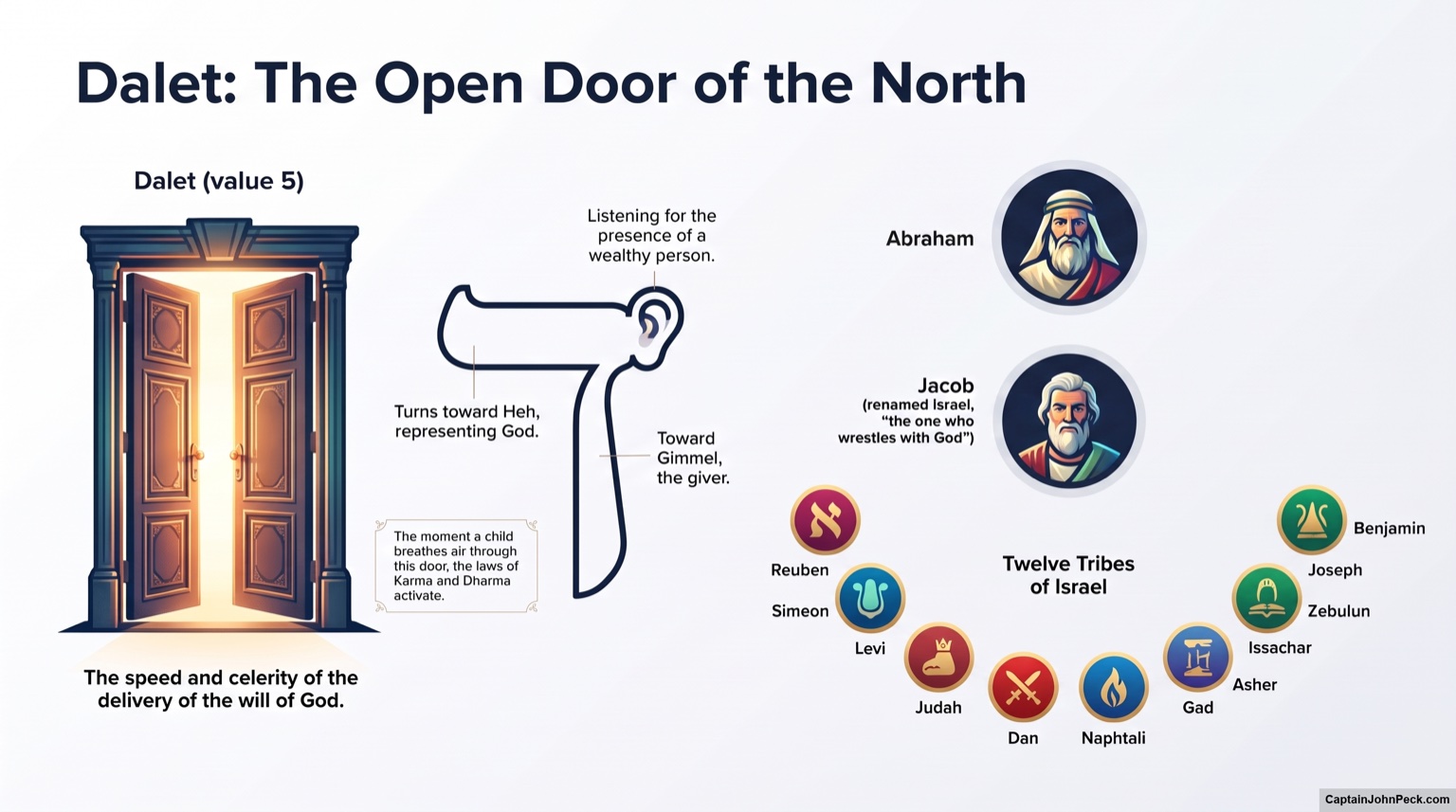
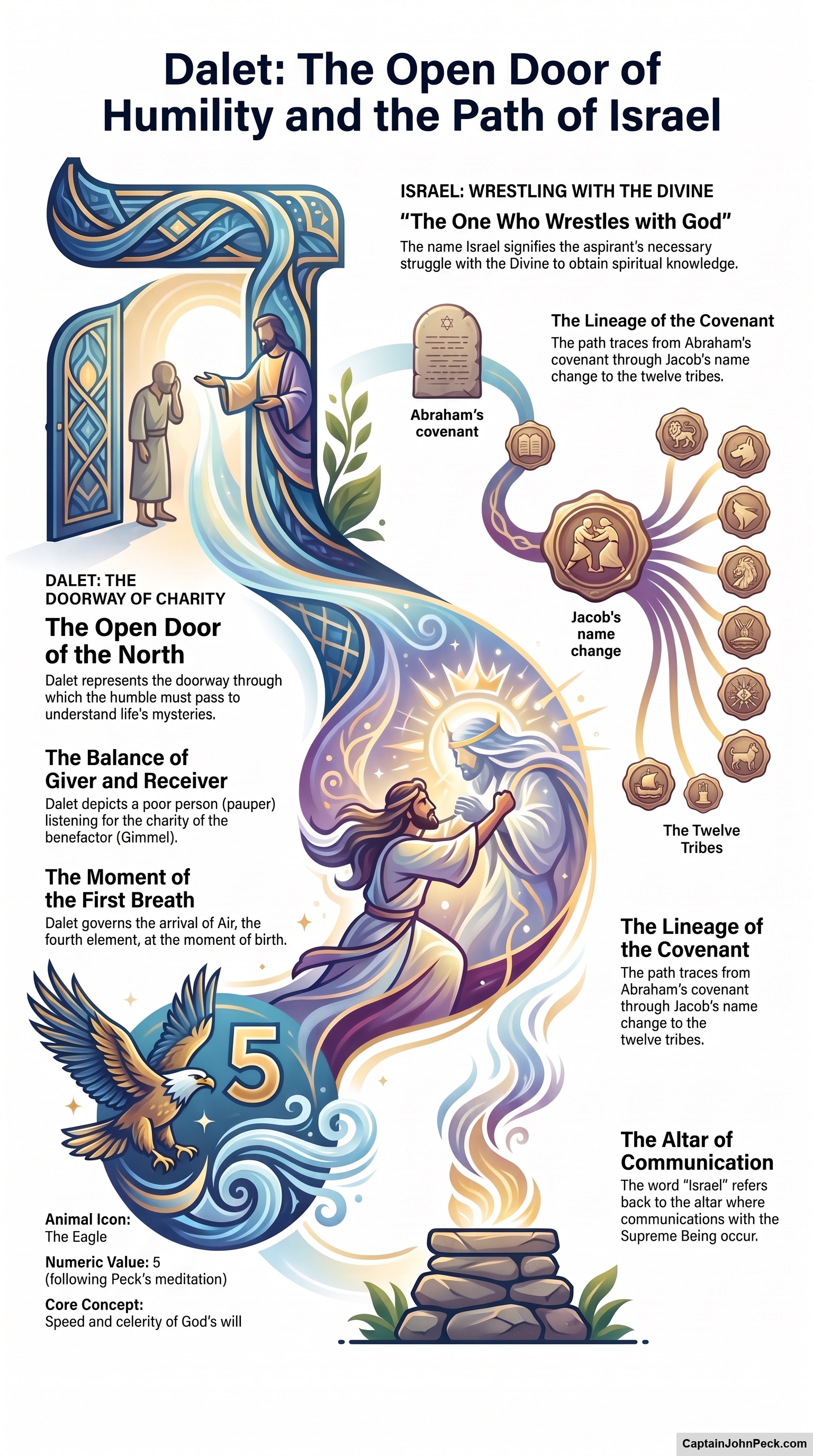
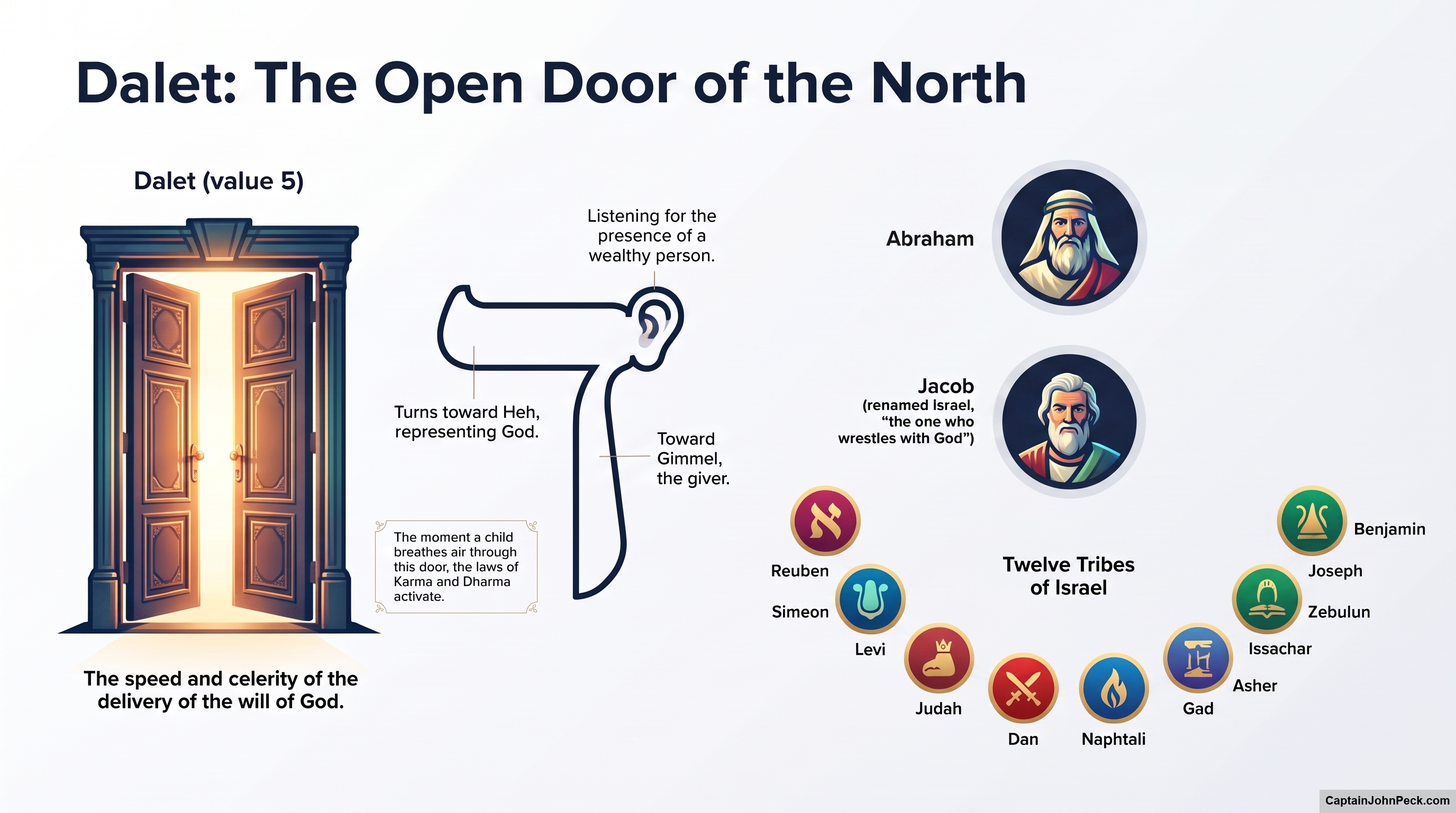
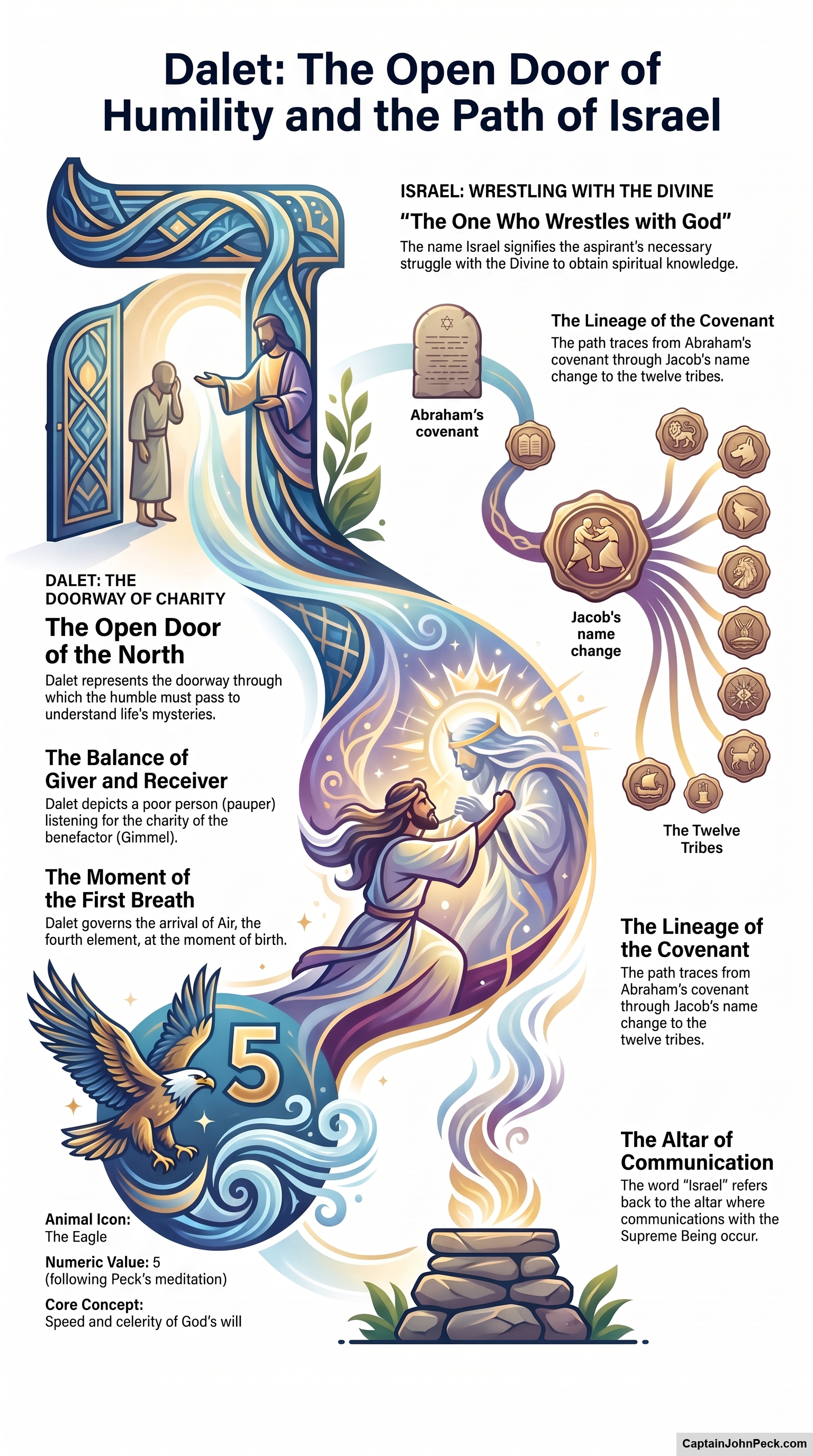
This episode follows Captain John Peck’s reading of Dalet as “the open door,” representing charity and humility, and his exploration in The Royal Arch Chapter: The Hidden Ritual of what the name Israel itself is said to mean — tracing a line from Abraham through to Jacob and the twelve tribes.
Radio Play 14: The Six Candles, Heh, and the Tension of 666
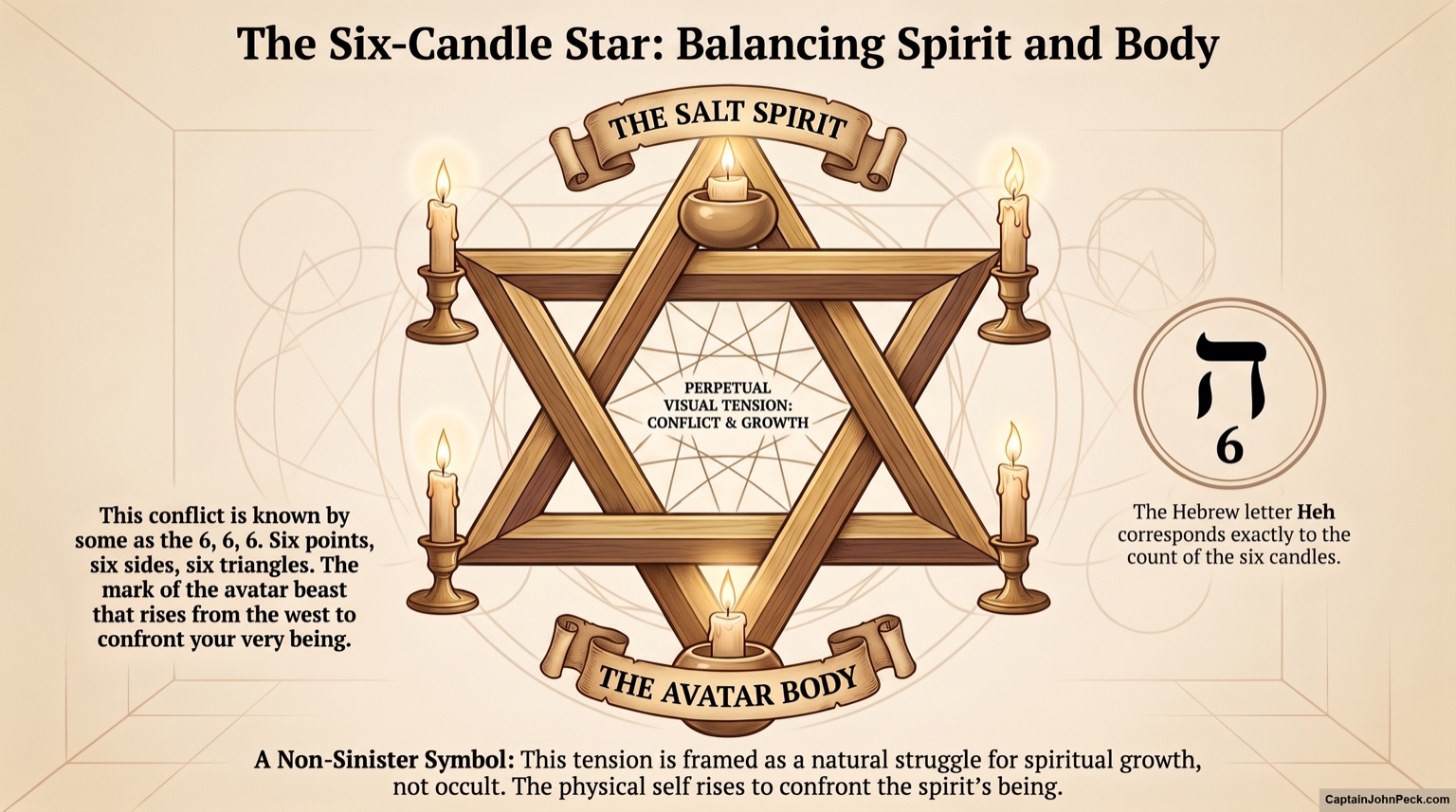
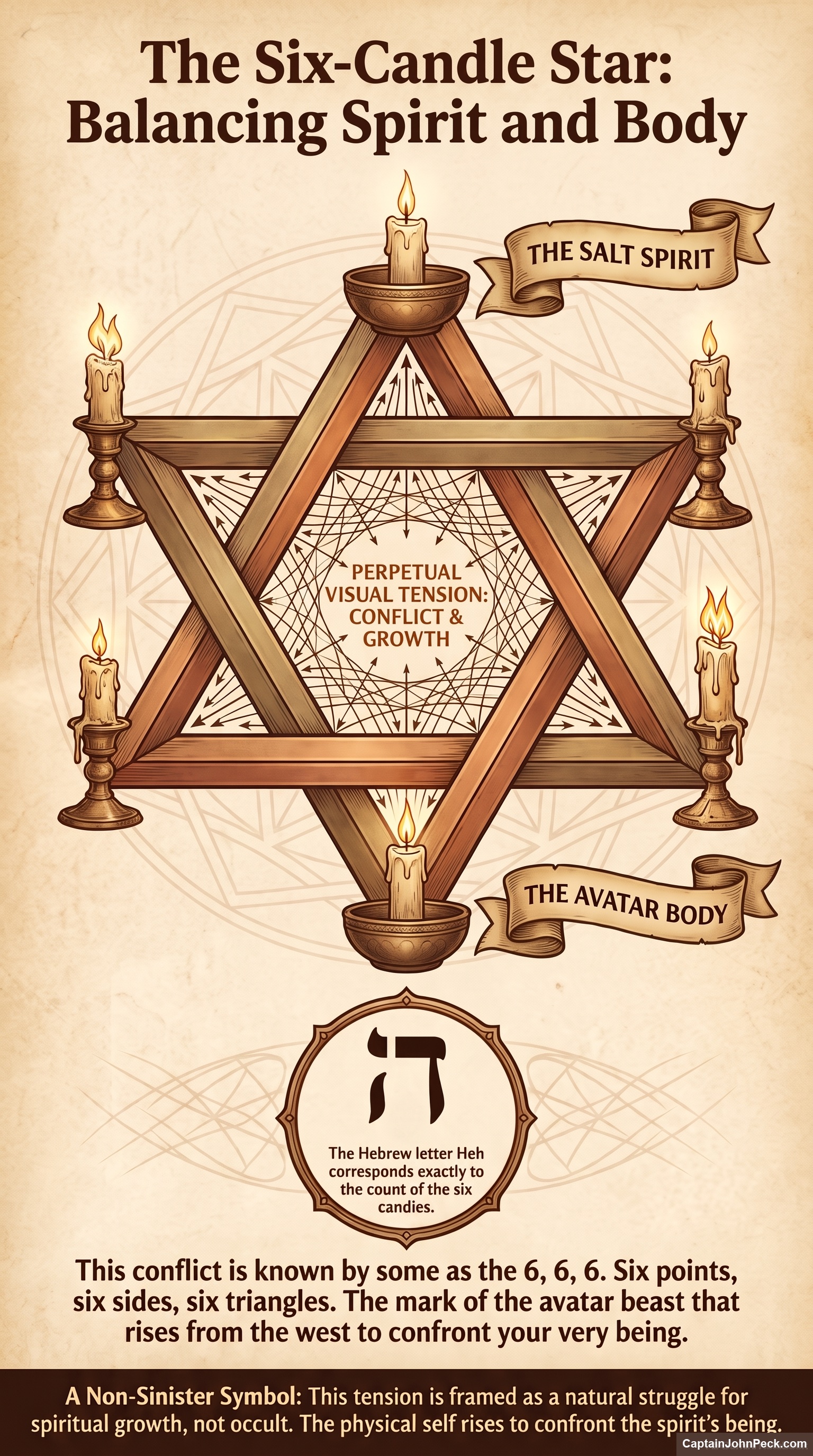
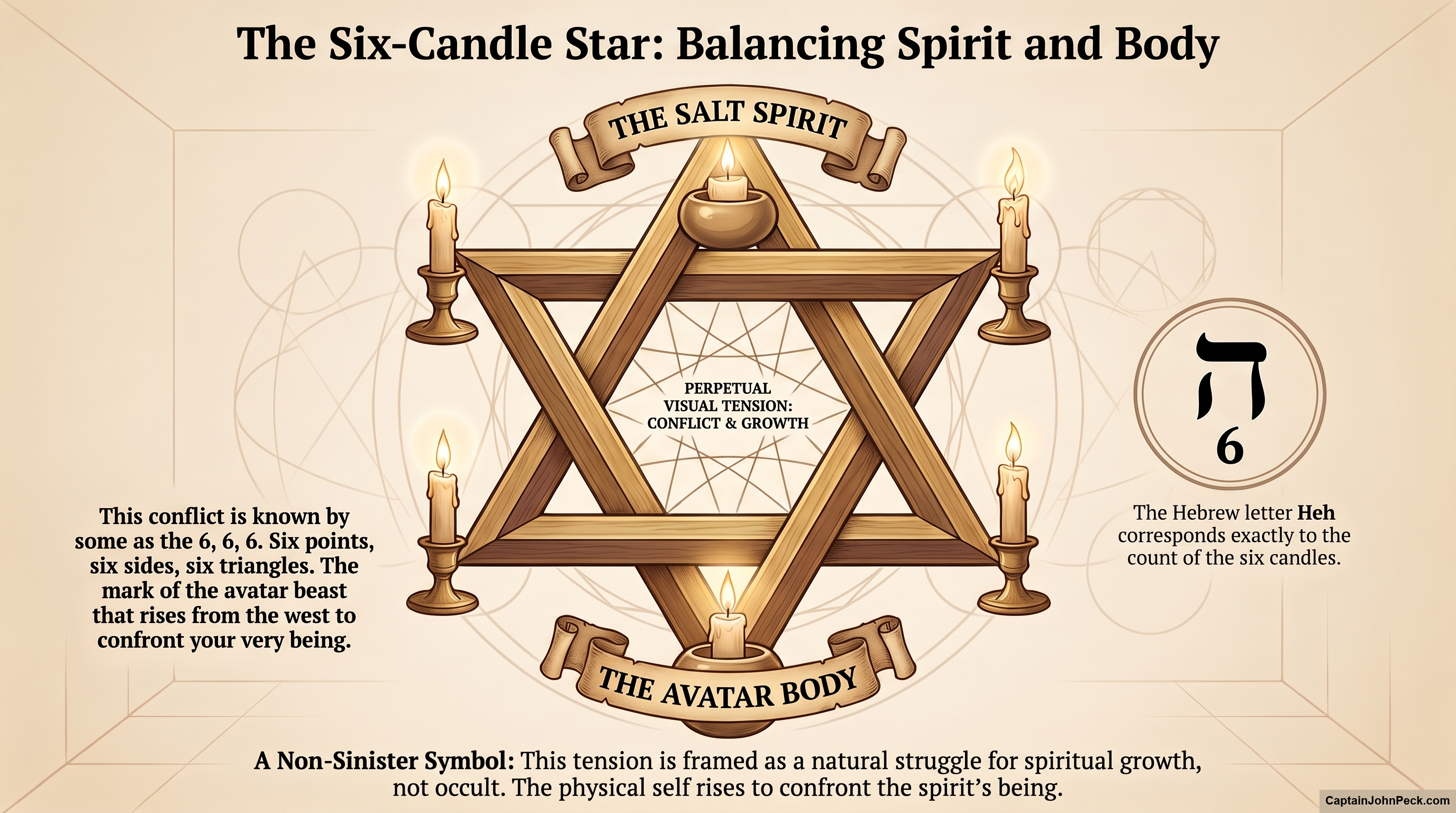
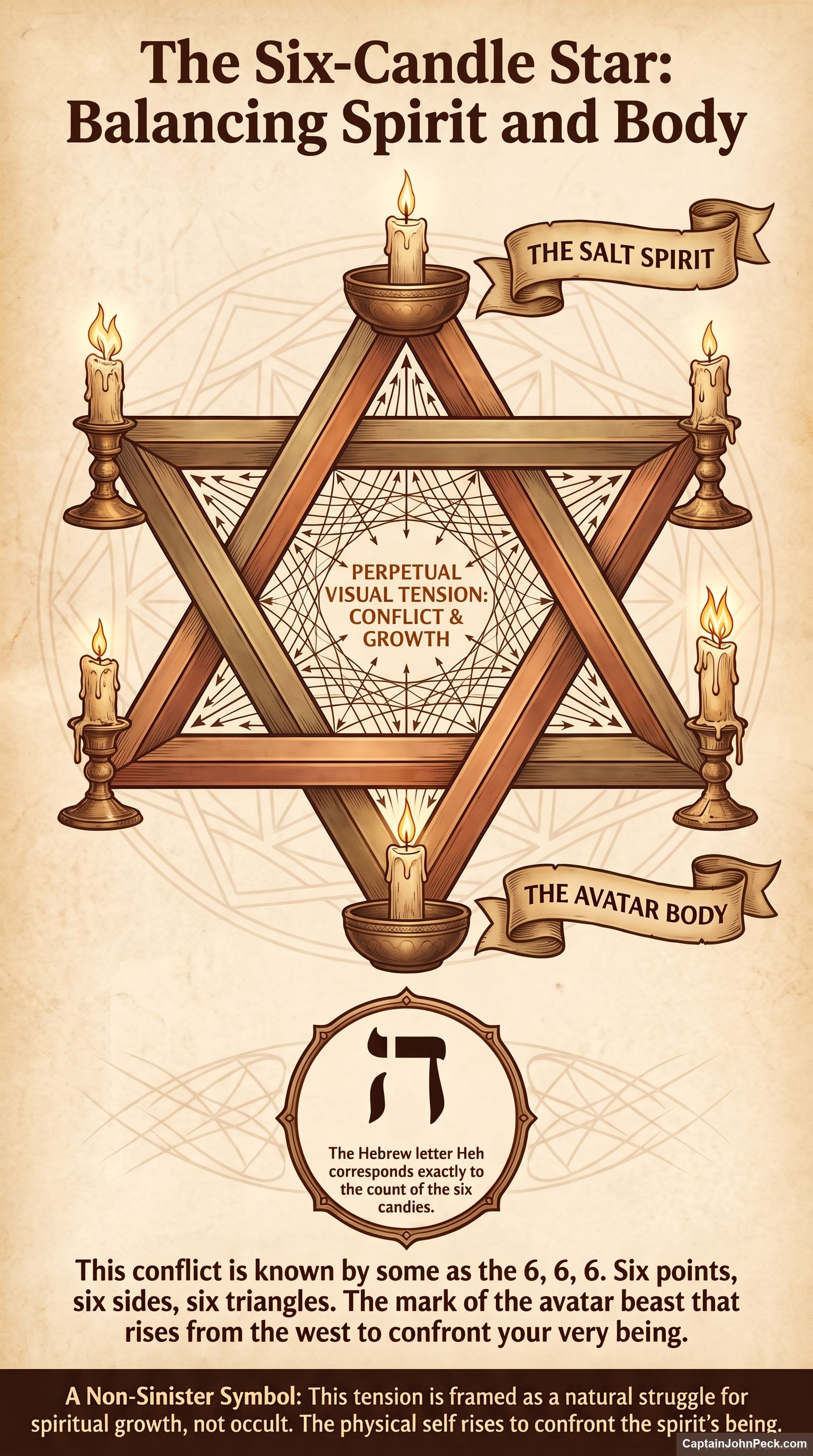
The six candles at the centre of the Chapter room are the subject here, read through the Hebrew letter Heh. Captain John Peck’s own careful framing of the number 666 — not as something sinister, but as a tension between the physical self and a higher purpose — is handled with particular care in this episode of The Royal Arch Chapter: The Hidden Ritual.
Radio Play 15: The Double Cube and the Kabbalah Tree of Life
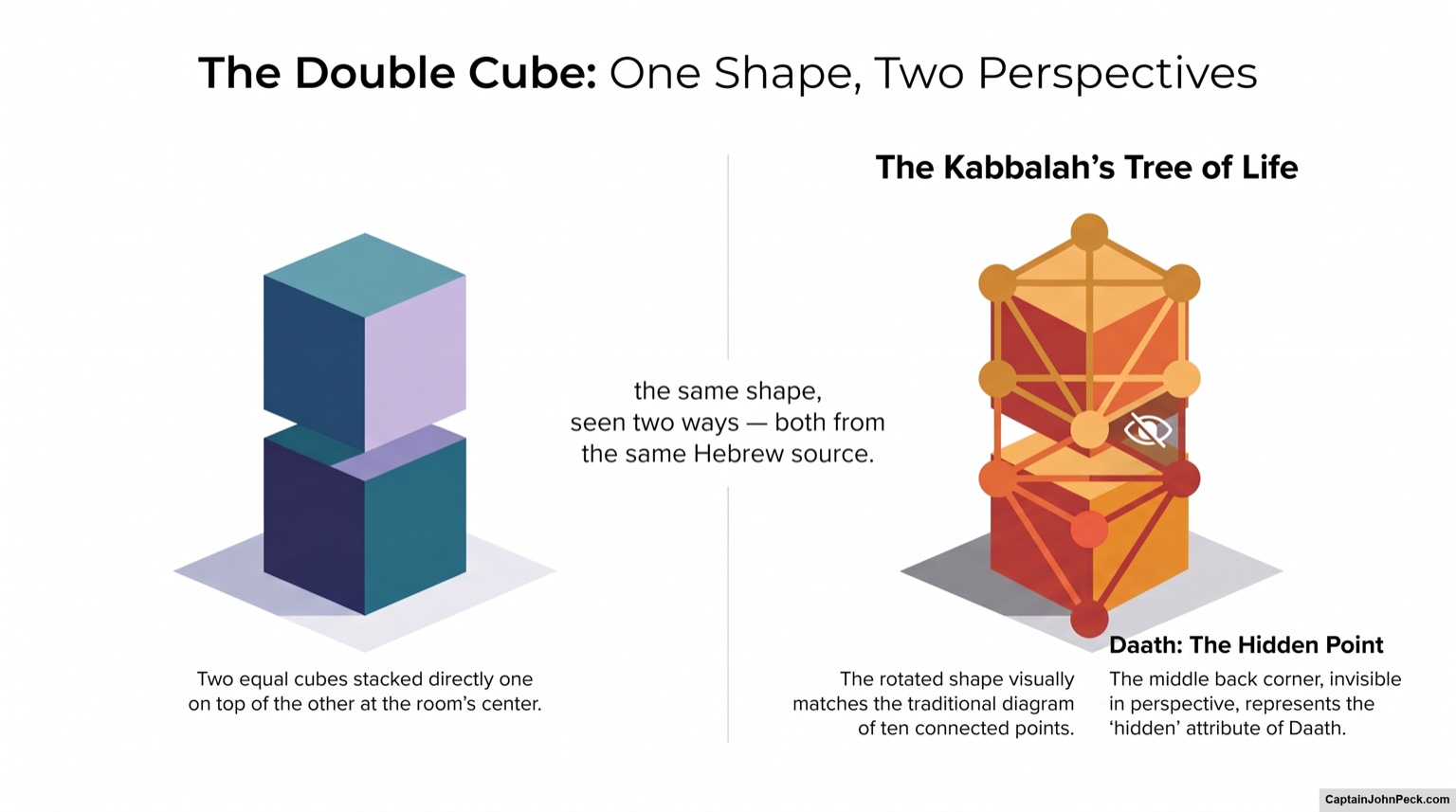
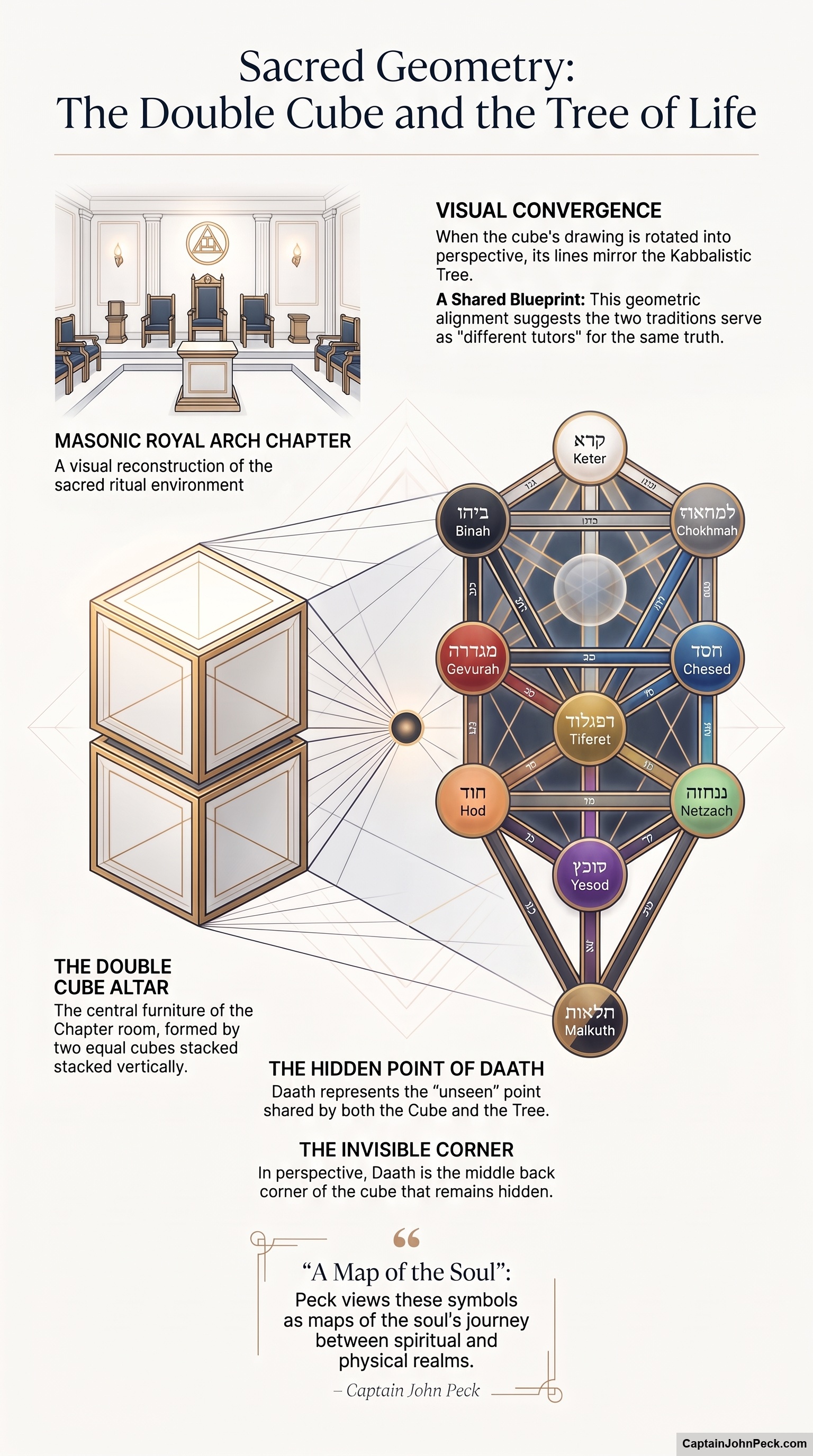
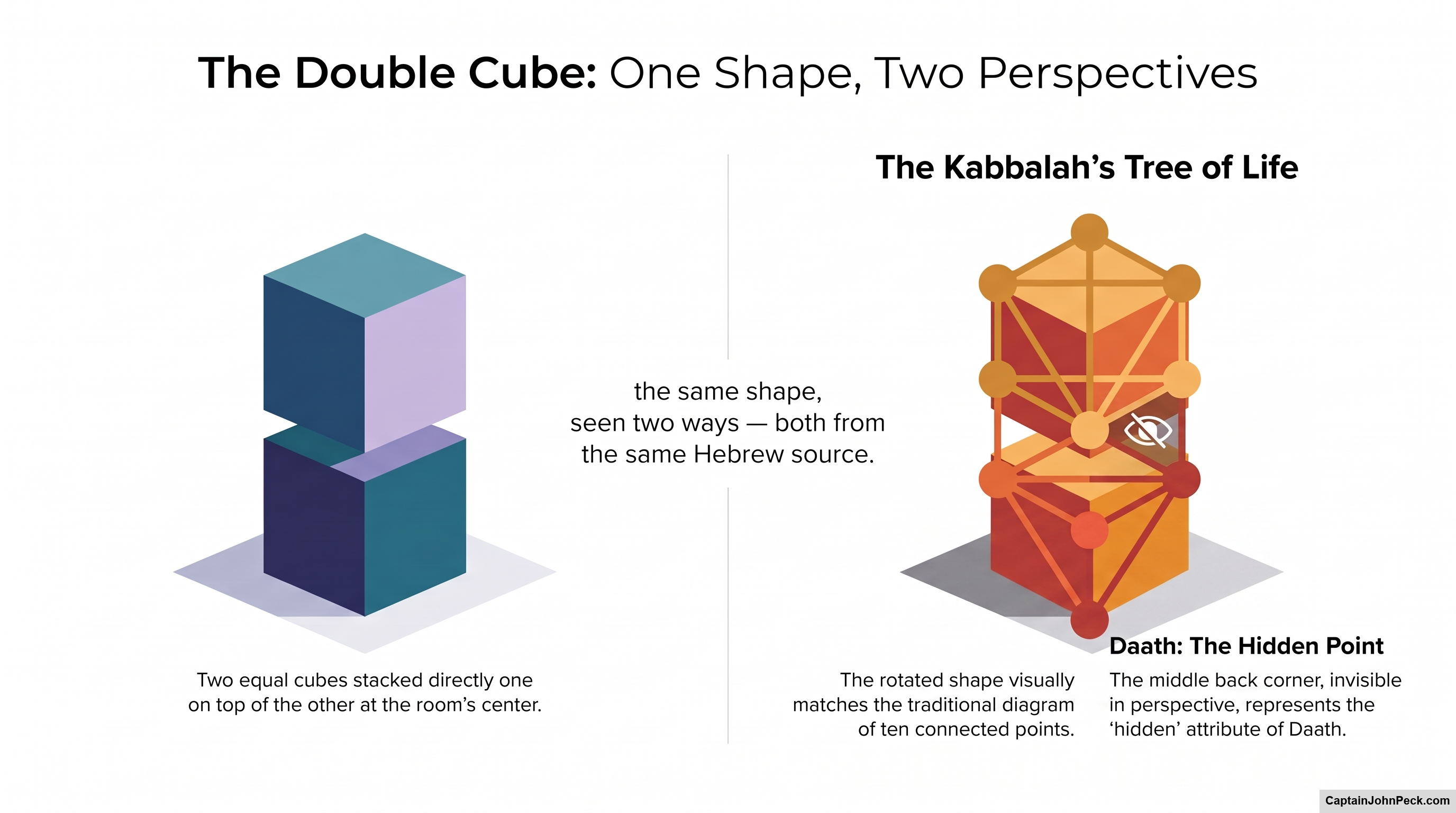
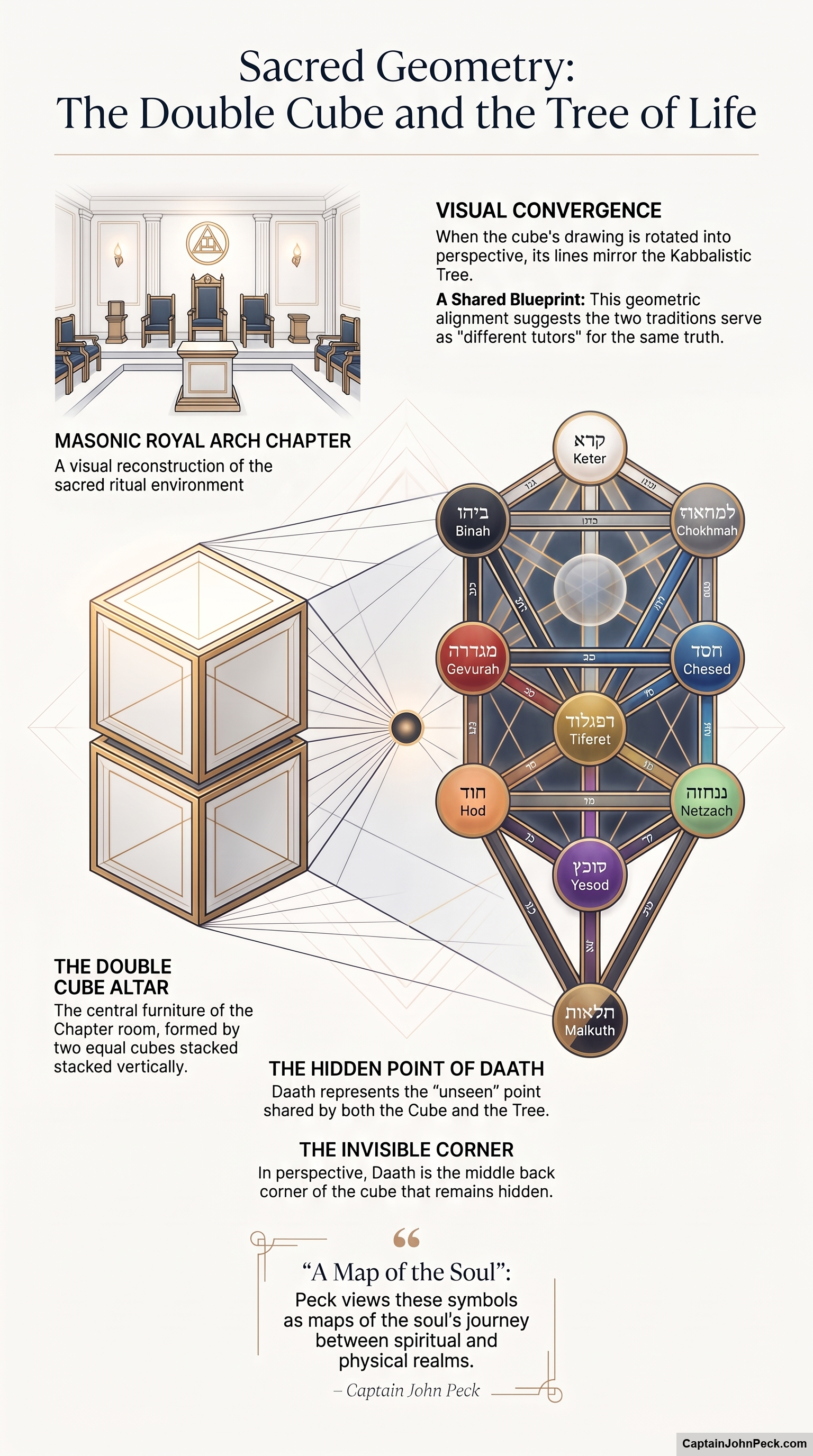
A short, focused episode: when the Chapter room’s double cube is redrawn in perspective, it resembles the Kabbalah’s Tree of Life. Captain John Peck’s own brief discussion of Daath — the hidden point shared by both traditions — anchors this visual link in The Royal Arch Chapter: The Hidden Ritual.
Radio Play 16: Vav, Zayin, and the Sword of Justice — Revealing What Was Hidden
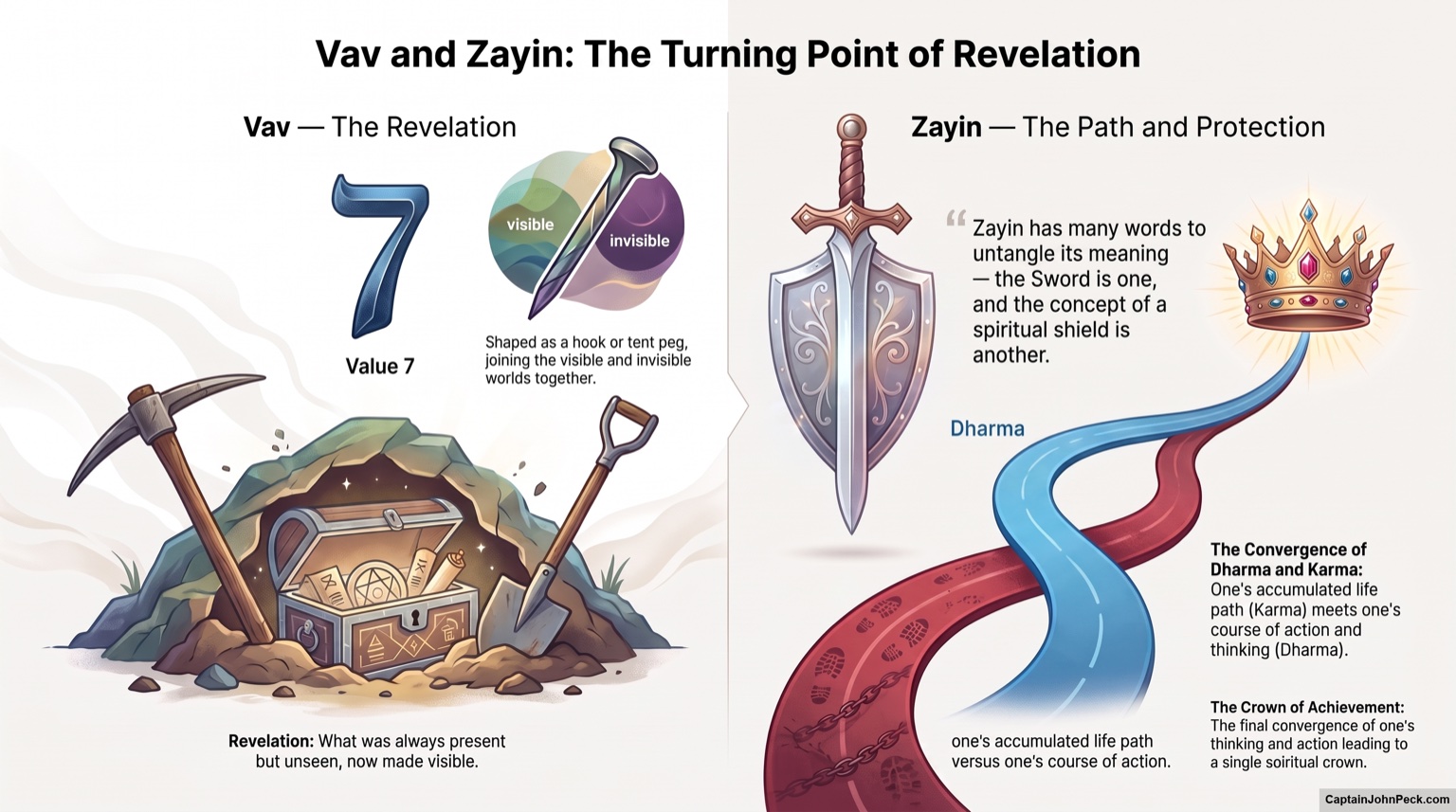
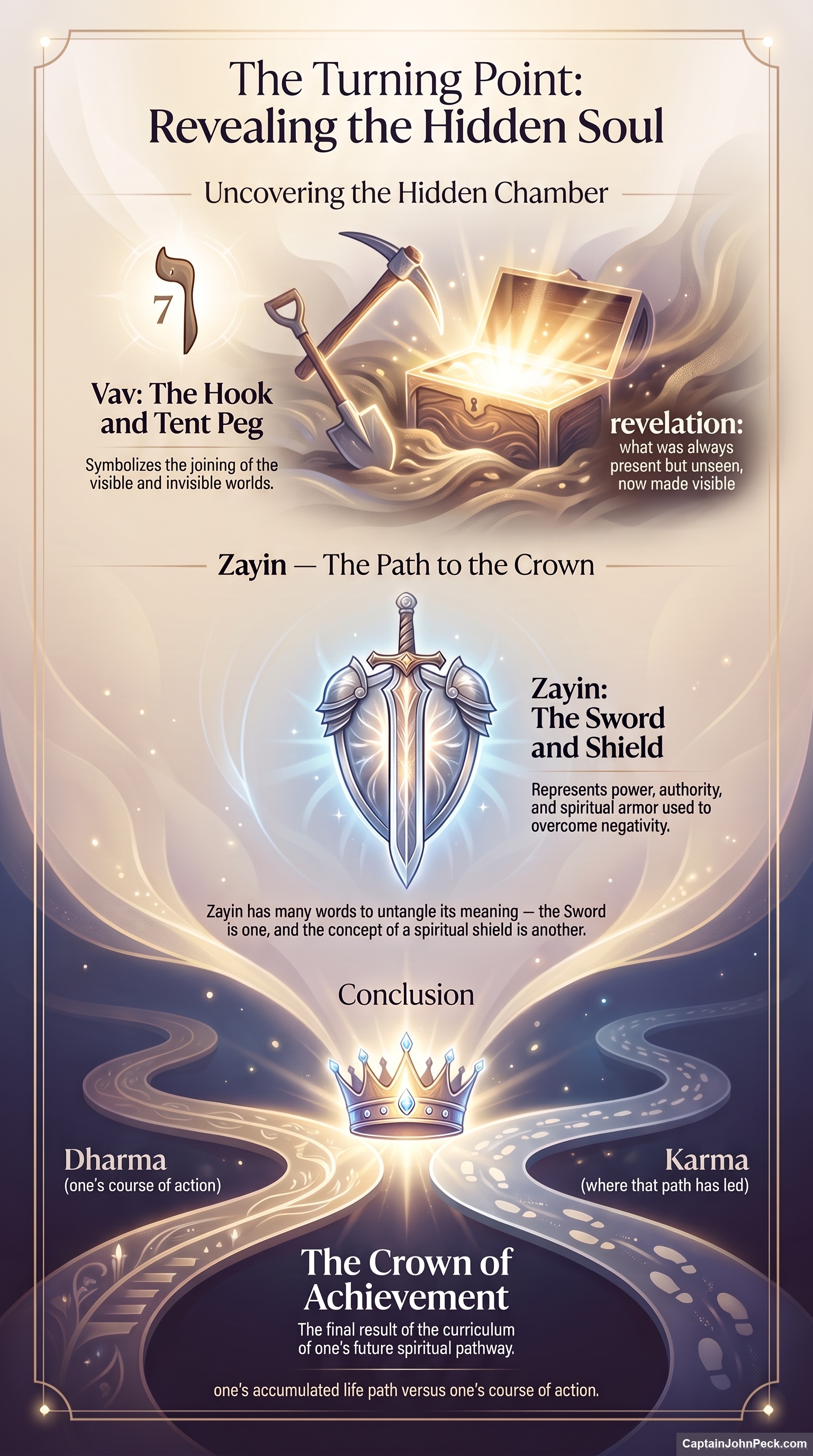
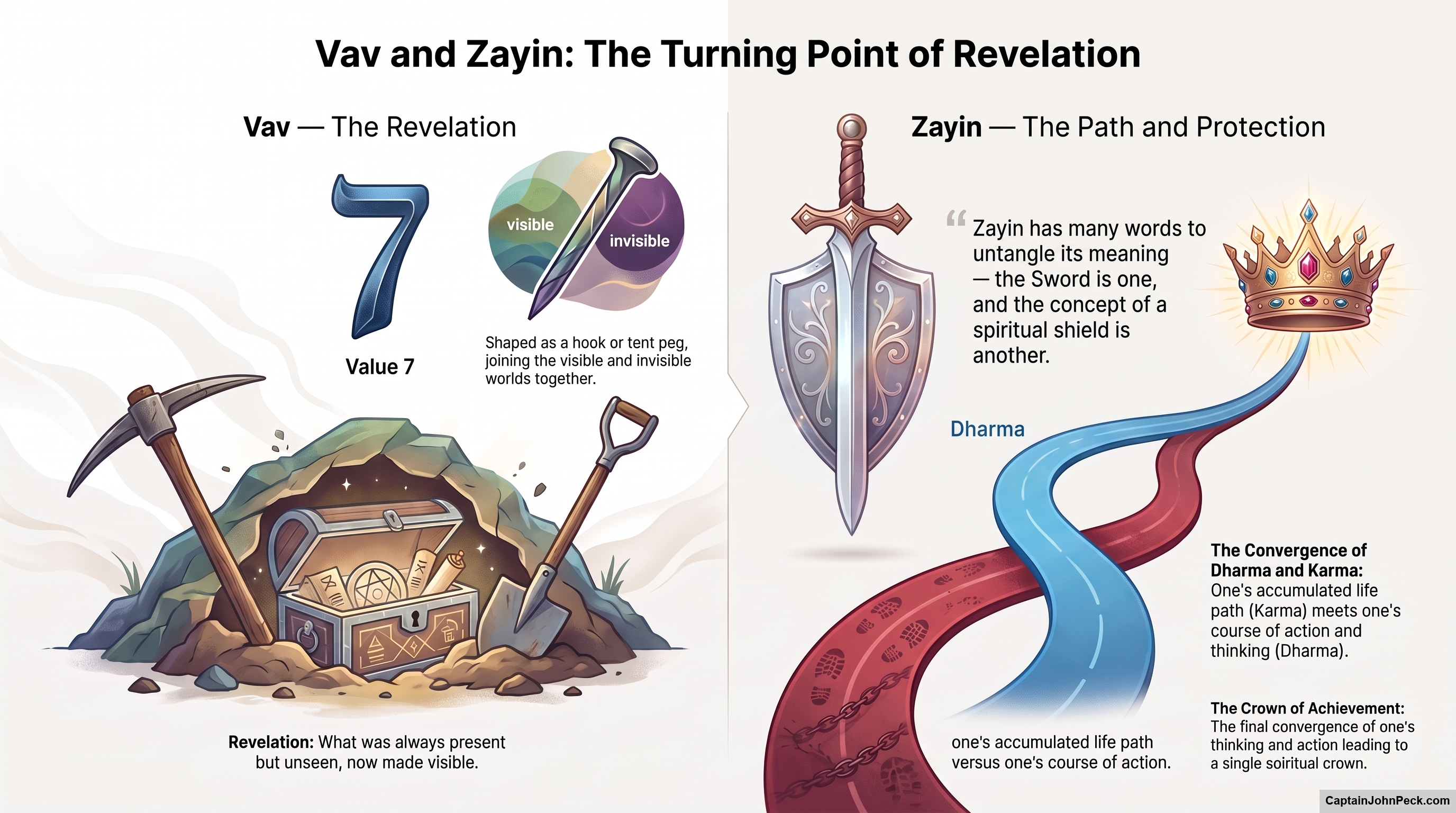
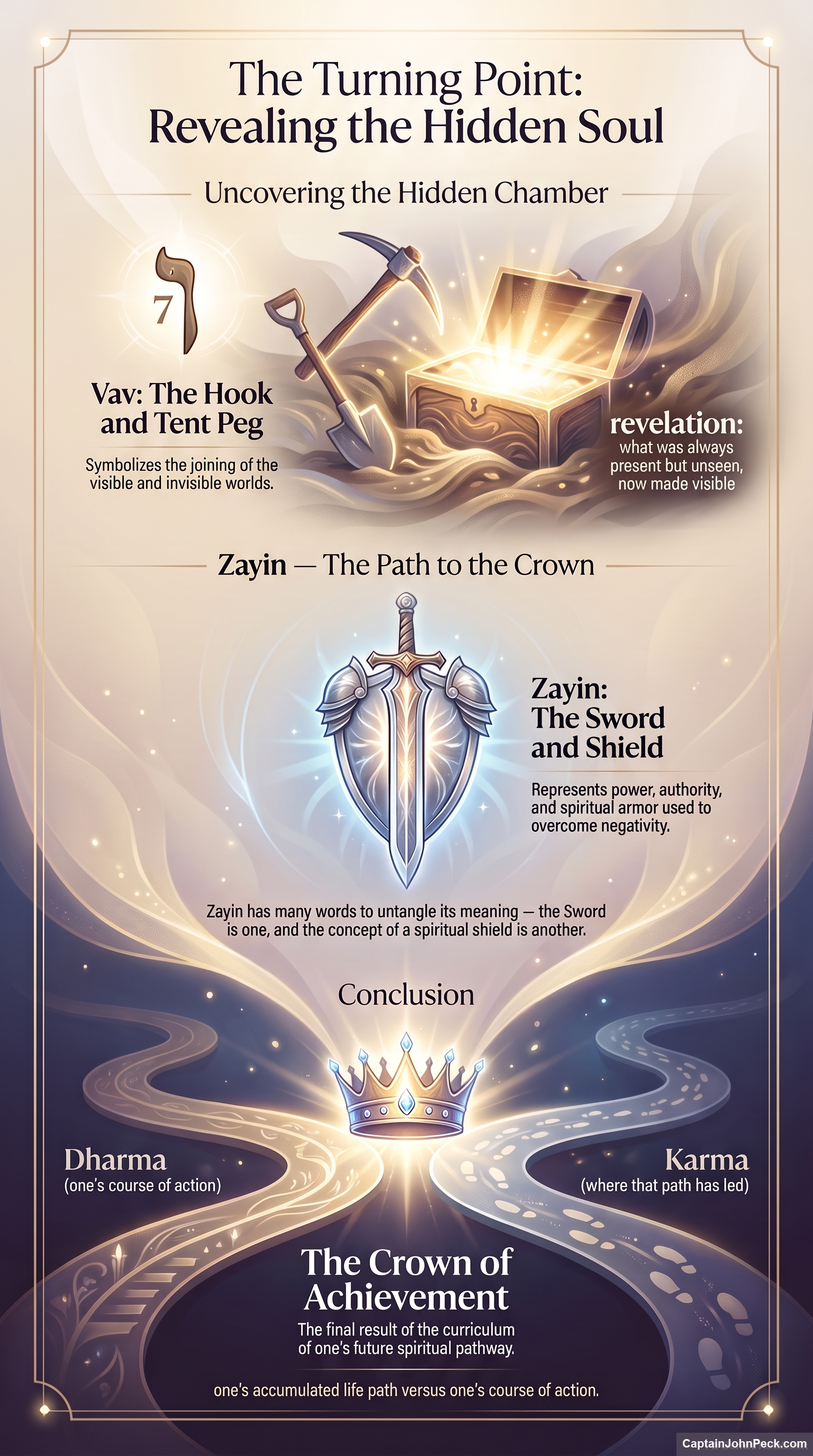
This episode covers two letters at once: Vav, read as revelation — the pick and shovel uncovering what was always there — and Zayin, the sword, tied to Karma and Dharma. Deep into the twenty-part journey of The Royal Arch Chapter: The Hidden Ritual, this is where hidden knowledge becoming revealed is itself the theme.
Radio Play 17: The Vault Ceremony and FIAT LUX — Let There Be Light
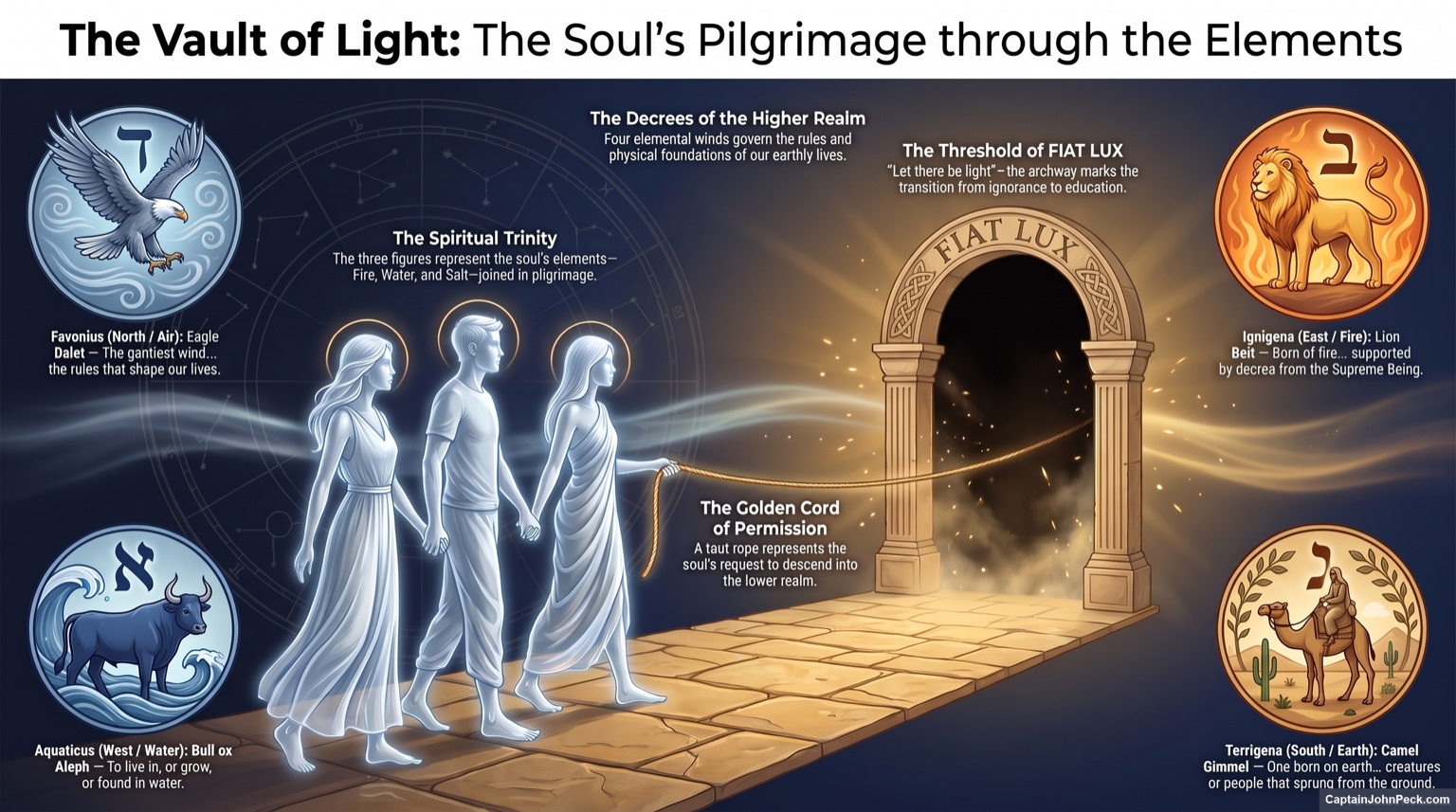
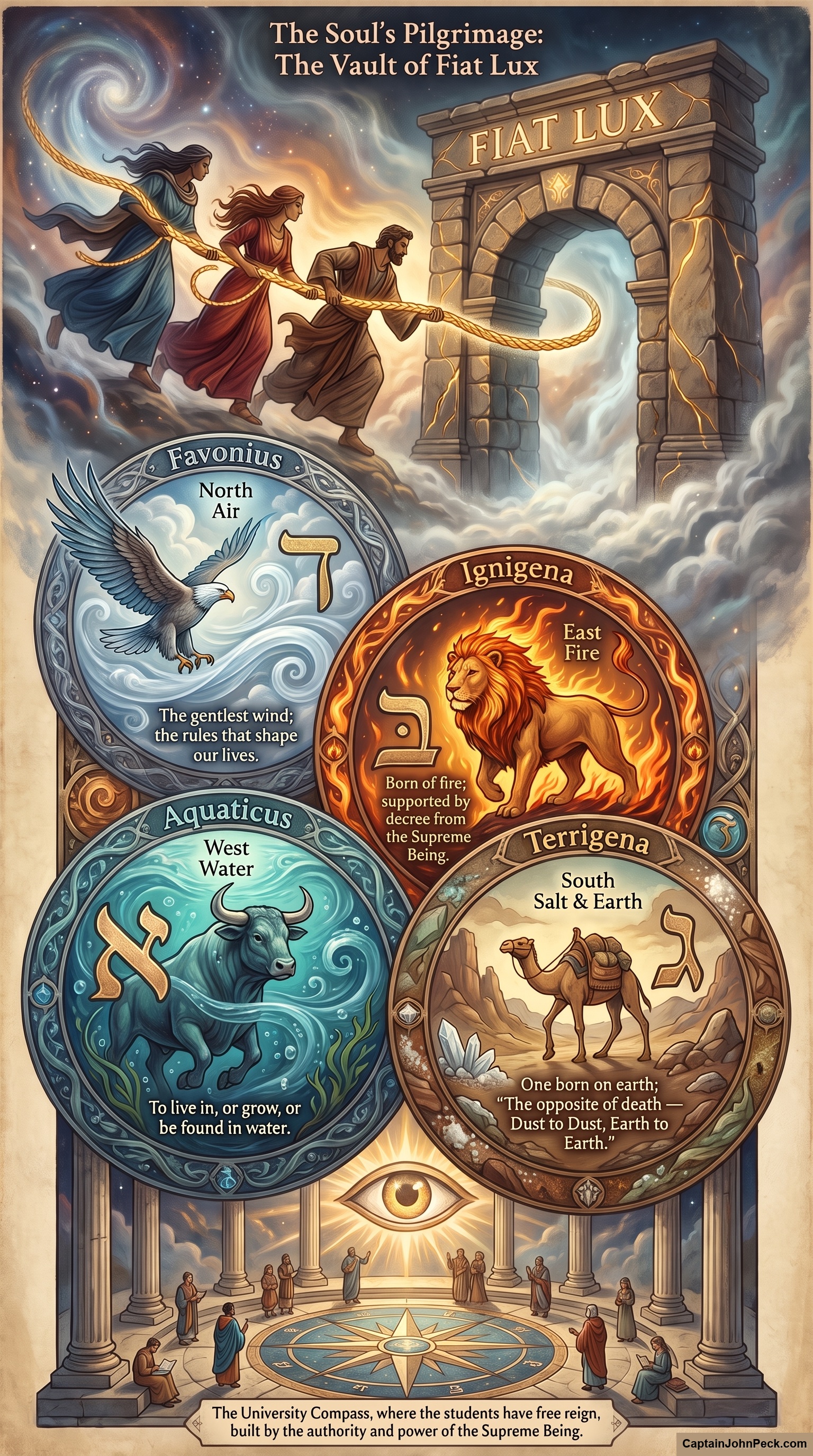
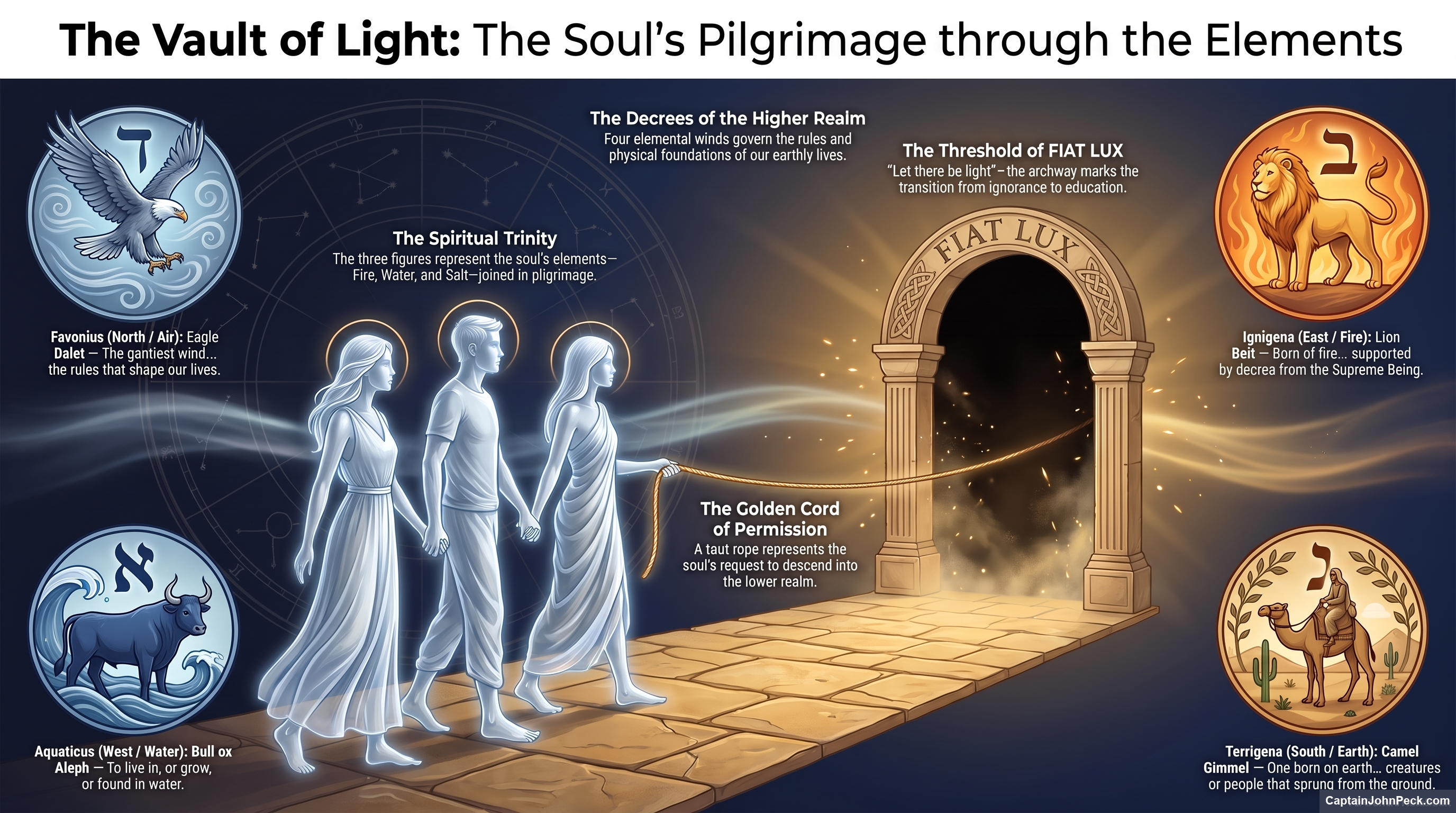
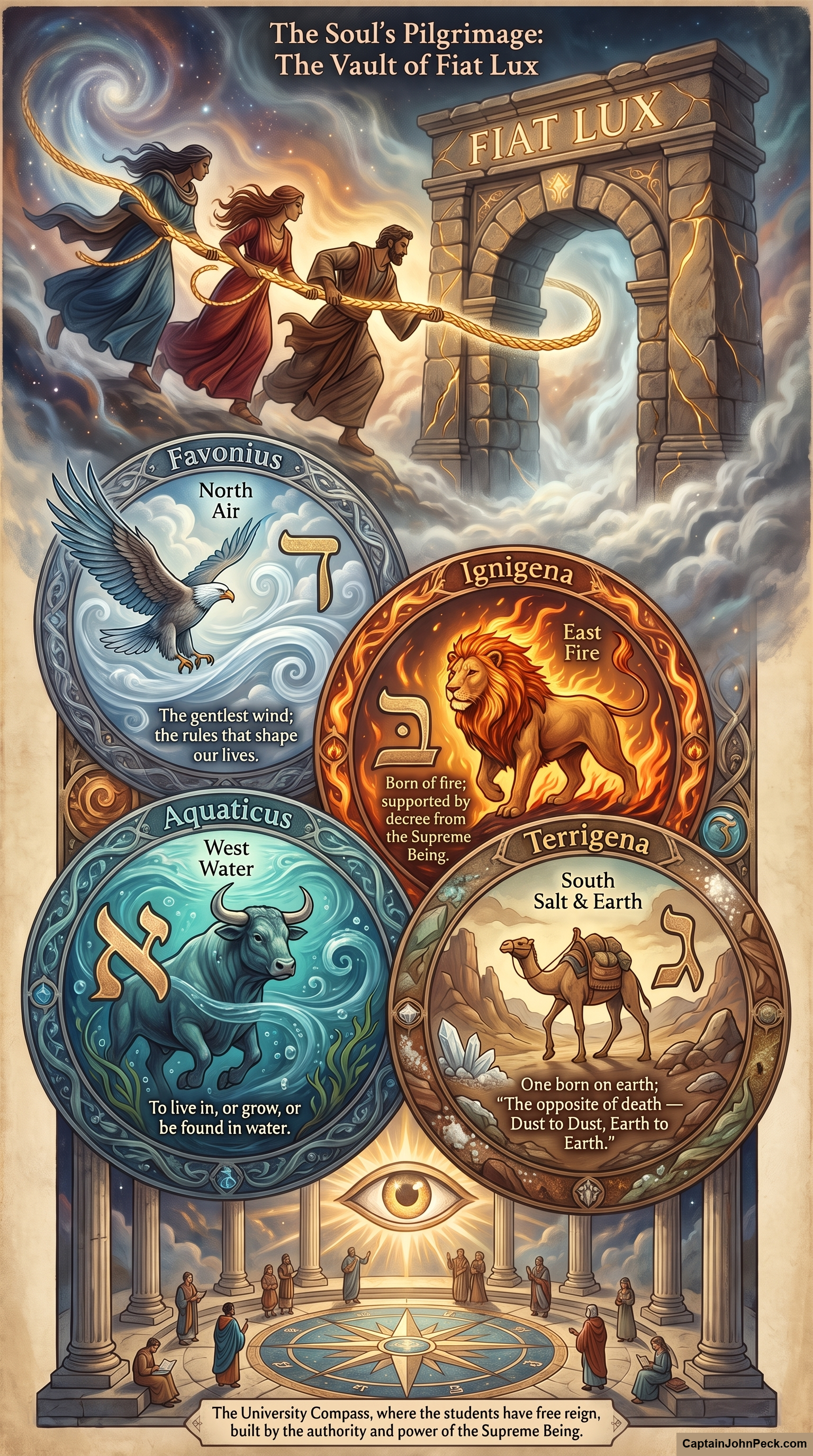
The three sojourners, bound together, advance toward a concealed vault in this episode of The Royal Arch Chapter: The Hidden Ritual. Captain John Peck’s own translation of the Latin inscription above the arch — FIAT LUX, “Let there be light” — ties together the four-element framework the series has been building across earlier episodes.
Radio Play 18: The Triple Tau — Completion, Perfection, and the Soul’s Return
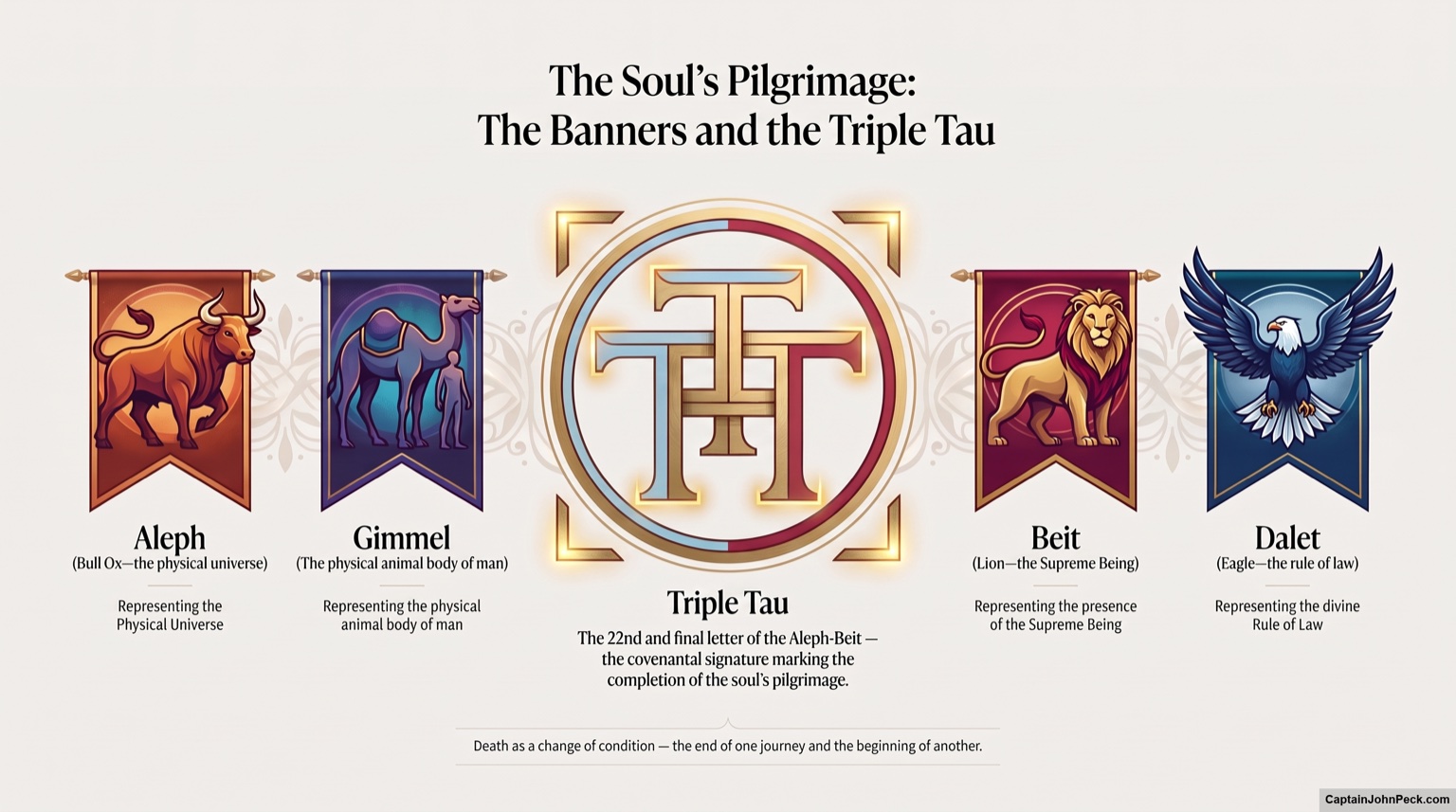
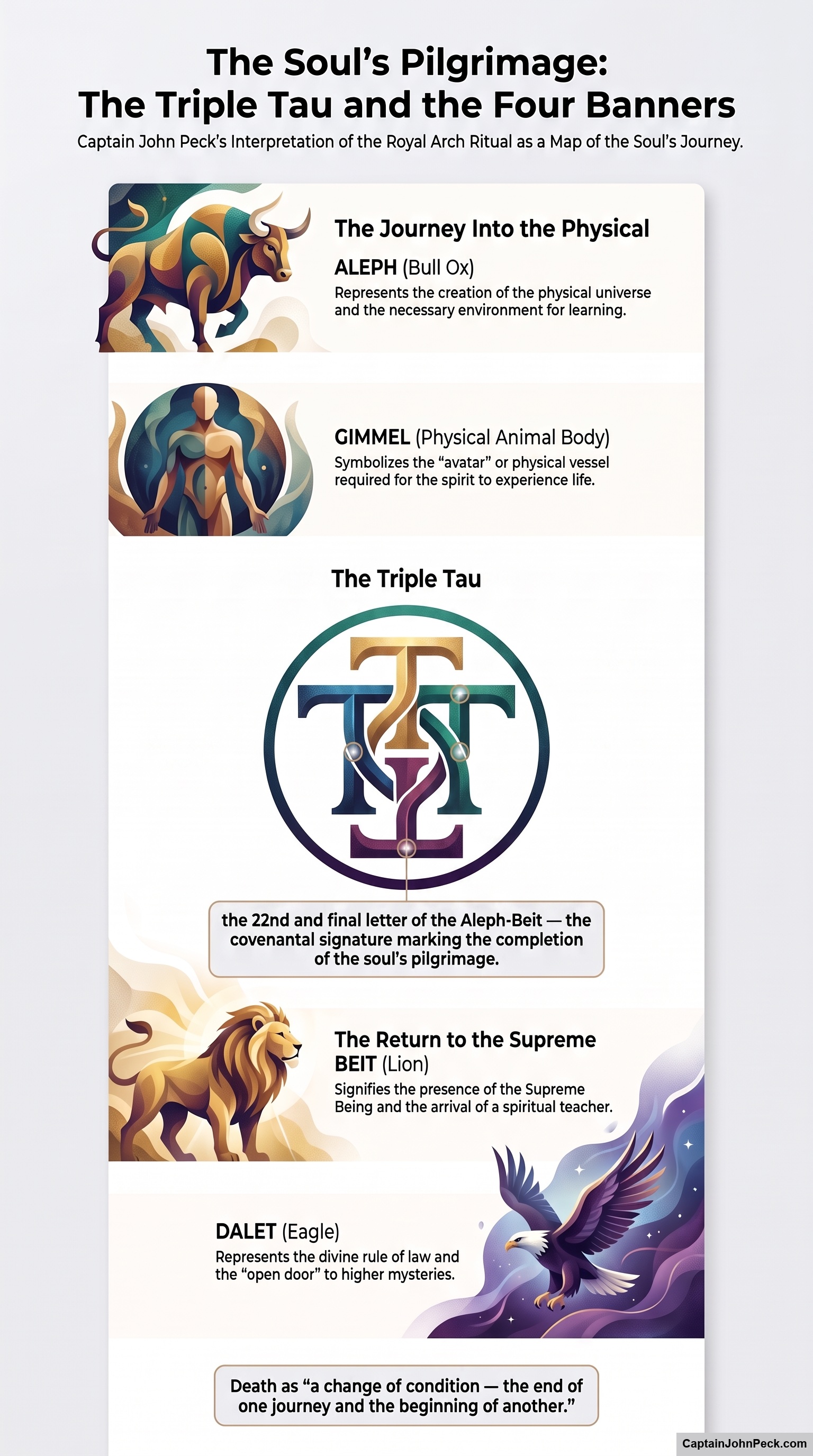
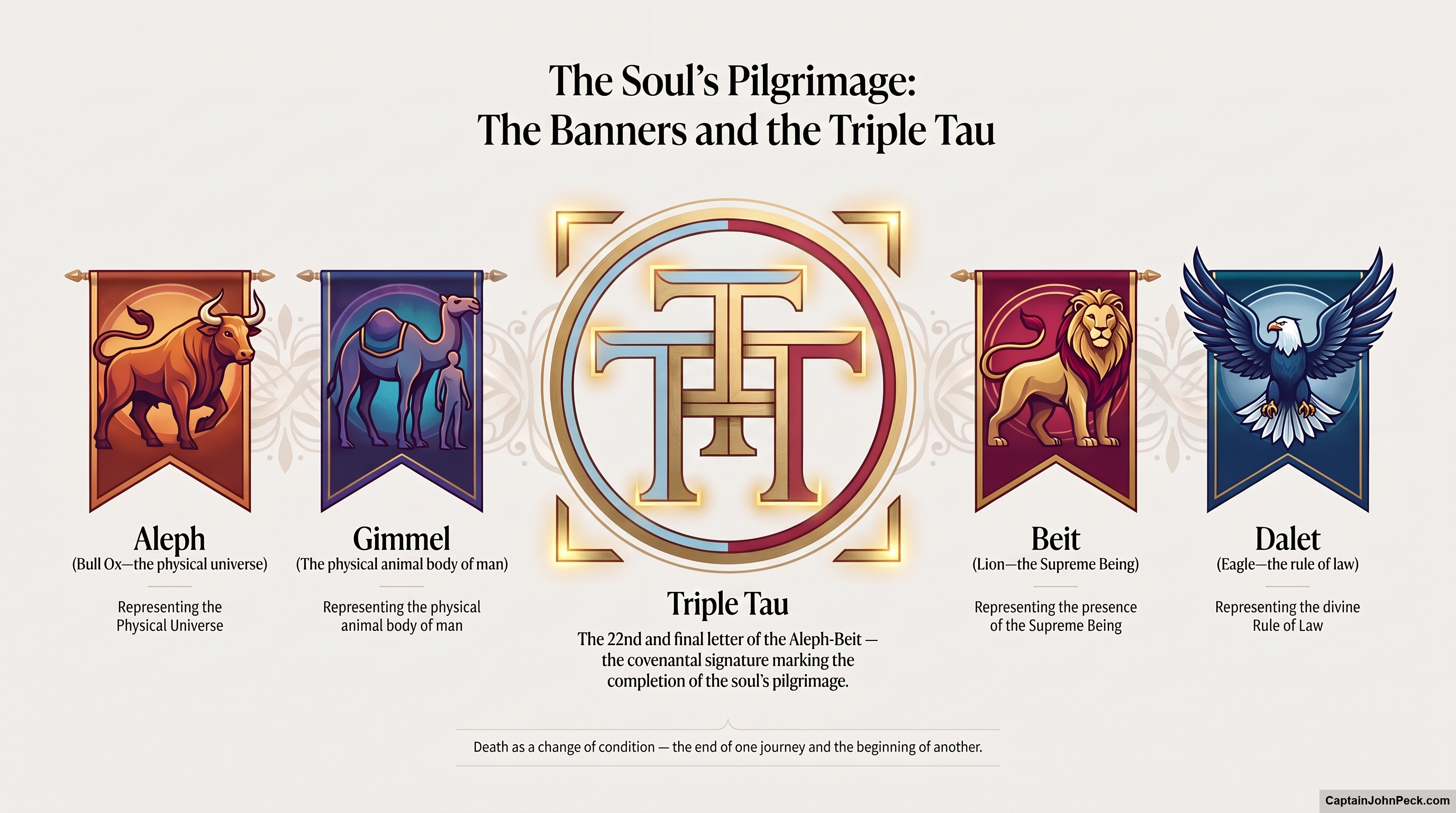
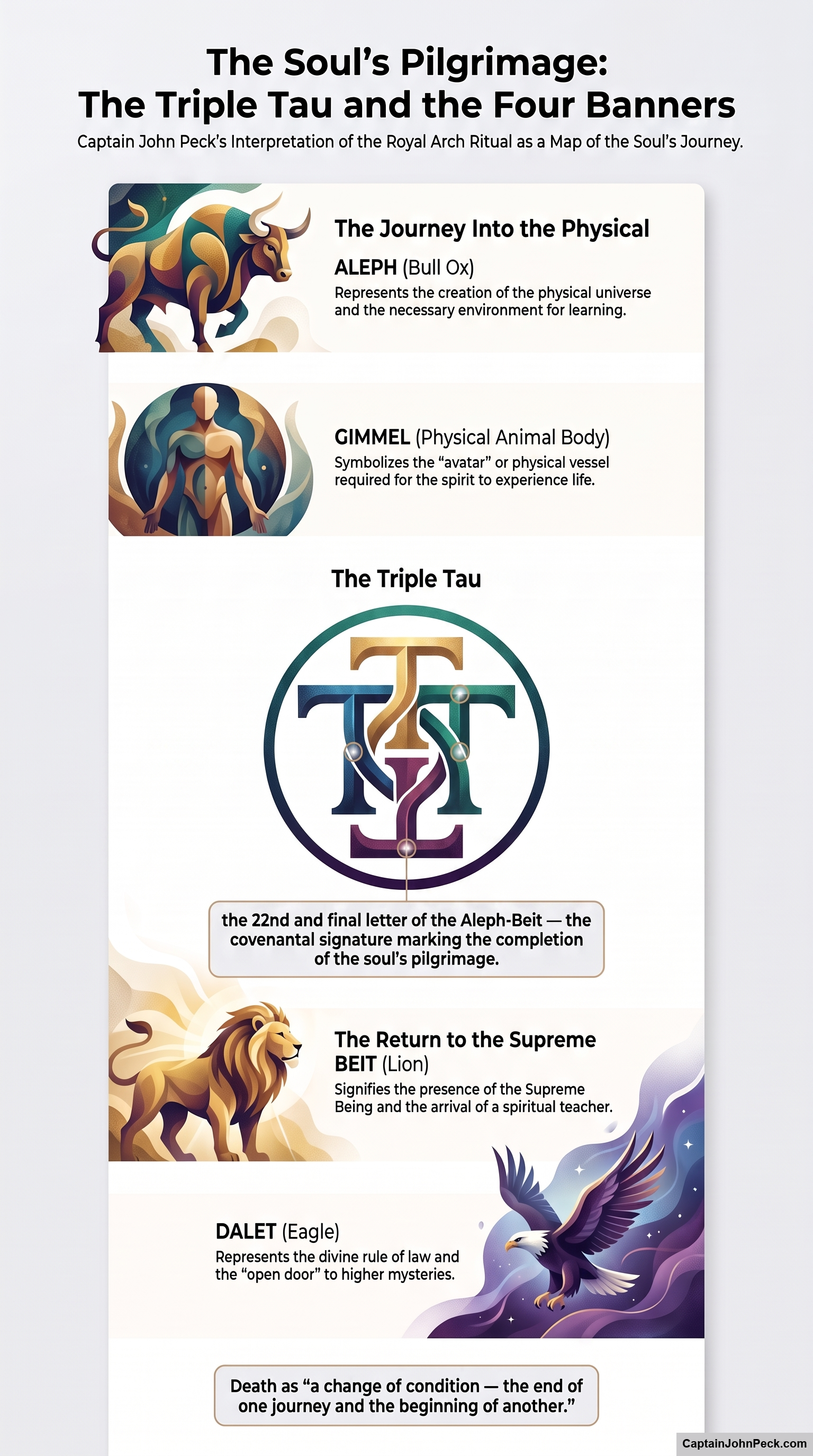
The Triple Tau — the twenty-second and final letter of the Hebrew Aleph-Beit — takes centre stage in this episode of The Royal Arch Chapter: The Hidden Ritual. Captain John Peck reads its eight right angles and its place at the centre of the Chapter room’s banners as a signature marking the completion of the soul’s journey.
Radio Play 19: Freemasonry Meets Rosicrucian Thought — A Companion’s Reflection
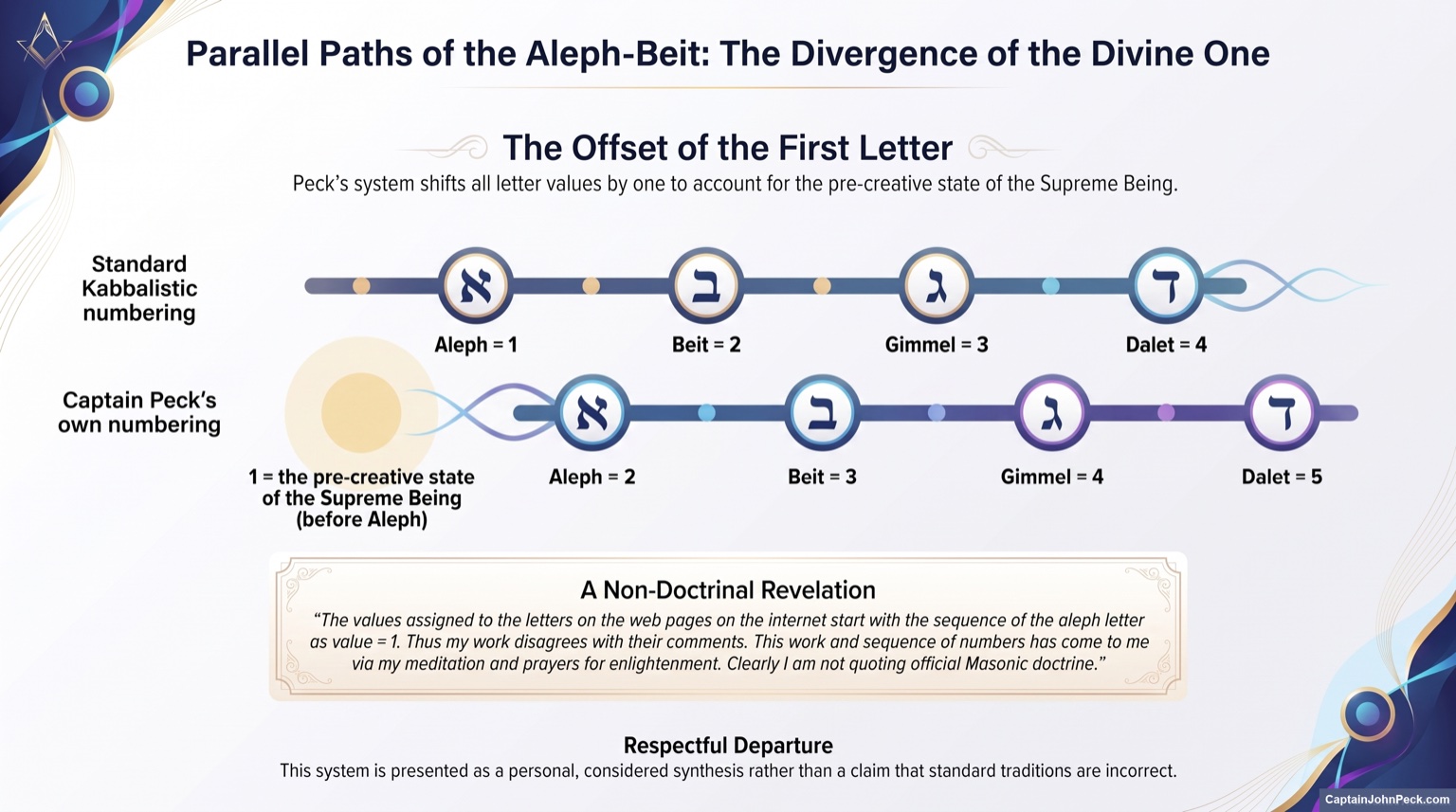
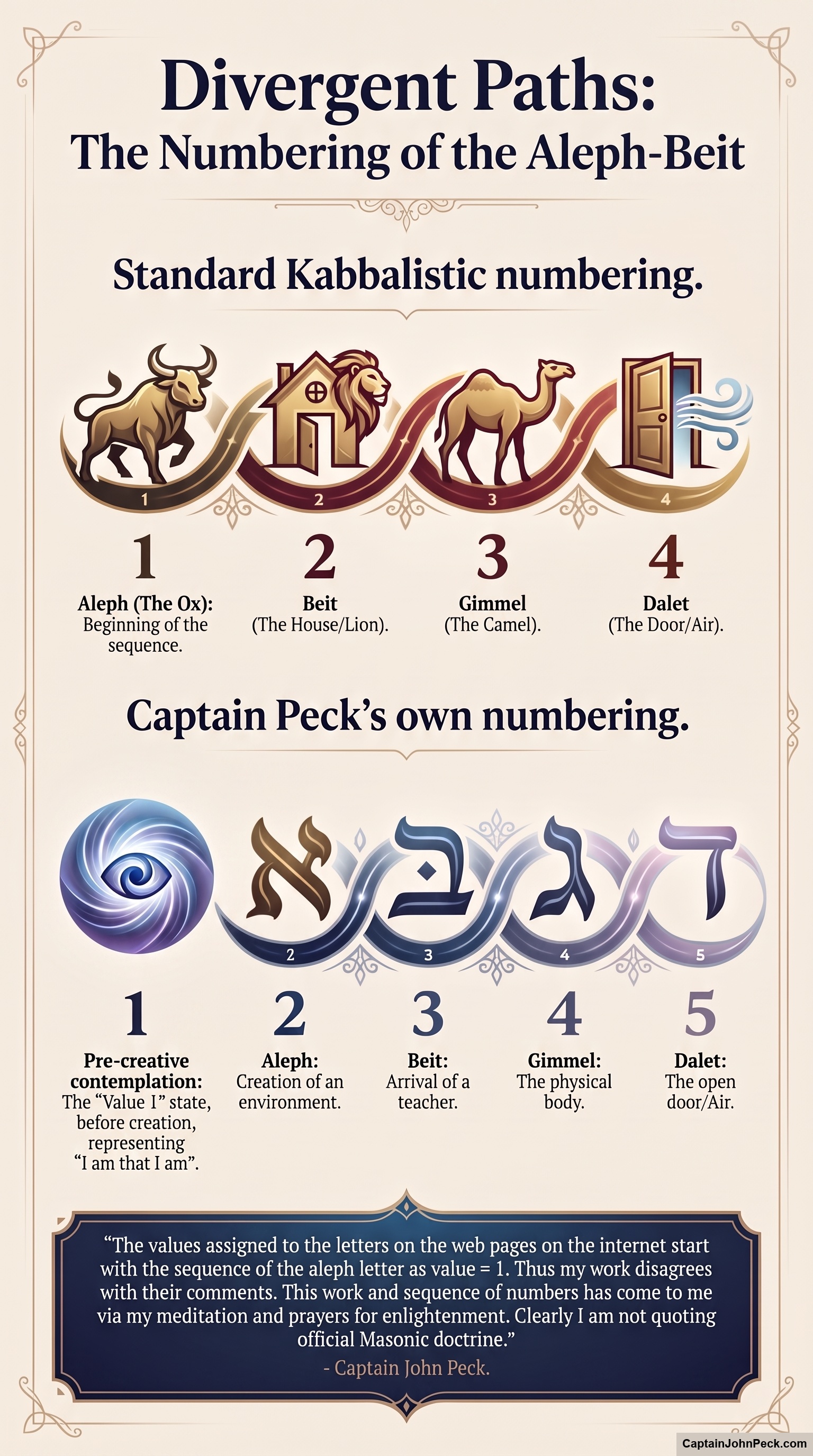
Aimed at listeners already familiar with the Royal Arch as much as newcomers, this episode looks at what makes The Royal Arch Chapter: The Hidden Ritual distinctly Captain John Peck’s own Rosicrucian interpretation, rather than official Masonic teaching — including why he’s so careful to flag, throughout the book, exactly where his own insight departs from convention.
Radio Play 20: Conclusion — The Soul’s Map, and an Invitation to Read Further
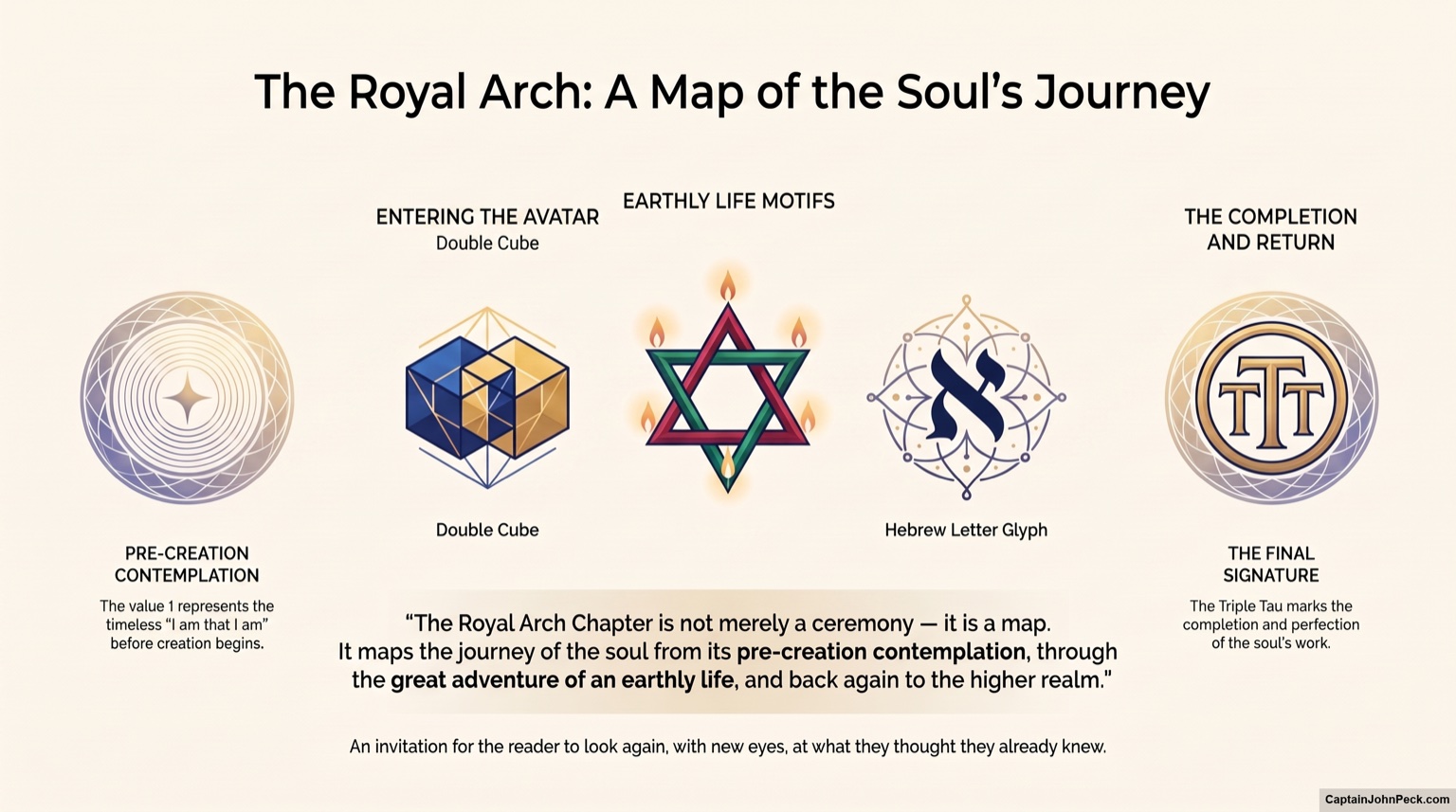
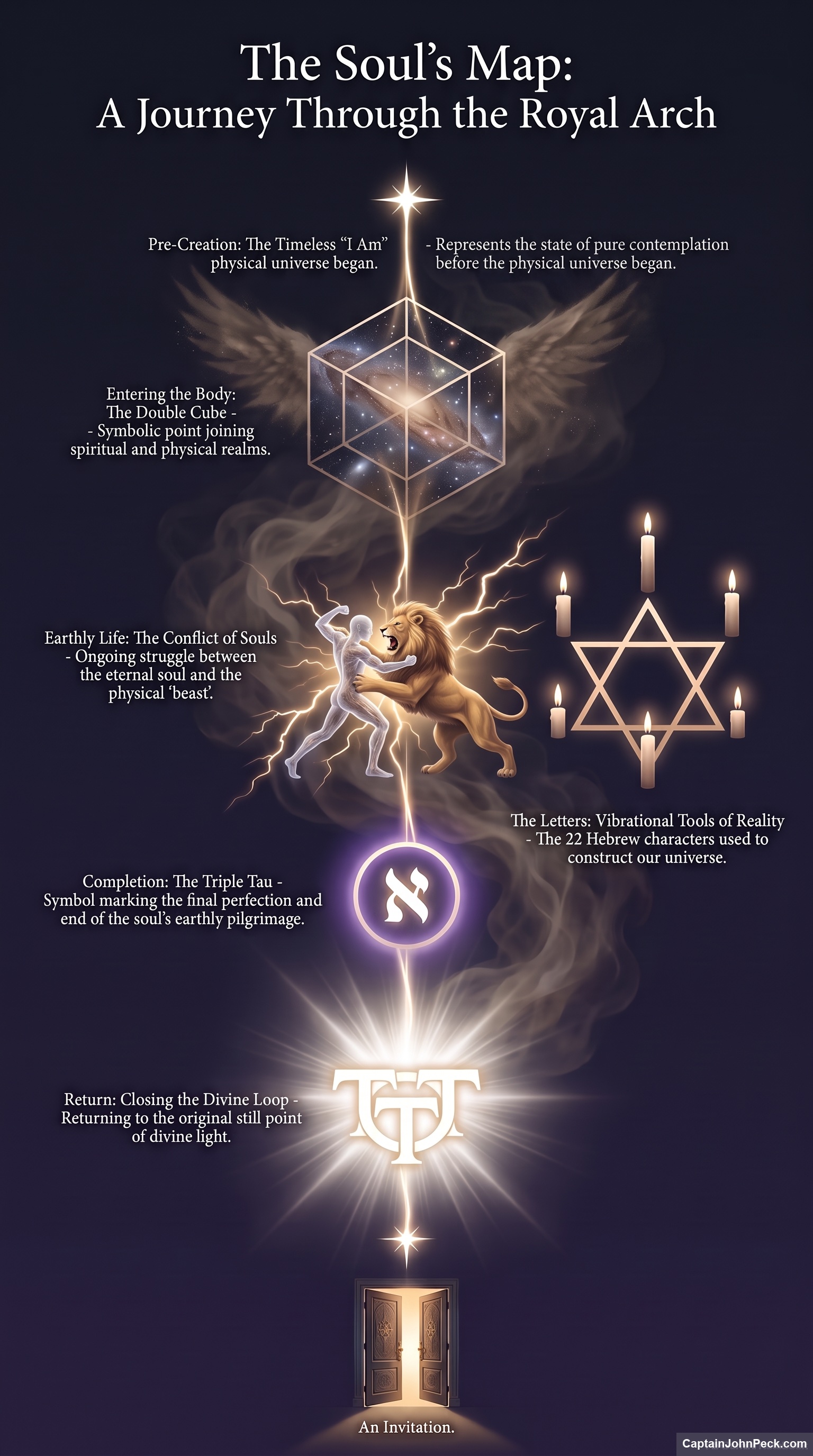
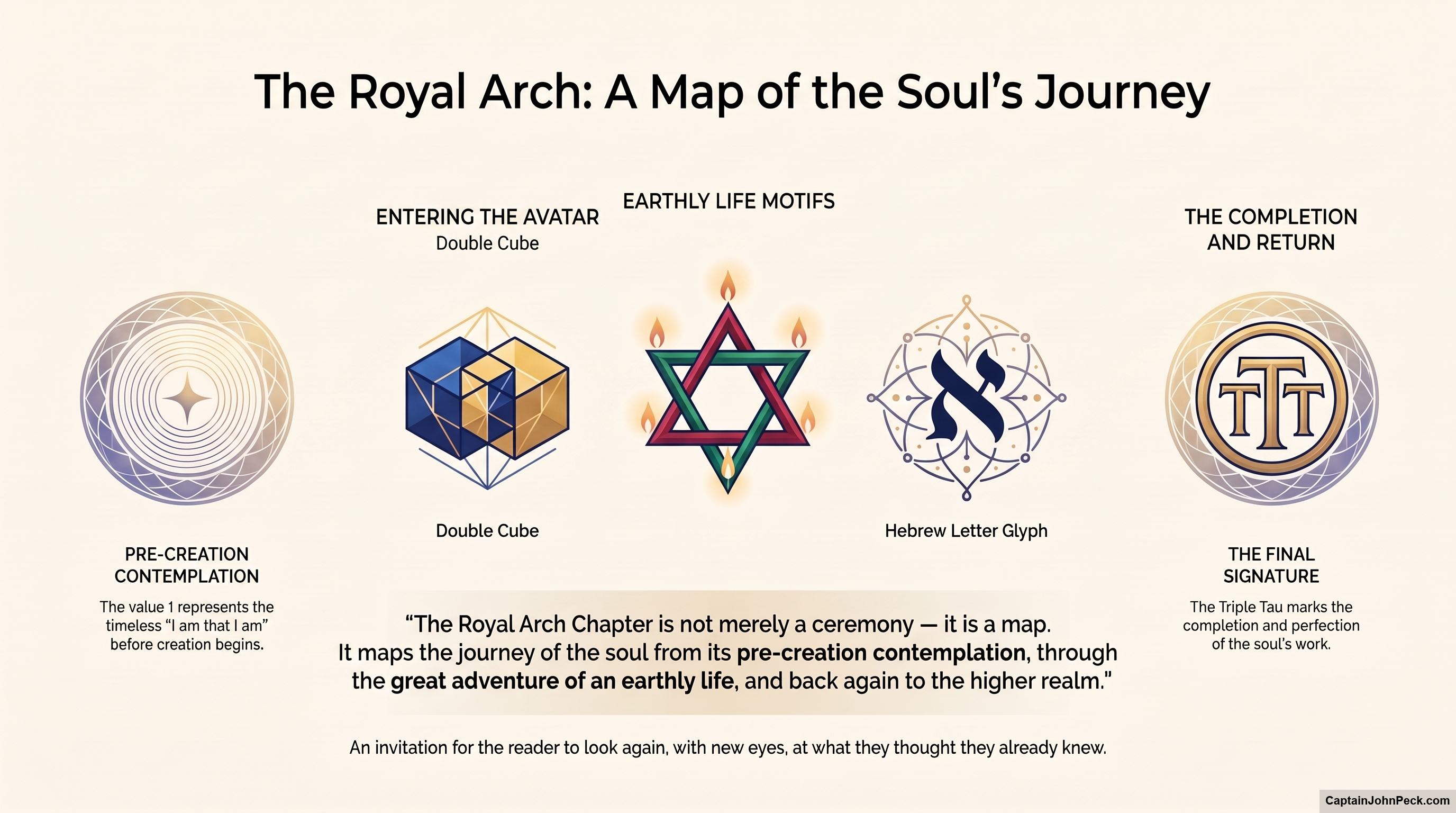
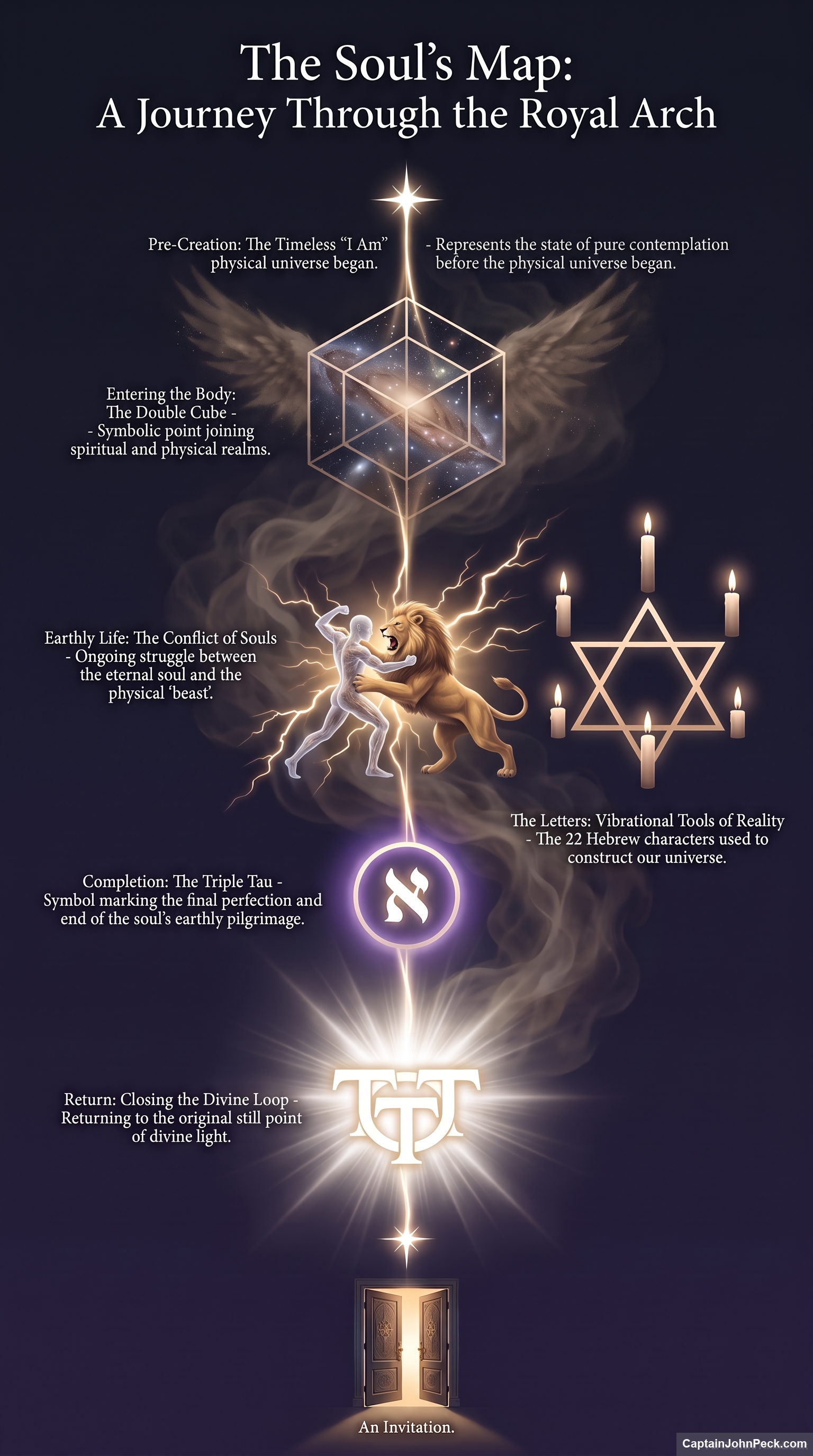
The final episode of the series draws The Royal Arch Chapter: The Hidden Ritual to a close: not as a ceremony, but as a map of the soul’s journey from before creation, through earthly life, and back again. A warm send-off for the whole twenty-part series, and an invitation to spend more time with the source material itself.
About the Radio Plays
The twenty Radio Plays of the Royal Arch form a companion audio series to Captain John Peck’s book, The Royal Arch Chapter: The Hidden Ritual. Each episode is a warm, unscripted conversation exploring one thread of the book at a time, building steadily from a gentle introduction into the ritual’s deepest symbolic territory.
The series opens by introducing Captain John Peck himself and the physical staging of a Royal Arch Chapter room, before turning to his central claim: that the twenty-two letters of the Hebrew Aleph-Beit are themselves symbols for the energies of thought behind creation. From there it follows the sun’s own hidden rhythms, the recurring numbers 72 and 144, and the installation of the three Principals — Zerubbabel, Haggai, and Joshua — each tied to a letter, a direction, and a lesson.
Along the way the series pauses for some of the book’s most personal passages: a parable of a school in sixteenth-century Berkshire, a first-hand account of sacred gold once associated with the Pharaohs, and a careful, considered reading of the number 666 quite unlike its usual associations. Later episodes trace the double cube’s echo of the Kabbalah’s Tree of Life, the Vault Ceremony and its Latin inscription FIAT LUX, and the Triple Tau — the Aleph-Beit’s final letter — before a closing reflection on what makes this reading distinctly Captain Peck’s own.
The series concludes where the book itself concludes: not with a ceremony explained away, but with a map of the soul’s journey from before creation, through earthly life, and back again.
Select any Radio Play from the directory at the left to begin.
About the Author

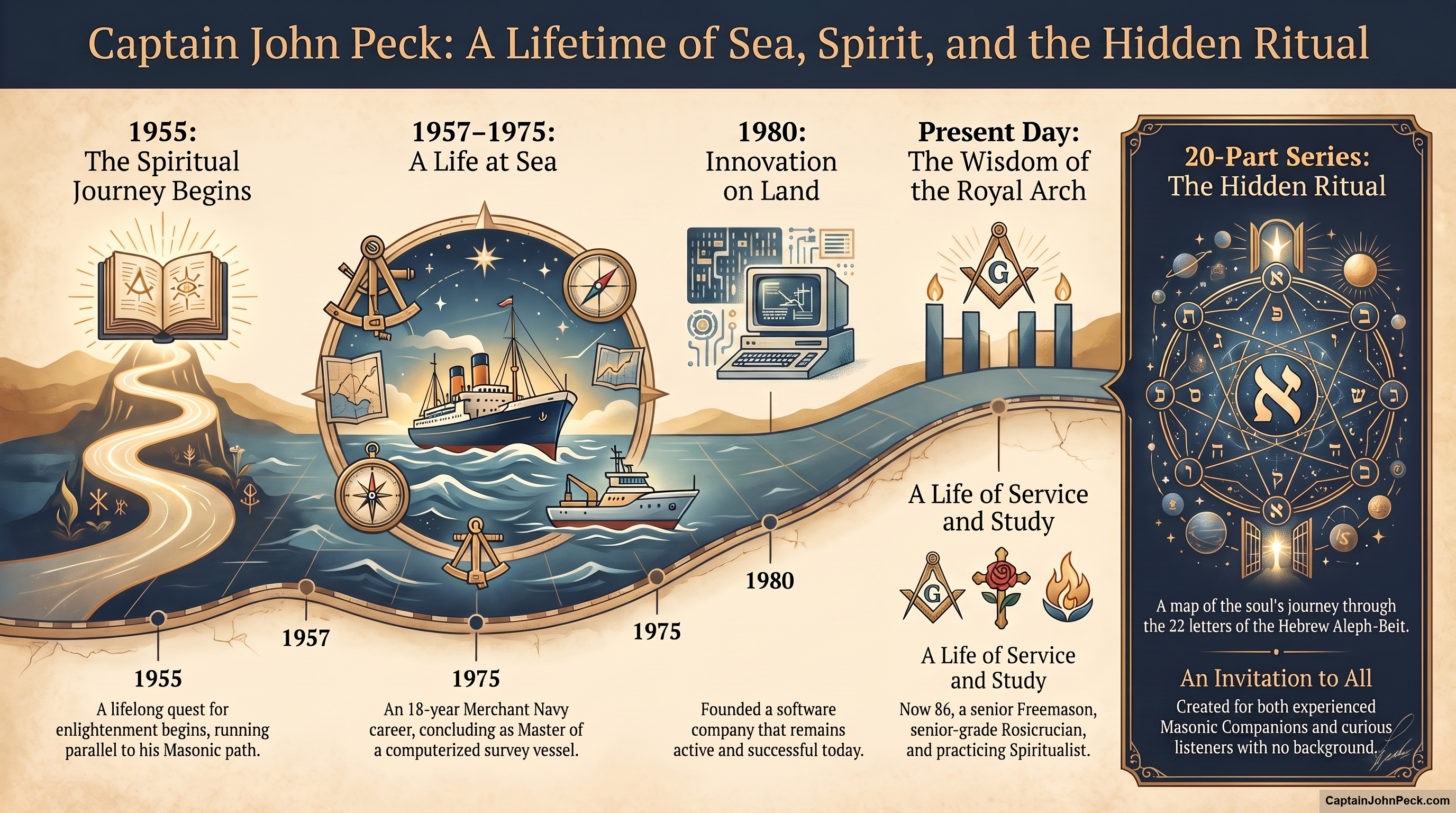
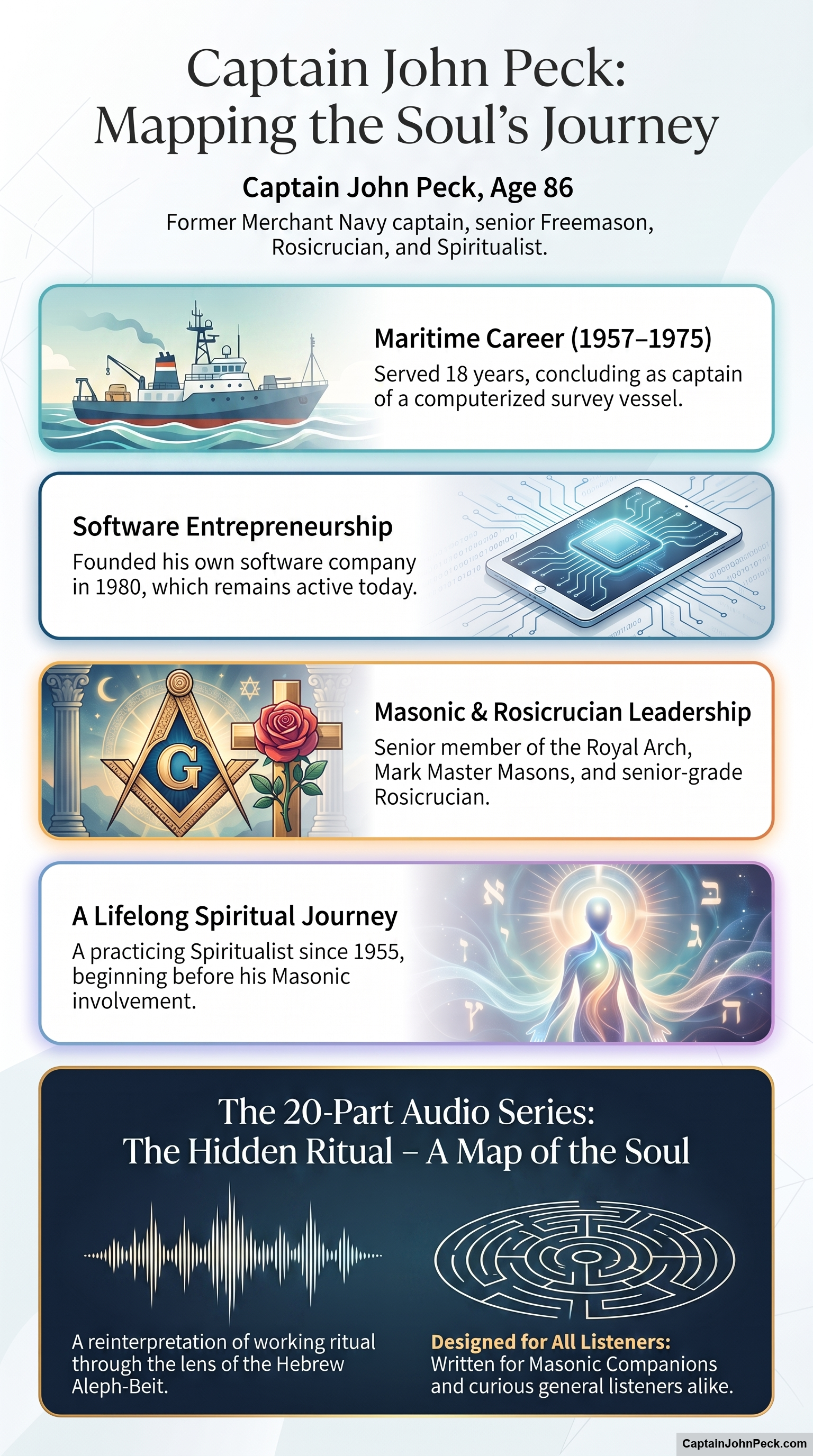
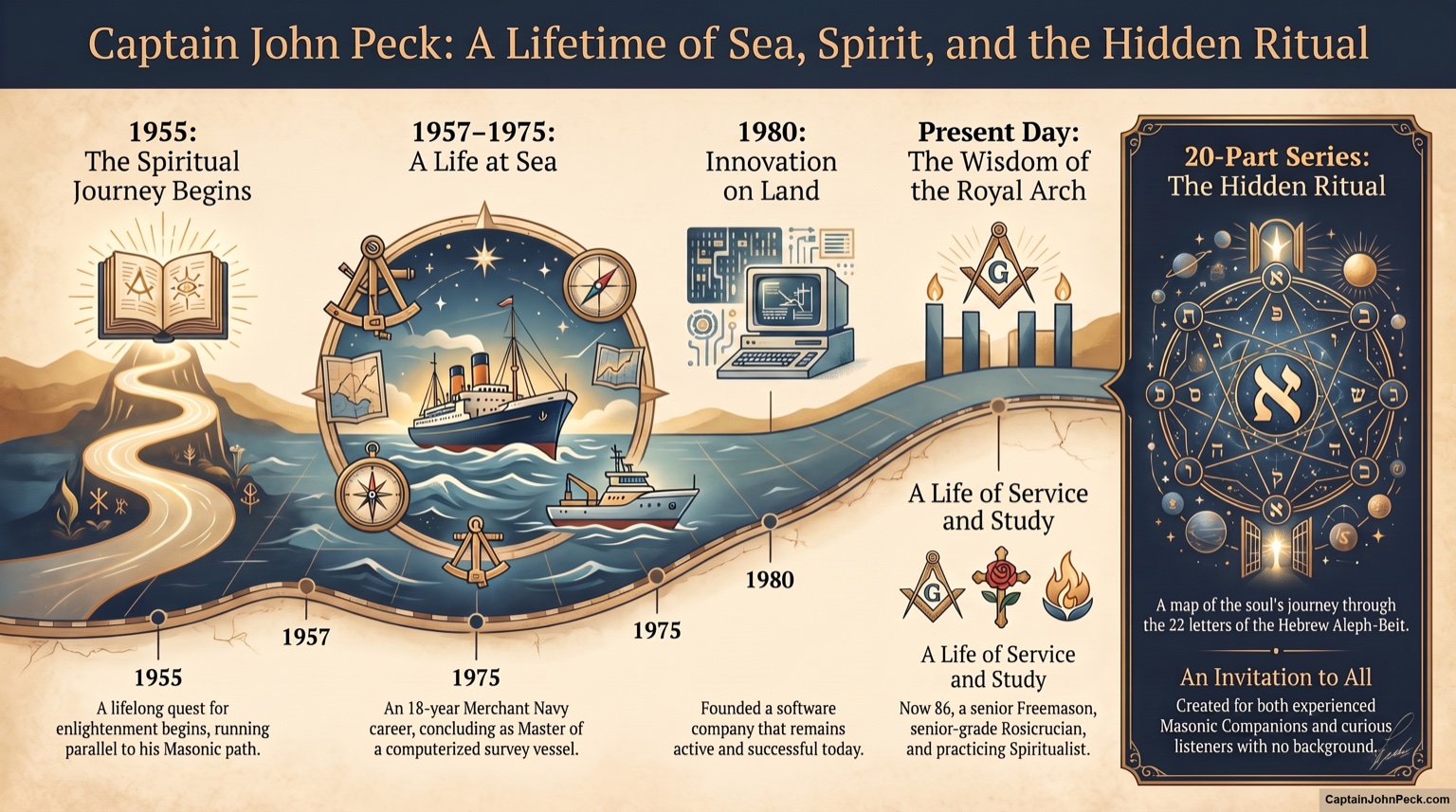
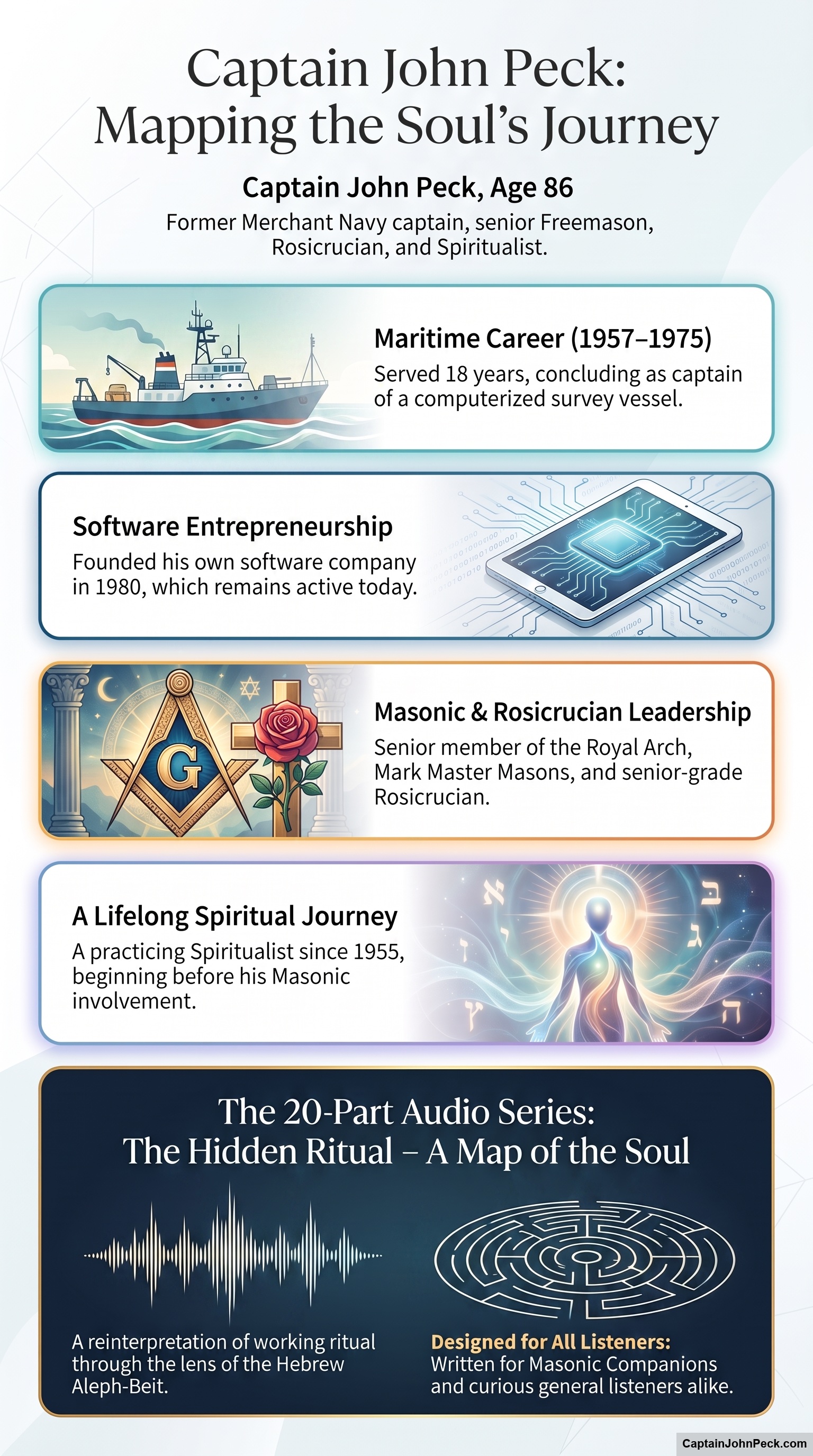
Captain John Peck is a distinguished mariner, computer software developer, Freemason, Rosicrucian, practising Spiritualist, and author whose career has been characterised by innovation, problem-solving, service, and a sustained pursuit of knowledge. His professional and spiritual journeys have developed alongside one another for more than seven decades, encompassing the command of ocean-going vessels, pioneering maritime technology, the design and implementation of complex computer systems, and extensive study of spiritual philosophy and the esoteric traditions of Freemasonry.
His life at sea spanned eighteen years, from 1957 to 1975. During this period, he developed what he describes as the world's first radar plotter capable of simultaneously displaying the true and relative motion of vessels, including their direction and speed. He invented, constructed, and sold the device to address the practical problems of navigation in fog and reduced visibility, enabling cable ships to operate more safely in crowded shipping lanes. This early work exemplified the approach that would become a defining feature of his later career: identifying a practical problem, developing an innovative solution, and bringing that solution into effective operation.
By 1975, Captain Peck had reached the rank of Master and was commanding a computerised survey vessel. Having attained the highest rank in his maritime career and completed his service at sea, he came ashore and entered the emerging computer software development industry. His subsequent career has been devoted to solving complex problems and transforming clients' requirements into working solutions.
In 1980, Captain Peck established his own company, beginning a career in software development and systems implementation in which he remains active to this day. Over the decades, the titles and roles within the computer industry have evolved, but the substance of his work has remained remarkably consistent. His approach encompasses the complete life cycle of a solution: understanding a client's requirements, identifying the underlying problem, designing an appropriate solution, procuring the necessary hardware, developing the software, delivering and installing the system, training personnel, and subsequently maintaining the hardware and software under support contracts.
The longevity of his professional relationships is testament to this approach. Two of his principal contracts each continued for more than thirty-one years. His work has also received formal recognition, including an ABTA award for speed of response and an ATOL award recognising the economy of his operations, where operating costs were reported to be approximately 50 per cent lower than those of the nearest competitor. In 2026, he also received an award assigned by the faculty of MIT, further recognising his contribution to his field.
Alongside his professional career, Captain Peck has pursued a spiritual journey that began in 1955. His interest in spiritual awareness, philosophy, and esoteric traditions has remained a continuous thread throughout his life and has developed in parallel with his professional work as a problem solver. His Masonic and Rosicrucian studies have led him to explore the relationship between human consciousness, spiritual awareness, and the deeper philosophical principles embedded within the Masonic tradition.
He is a senior Freemason and Rosicrucian, and a practising Spiritualist whose work draws upon decades of study, meditation, contemplation, and dedicated service within his respective traditions. His Masonic and Rosicrucian appointments reflect a longstanding commitment to scholarship as well as service, including his work as Past Saffragan and Past Provincial Director of Studies within the Societas Rosicruicana in Anglia.
Captain Peck's writing represents the culmination of these diverse experiences. Having spent a lifetime approaching both technical and spiritual questions through investigation and problem-solving, he has sought not only to understand what he has encountered but also to share his conclusions with others. To this end, he has written 32 lectures examining spiritual awareness as it is expressed and developed throughout the Masonic tradition.
At 86 years of age at the time of writing, Captain Peck remains professionally active and intellectually engaged. His life encompasses a rare combination of maritime command, technological innovation, entrepreneurship, software engineering, Masonic and Rosicrucian scholarship, and spiritual enquiry. His continuing work reflects a lifelong conviction that every problem presents an opportunity for understanding—and that knowledge, once acquired, is most valuable when it is shared.
Licence
Attribution-NonCommercial 4.0 International (CC BY-NC 4.0)
This work is licensed under the Creative Commons Attribution-NonCommercial 4.0 International Licence. It may be shared and adapted for non-commercial purposes, provided that appropriate credit is given and any changes are indicated.
You are free to
- Share — copy and redistribute the material in any medium or format
- Adapt — remix, transform, and build upon the material
The licensor cannot revoke these freedoms as long as you follow the licence terms.
Under the following terms
- Attribution — You must give appropriate credit, provide a link to the licence, and indicate if changes were made. You may do so in any reasonable manner, but not in any way that suggests the licensor endorses you or your use.
- NonCommercial — You may not use the material for commercial purposes.
- No additional restrictions — You may not apply legal terms or technological measures that legally restrict others from doing anything the licence permits.
Notices
You do not have to comply with the licence for elements of the material in the public domain, or where your use is permitted by an applicable exception or limitation.
No warranties are given. The licence may not give you all of the permissions necessary for your intended use.